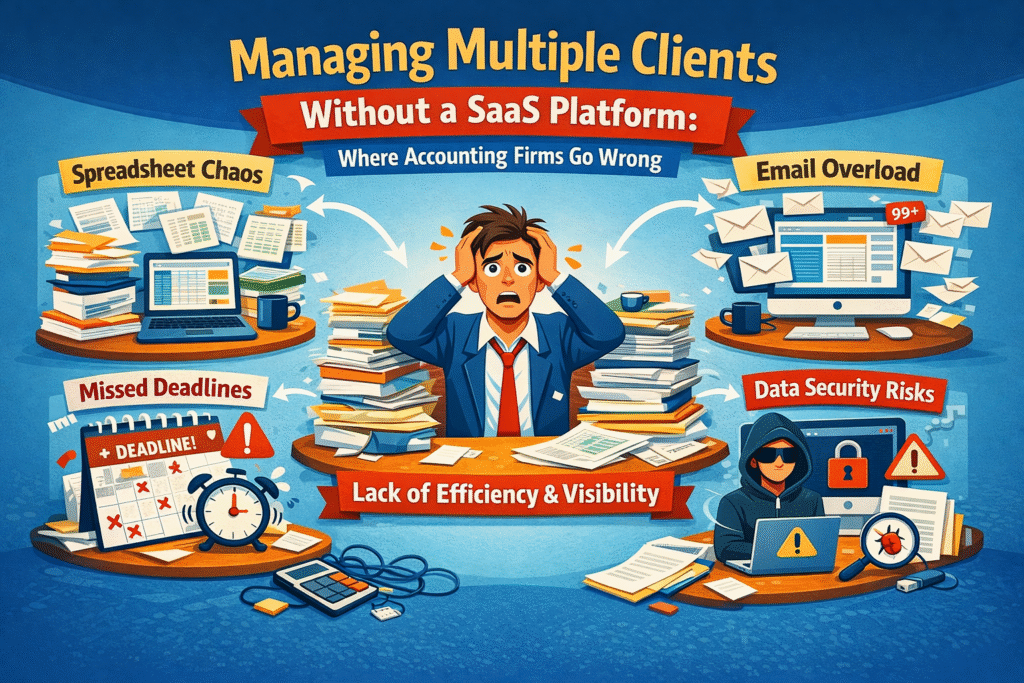
Accounting firms and KPOs cannot view compliance as a one-time task; it is rather a daily obligation multiplied by the number of clients they handle. Every client is different and brings along different tax rules, payroll cycles, reporting standards, and audit expectations. Going manual with this management, or using disconnected tools, makes compliance a dangerous juggling act. Even experienced teams will get frustrated when they face overlapping deadlines, documents in email, and audit trails scattered across various systems.
Spreadsheets and legacy tools undoubtedly still dominate many accounting operations; however, they have never been capable of supporting audit readiness at scale. You can get penalties, disgruntled clients, or scary last-minute audit scrambles if you miss an approval or lose a document. The more firms grow and the more clients they get under tighter regulatory scrutiny, the higher the pressure.
Modern SaaS accounting platforms are making a difference in the field. Instead of making an audit-ready accounting system for something done at the last minute, they turn it into a built-in feature by centralising workflows, approvals, documents, and reporting. Firms don’t prepare for audits; they’re always ready.
A cloud platform, powered audit, and ready accounting give the team a sense of being able to go about their work stress-free, as they are completely sure that each transaction, change, and approval has already been recorded, is traceable, and is compliant for every client they handle.
Why Manual Accounting Processes are Non-Compliant?
Most people think manual accounting processes fail because staff lack expertise. However, the real culprit is that these systems are not designed to be integrated. Tax declarations are stored in one application, salaries in another, invoices in Excel, and audit papers in either shared folders or email threads. This quilt approach makes it hard to keep a full compliance record for every client.
It gets riskier when the backlog of work builds up. The margin for mistakes gets smaller when you forget to upload a document, miss a tax regulation change, or forget to get an approval for a document. An audit trail is intended to demonstrate the workflow of a process, that is, the process activities (who did what and when). Yet traces are regularly left incomplete or conflicting, especially when multiple team members access the same documents.
The impact of these actions can be felt in reality. In a 2024 Thomson Reuters survey, 64% of accounting professionals agreed that manual operations increase audit risk and heighten anxiety about compliance during the busiest filing periods.
Besides the fines, inefficiencies demoralise and bind up valuable time. Teams are spending more time correcting mistakes than adding value to their clients. Reactive mode thus translates into gradually losing trust, both internally and with clients who expect accuracy, transparency, and reliability.
That’s why businesses are moving away from manual processes toward accounting automation software that integrates compliance into the core of day-to-day operations.
How SaaS Accounting Platforms Alter the Audit-Readiness Paradigm
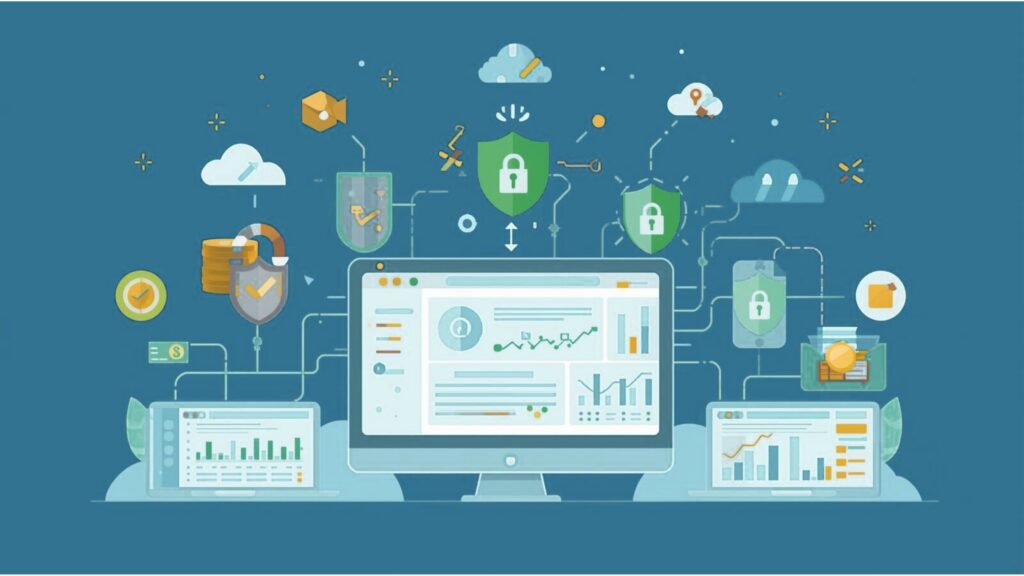
Unified compliance environment: A modern SaaS accounting platform brings all customer data, financial transactions, and documents into one secure, closed system built specifically for accountability.
Single source of truth: Teams no longer need to chase information across multiple tools. Every record lives in one place, reducing errors and saving time during reviews and audits.
Built-in audit management: When audit management software is integrated, every transaction from input and approval to reconciliation is automatically logged without manual effort.
Automated digital audit trails: All activities are time-stamped, securely stored, and instantly available, making it easy to present clear evidence when auditors request it.
No manual evidence gathering: The system captures and records data in real time, eliminating the need to piece together information from scattered sources.
Role-based access control: Sensitive financial data is restricted to authorised users, ensuring strong data security and controlled visibility.
Auditor-friendly access: Auditors can be granted read-only access, allowing them to review records without disrupting daily accounting operations.
Clear compliance visibility: Compliance dashboards highlight deadlines, required approvals, and filing statuses, helping teams stay organised and avoid missed obligations
The evidence of the result is significant. According to a 2023 Deloitte report, organizations that adopted cloud-based accounting and compliance platforms reduced audit preparation time by up to 30%.
Audit readiness is no longer a last-minute panic; it is ingrained in the firm’s everyday operations.
Efficiently Managing Multi-Client Compliance
Compliance issues for a single customer can be sorted out without any hassle. After all, handling the tax issues for 50 or 500 accounts is where the complexity really hits the ceiling. Multi-client accounting software is the answer in such a scenario, as it is programmed to provide a firm with a single dashboard for the compliance status of the entire client portfolio.
Instead of group members having to keep deadlines in their heads, they can all see upcoming tax filing deadlines, payroll cycles, and statutory submissions from a single pane of glass. Things stay on track with automated reminders, ensuring documents are requested, reviewed, and approved on time. Standardised workflows create consistency, so whether the client is large or complex, each can be compliant with the same discipline.
The true value lies in the management having real-time visibility. They can therefore, without delay, distinguish the clients who are fully compliant from those who require their help and identify the point of congestion in the workflows. Instead of managing fires, proactive teams can prioritize their work effectively, especially during peak times.
Bringing Payroll, Tax, and Financial Reporting Together
Compliance issues are not your concern alone, and your systems should not be isolated either. Cutting-edge software platforms unify payroll and compliance software, tax workflows, invoicing, and Accounting reporting and analytics software under one roof.
Such an integration ensures that payroll data is used directly to prepare financial reports, tax assessments are based on real-time transactions, and compliance records are in sync at all levels. Audit-ready reports, along with the supporting documentation and approval histories, can be produced without delay for each client.
By minimizing manual handoffs across tools, firms can drastically reduce errors and duplication. The outcomes go beyond cleaner audits; the firms also experience their daily operations running very smoothly, easily scalable without causing disorder.
Data Security and Regulatory Compliance
Trust is at the heart of the accounting profession, and security is a significant part of it. Cloud-based accounting automation software employs encryption, access controls, and continuous monitoring to safeguard highly sensitive client data. Thorough audit trails ensure that every system interaction is recorded, helping both internal and external audits.
Leading platforms are designed to comply with global and regional requirements, such as GDPR and AICPA standards. Such built-in compliance allows firms to remain audit-ready without having to manually supervise or frequently check their systems. In this way, security and compliance are established as core necessities rather than optional extras.
How WeekMate Takes the Hassle Out of Auditing Your Books
- All-in-one accounting management software for accounting firms/KPOs that serve multiple clients with complex compliance requirements
- Integrate tax, payroll, reporting, and compliance workflows in a single, cloud-based platform that offers full operational transparency
- Eliminates manual monitoring in favor of automated processes, helping to minimize errors and compliance steps that get overlooked
- Features real-time dashboards that instantly inform managers and auditors of client compliance status
- It automatically records every transaction and document, providing a complete and trustworthy audit trail.
- Delivers a uniform record of compliance across all clients, with no extra manual work
- Allows firms to be audit-ready all year long, not just in audit season
Conclusion: How to Achieve Compliance Without Compromise
Manual accounting practices not only increase the probability of non-compliance but also make it unnecessarily difficult, especially if the firm has to manage several clients under stringent regulatory requirements. It is very difficult to conduct an error-free, stress-free audit when using disjointed tools.
SaaS platforms are very different, as they combine several workflows into a single platform, making work easier, creating comprehensive audit trails, and helping eliminate manual processes. Accounting automation software, as the engine of a firm, enables the firm to grow without worry while remaining fully compliant at every step.
Audit-ready accounting is not about working harder, but about creating and using efficient systems that, at every step, facilitate accuracy, transparency, and confidence.
FAQs
1. What is audit-ready accounting?
Audit-ready accounting is the process of maintaining digital records, approvals, and reports in a manner that meets compliance requirements at all times, so financial information can be audited at any time without scrambling during month-end or year-end closing.
2. How does a SaaS platform facilitate audit compliance across multiple clients?
It consolidates all client information, automatically tracks every transaction and approval, and delivers real-time compliance and audit reports at the client level.
3. Can multi-client accounting software lead to error-free audits?
Yes, automation reduces manual data entry, standardizes workflows, and provides a full, consistent audit trail for each and every client.
4. Does audit-ready accounting software also include payroll and tax management?
Today’s platforms are providing these features – payroll, tax filings, invoices, reporting – in a single system, thus aligning and ensuring the consistency and compliance across the functional areas.
5. How secure is client data in cloud-based, audit-ready platforms?
Enterprise SaaS platforms use encryption and role-based access controls and comply with regulatory requirements to protect their clients’ sensitive information.