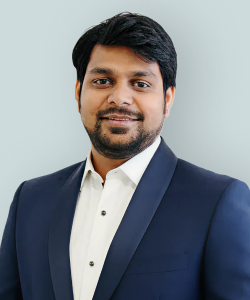

WeekMate and HR Shapers brought together HR leaders from across Ahmedabad for a roundtable and networking session on Organizational Culture and Employee Experience in the AI-Driven Organization, held at Hyatt Ahmedabad. The room included senior HR voices from Adani Group, Zydus Group, eInfochips, Emcure Pharmaceuticals, Sterling Hospitals, Monte Carlo, Shadowfax, and several other leading organizations spanning pharma, manufacturing, logistics, healthcare, tech, and retail.
The evening opened with Navratri, not as a warm-up question but a deliberate one. Ahmedabad’s favourite season, what it means to the city, and how each leader celebrates it. The message underneath was simple. Before you talk about systems, you talk about people.
What the Session Covered
Let employees play with AI before you plan the rollout
One of the sharpest points of the evening came from a leader at Adani Group. Don’t start AI adoption with a rollout plan. Let employees experiment with the tools first, watch how they actually use them, and pull real usage patterns and metrics from that behaviour before deciding what to adopt and where. The reasoning stuck with the room. If you’re building for the next hundred years, you don’t optimise for this quarter’s tool.
AI screening AI
Hiring has quietly become a contest between algorithms. Candidates apply with AI. Companies shortlist with AI. The discussion went deep on what still signals genuine fit when every application arrives machine-polished, and where technology speeds up sourcing and matching without actually improving quality. The open question the room kept returning to: where does the human have to step back in, and how early?
Culture is the one thing you cannot automate
Every industry represented in the room agreed on this. Tools can run a process, but they cannot build belonging. In culture work, human intervention isn’t a nice-to-have; it’s the whole job.
Culture behaves differently at scale
A tight team runs on shared instinct. A large organisation has to carry that same feeling across floors, cities, and functions, and that doesn’t happen by accident. Leaders had an honest conversation about what survives growth and what quietly breaks along the way.
Remote and hybrid, beyond the usual talking points
The group moved past the standard debate to something more specific: what actually holds a team together when people aren’t in the same room, and what erodes without anyone noticing.
A Word From the Room
Different industries. Pharma, manufacturing, logistics, healthcare, tech, retail. Different scale, different constraints, but remarkably similar struggles. Leaders also compared the current HR tech landscape, weighing where tools genuinely help against where they just add work. That comparison is the reason WeekMate exists in the shape it does.
We build HRMS and CRM for Indian businesses with one test in mind: does this give the HR team their time back, or does it just move the work somewhere else? Automate the process. Protect the judgement. The part that builds culture was never the part software could do.
A special thank you to Ashish Gakrey and HR Shapers for putting this together with us, and to every HR leader who gave us three hours on a weekday evening.
The Impact
This wasn’t a panel where ideas got shared and left in the room. It was a working conversation, one that HR leaders are already carrying back into their own organizations, from how they pilot AI tools to how they think about culture at scale.
What’s Next
This is the first of many. We plan to keep such conversations going with more roundtables across cities, each one built around the questions leaders are actually sitting with, not the ones that make for easy panels. The next edition will bring back familiar faces and pull in new industries and perspectives. Details on the date and theme are coming soon, so stay tuned.