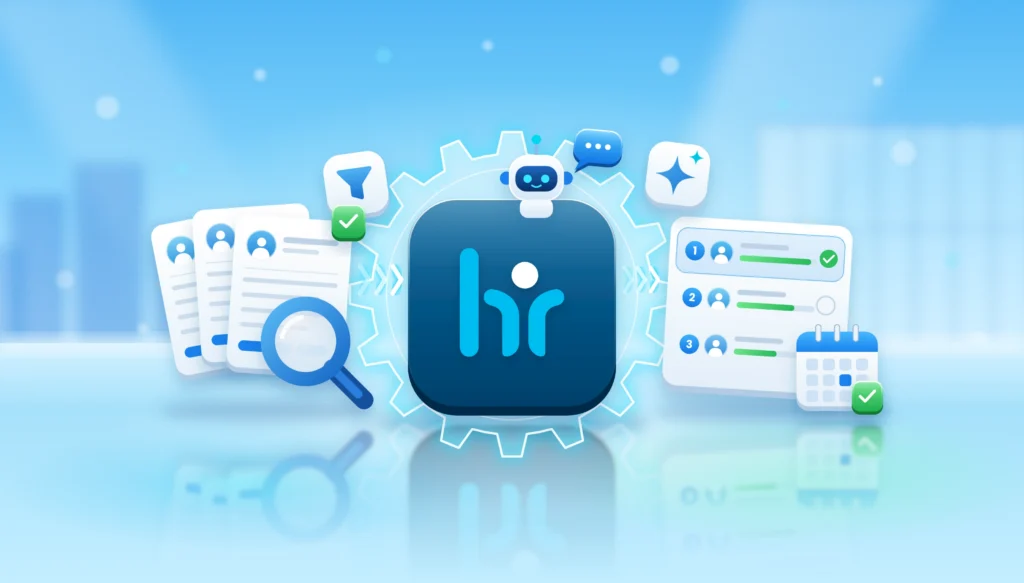
Employee management is not just about hiring employees, managing their performance and establishing relations with them. There are many other activities that HR department needs to do regularly like keeping records of the employees, checking their attendance, processing leave requests, managing payroll and answering routine queries from the employees. These activities if done manually would take up much of time and would increase the possibility of errors too.
It is the role of HR automation in which lies the use of HRMS software that can help businesses automate all their routine tasks, optimize everyday HR operations, and manage employee data through a single interface. It will allow HR specialists to devote more time to employee motivation, talent management, and development of the business.
Now let’s find out how HR automation assists businesses in minimizing their administrative workload.
What Is HR Automation?
Automated Human Resource Management is the technology that automates repetitive functions within human resources management by use of technology. The application of automated human resources makes it easier for the organization to automate these processes because the automation function is applied to processes such as recruitment, onboarding of employees, leave management, timesheet management, payroll management and record keeping.
Traditionally, human resource managers use spreadsheets, emails, and manual calculations to accomplish these processes. With the growth of the business, it makes these processes more difficult to manage.
Once these processes are automated through HR, it is possible to develop workflows that will carry out predefined activities according to their requirements. For example, when a new employee joins the organization, the process of automation will collect documents and onboard the employee.
Common HR Administrative Tasks That Can Be Automated
A number of everyday HR functions are repetitive in nature and may be automated. Identification of such processes is the initial step to increase HR efficiency.
1. Employee Onboarding and Documentation
Employee onboarding entails collecting personal data, document verification, writing offers letters, assigning duties, and informing new hires about policies.
In case of manual processes, HR personnel need to interact with new hires and various departments to finish each process.
HR automation simplifies onboarding through:
Digital employee registration and document collection.
Automated onboarding task assignments.
Notifications for pending documentation.
Centralized employee record creation.
Automated onboarding status tracking.
This helps HR teams provide a more organized joining experience while reducing paperwork and repetitive follow-ups.
2. Attendance and Leave Management
Employee attendance and processing leaves may become a tedious process for companies that have many departments, shifts, or office branches.
Maintaining manual attendance sheets may take much effort from HR specialists who have to calculate hours worked, time taken off, late arrivals, etc.
With HR workflow automation, businesses can:
Record employee attendance digitally.
Track working hours and shifts.
Automate leave request submissions and approvals.
Update leave balances automatically.
Send notifications for pending approvals.
Maintain centralized attendance records.
Automating these activities reduces manual tracking and provides better visibility into workforce availability.
3. Payroll Processing and Salary Calculations
In payroll processing, it is important to have information regarding employees, attendance, leave, salary structure, and deductions.
Errors in the computation of salaries and other processes by human resource departments result in erroneous payments to employees.
Automated payroll processes help businesses:
Calculate salaries using predefined salary structures.
Consider attendance and leave information.
Calculate applicable deductions and allowances.
Generate employee payslips.
Maintain payroll records.
Support PF, ESI, and TDS-related payroll compliance.
By connecting attendance, leave, and payroll information, businesses can reduce repetitive data entry and improve payroll accuracy.
Management of employees’ data is yet another significant administrative function. The HR departments keep updating the contact information, designation, departmental details, documents of the employees, salaries and other employment related details.
Using multiple spreadsheets for this can cause duplication and out of date entries.
Automation helps businesses:
Maintain centralized employee databases.
Update employee information digitally.
Organize employee documents.
Control access to confidential information.
Retrieve employee records quickly.
Reduce repetitive data entry.
A centralized system helps HR professionals access accurate employee information without searching through multiple files.
5. Employee Queries and Routine HR Communication
HR departments often get queries related to leave balances, attendance status, salary details, company policies, holidays, and other aspects of employee data.
Answering each one separately would disrupt the important functions of HR departments.
Automation can simplify routine communication through:
Employee self-service portals.
Automated notifications and reminders.
Digital access to HR policies.
AI-powered HR assistants.
Automated updates about leave and attendance requests.
Quick access to payslips and employee information.
These capabilities help employees find routine information independently while reducing repetitive communication for HR teams.
6. Performance Reviews and Employee Feedback
Performance management is all about goal setting, obtaining feedback, scheduling review, tracking performance, and preparing evaluation reports.
If this process is handled manually, the Human Resources team needs to coordinate with the employees and managers for conducting the review.
HR workflow automation can support:
Automated performance review reminders.
Digital goal-setting and tracking.
Scheduled appraisal notifications.
Employee feedback collection.
Centralized performance records.
Automated reporting and progress monitoring.
This makes performance management more structured and reduces administrative coordination.
7. HR Reports and Documentation
HR report preparation is yet another repetitive task. It is common for organizations to require data regarding employee attendance, strength of workforce, payroll costs, absenteeism details, and performance of employees.
Without automation, an HR professional might be required to gather data from various sources and create reports manually.
Automated reporting helps businesses:
Generate HR reports using centralized information.
Monitor employee attendance and leave trends.
Access payroll summaries.
Track workforce information.
Reduce manual report preparation.
Make informed HR decisions using organized data.
This allows HR teams to spend less time preparing spreadsheets and more time analyzing workforce performance.
Key Benefits of HR Automation for Businesses
Adoption of automation in all HR processes comes with other benefits aside from reducing manual labor. This enhances the efficiency of HR personnel in managing employees and supporting the business goals.
1. Saves Time and Improves Productivity
HR professionals spend considerable time completing repetitive administrative activities. Automating these tasks reduces manual effort and allows teams to complete everyday responsibilities more efficiently.
2. Reduces Manual Errors
Manual data entry, attendance calculations, and payroll processing can result in mistakes. Automation uses predefined rules and connected employee information to minimize repetitive errors.
3. Improves Employee Experience
Employees can access important information, submit requests, check attendance, and download payslips without waiting for individual HR assistance.
4. Creates Consistent HR Workflows
Automated workflows follow predefined processes for approvals, notifications, and documentation. This helps businesses maintain consistency across departments.
5. Improves Data Accessibility
Centralized employee information makes it easier for authorized HR professionals and managers to retrieve records and access relevant workforce information.
6. Supports Business Scalability
As businesses grow, employee records, payroll requirements, and administrative responsibilities also increase. Automated HR processes help organizations manage larger workforces without proportionately increasing manual administrative work.
7. Allows HR Teams to Focus on Strategic Activities
When repetitive administrative responsibilities are reduced, HR professionals can dedicate more time to recruitment planning, employee engagement, learning and development, retention strategies, and organizational improvement.
Businesses do not need to automate every HR activity at once. A step-by-step approach helps organizations identify the most time-consuming responsibilities and introduce automation where it delivers the greatest value.
Here are some practical steps to get started:
Step 1: Identify Repetitive HR Activities
Evaluate the present tasks in the department and find out which of them take a lot of time to complete.
Step 2: Prioritize Processes for Automation
Think about the processes that are done regularly and involve data entry, approval, follow-up, etc. Payroll, attendance tracking, and onboarding are the processes to be chosen.
Step 3: Choose the Right HR Software
Find a product that meets all your business needs – employee management, attendance control, payroll calculation, leave management, onboarding, and reporting.
Step 4: Establish Automated Workflows
Establish approval rules, notifications, reminders, and other actions according to your HR policies. Thus, you ensure that repetitive tasks will be completed according to the book.
Step 5: Train Employees and HR Teams
Provide proper training so employees, managers, and HR professionals understand how to use the automated system effectively.
Step 6: Monitor and Improve Performance
Evaluate the time required to perform workflows, administrative costs, payroll accuracy, etc.
How WeekMate Helps Businesses Automate HR Administrative Work
The management of the day-to-day HR tasks will become difficult when the records for staff information, attendance, payroll, and other approval processes are maintained separately. WeekMate HRMS enables firms to integrate such vital HR processes via a centralized system.
With WeekMate, businesses can simplify routine administrative responsibilities through several features:
Automated Employee Onboarding
WeekMate tool assists in streamlining the process of onboarding employees by facilitating the collection of digital documents, allocation of onboarding tasks, and maintaining records of employees. HR departments do not have to keep checking the progress of each activity.
Attendance and Leave Management
The software helps businesses to manage attendance, working hours, leave, and approvals through a single system. This will help minimize the manual process of recording attendance and leave management.
Simplified Payroll Management
WeekMate supports payroll processing with employee salary information, attendance data, leave records, and applicable statutory calculations. This helps reduce repetitive payroll activities and maintain organized payroll records.
Employee Self-Service
Employees are able to view relevant HR data, update their profile, apply for leave, track attendance and retrieve pay slips from self-service facilities. It will reduce the number of routine tasks for HR departments to do.
AI-Powered Employee Assistance
WeekMate is equipped with MIRA AI, which is an intelligent HR assistant that assists in providing HR information and solving common queries for the employees.
HR Analytics and Reporting
Employees’ attendance information and other HR data can be accessed by companies through workforce information and reports. This provides visibility for better decision-making.
With all of these features integrated into one platform, WeekMate assists companies in reducing redundant tasks and streamlining the entire HR process.
HR administrative activities may take attention from the team away from such important duties as motivating employees, developing their skills, and managing them strategically.
All the above-mentioned everyday HR functions can be automated in order to simplify the process. HR automation allows firms to save time, make fewer mistakes, maintain a stable workflow, and facilitate employees’ lives during HR processes.
With the right set of tools, any firm is able to build a perfect HR system, which will contribute to future success of a company.
WeekMate allows firms to streamline employee management through unifying all important HR processes. Automating regular activities will give more time to add value to the lives of employees.
Frequently Asked Questions
WeekMate HRMS can assist organizations in automating employee onboarding, attendance, leave management, payroll, employee self-service, and other HR processes. The centralized system enables organizations to decrease the number of repetitive tasks and increase efficiency within HR.
The main benefits of HR automation include reduced administrative workload, improved productivity, fewer manual errors, faster HR workflows, better employee experience, centralized information, and improved scalability.
HRMS software centralizes employee information and automates activities such as onboarding, attendance, leave approvals, payroll, and employee self-service. It reduces manual data entry and helps HR teams manage routine responsibilities more efficiently.
Yes. HR automation is useful for startups, small businesses, and growing organizations. It helps smaller HR teams manage employee information, payroll, attendance, and administrative responsibilities without relying heavily on manual processes.
No. HR automation is designed to reduce repetitive administrative responsibilities, not replace HR professionals. It allows HR teams to spend more time on activities that require human judgment, communication, employee relationships, and strategic planning.