Most projects don’t fail overnight. They slip slowly. A deadline gets pushed. Communication gets messy. Someone misses a task. Before you even know it, the entire project starts feeling heavy, confusing, and off-track. And you know what? It’s rarely about lack of effort. Teams are already working, and people are trying. But something’s missing.
In 2026, with faster timelines, remote teams, and AI-driven workflows, managing projects without the right structure isn’t just hard, but it’s risky. This is where understanding project management challenges and solving them properly becomes critical.
Understanding Why Projects Fail
The Cost of Poor Project Management
Project failure isn’t just about missed deadlines. It shows up in ways that directly affect your business:
- Deadlines keep shifting
- Budgets go out of control
- Teams feel overloaded or underutilised
- Clients lose trust
- Internal chaos becomes normal
Early Warning Signs You Shouldn’t Ignore
Before a project fully fails, it leaves clues:
- The scope keeps changing mid-way
- Tasks get delayed again and again
- No clear visibility into progress
- People keep asking, “Who’s handling this?”
- Teams work in silos instead of together
If even 2–3 of these feel familiar, your system isn’t working.
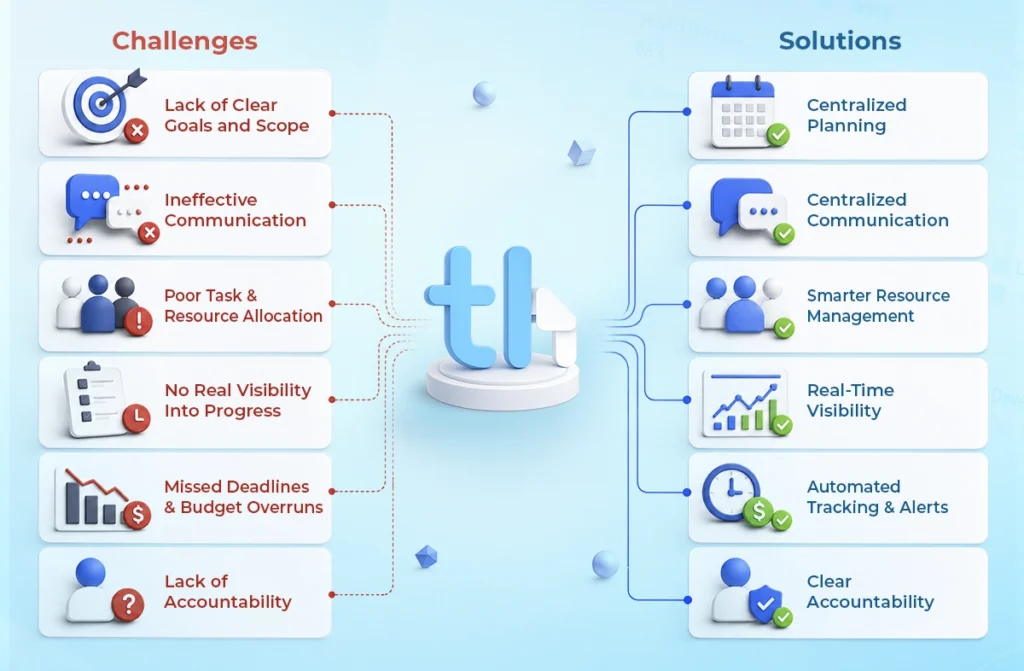
Top Project Management Challenges
Let’s break this down.
1. Lack of Clear Goals and Scope
This is where most problems begin. When goals aren’t clearly defined:
- Teams interpret things differently
- Scope creep becomes normal
- Expectations never align
It creates confusion from day one.
2. Ineffective Communication
You might think communication is easy in 2026. But with Slack, emails, WhatsApp, and meetings, information gets scattered.
- Important updates get buried
- Approvals get delayed
- Teams stay out of sync
More tools ≠ better communication.
3. Poor Task & Resource Allocation
Sometimes your best people are overloaded, and others are waiting for work. No one really sees the imbalance.
This leads to:
- Burnout
- Missed priorities
- Slow execution
4. No Real Visibility Into Progress
Manual tracking, spreadsheets and random updates. It all looks manageable until it isn’t.
Without real-time visibility:
- Bottlenecks go unnoticed
- Delays pile up silently
- Managers react late
5. Missed Deadlines and Budget Overruns
Weak planning and poor tracking lead to chaos. Teams don’t have:
- Accurate timelines
- Clear milestones
- Real-time updates
So everything becomes reactive.
6. Lack of Accountability
When ownership isn’t clear, work gets delayed. Not intentionally, just naturally.
- Tasks float between people
- No one owns the outcome
- Productivity drops quietly
How a Workflow Management System Solves This
An efficient workflow management system doesn’t just “organize tasks.” It fixes the root problems.
Centralized Planning
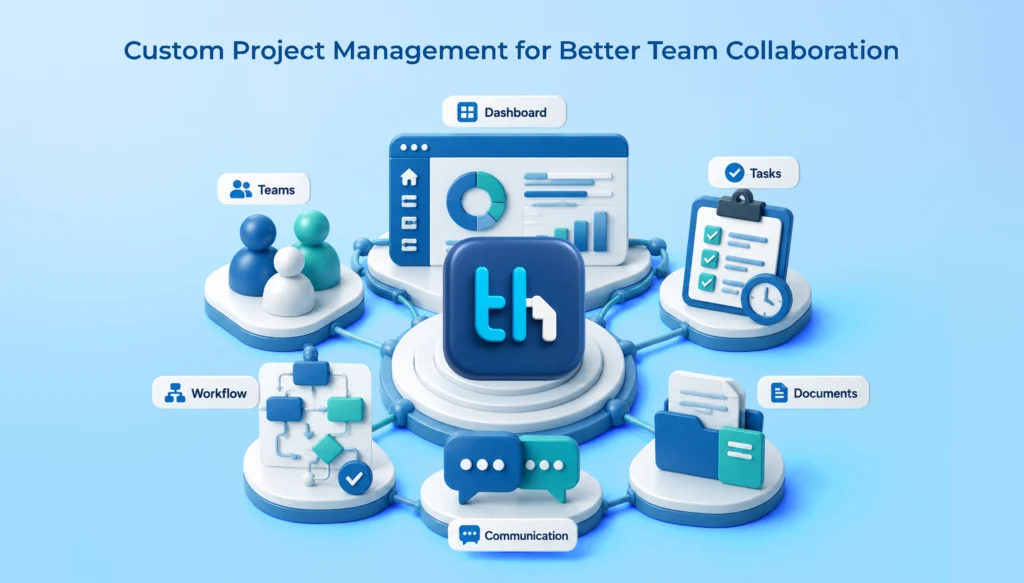
Everything lives in one place:
- Tasks
- Documents
- Communication
No more jumping between tools.
Real-Time Tracking & Automation
Imagine this:
- Tasks update automatically
- Reminders are triggered without follow-ups
- Progress is visible instantly
That’s not “advanced” anymore. It’s expected.
Clear Accountability
Every task has:
- An owner
- A deadline
- A status
No confusion. No guessing.
Smarter Resource Management
You can actually see:
- Who’s overloaded
- Who has bandwidth
- Where work needs to shift
Decisions Driven by Data
Instead of random guessing, you get:
- Performance insights
- Bottleneck identification
- Predictive planning
This is where good teams become great.
How Project Management Software Improves Productivity
Let’s talk about outcomes. When businesses implement the right project management software, they typically see:
- Faster execution cycles
- Fewer manual follow-ups
- Better team coordination
- Clearer priorities
- Stronger remote collaboration
And maybe most importantly, less stress across teams.
Key Features to Look for in Project Tracking Software for Businesses
Not all tools are equal. Some look good, but fall apart in real use. Let’s understand it with the help of the table below:
|
Feature
|
Why Does It Matter
|
|
Task & Workflow Automation
|
Reduces manual effort and errors |
|
Real-Time Dashboards
|
Instant visibility into progress |
| Collaboration Tools |
Keeps communication in one place
|
|
Resource Management
|
Prevents overload and inefficiencies |
| Integrations |
Connects with your existing tools
|
|
Cloud & Mobile Access
|
Enables remote and flexible work
|
| Scalability |
Grows with your business
|
Even with the best system, how you use it matters. A few practical habits:
- Set clear objectives before starting
- Keep communication centralized (not scattered)
- Track progress continuously, not occasionally
- Use data to improve workflows
- Make accountability visible
- Review and refine processes regularly
Choosing the Right Project Management Solution
This decision matters more than most businesses realize. Before choosing a system, ask:
- Does it fit your workflow, or does it force you to change everything?
- Will your team actually use it?
- Is it easy to implement?
- Can it scale as you grow?
- What’s the real ROI over time?
Because a tool only works if people actually adopt it.
A Quick Note on Modern Trends (2026 Reality Check)
Project management today isn’t what it was 3–5 years ago. We’re seeing:
- AI-assisted task prioritization
- Predictive project timelines
- Automated reporting
- Fully remote and hybrid team structures
And yes, tools now need to be fast, responsive, and optimized for Core Web Vitals. Because slow systems kill productivity.
Conclusion – Overcome Project Management Challenges
To understand the actual causes of project failure, systemic inadequacies must be faced honestly. Projects usually don’t fail because teams lack skill. More often, the real problem is the outdated systems. If your projects seem harder than they should, slower than expected, or constantly “almost finished”, it’s time to rethink how you manage them.
Platforms such as WeekMate offer full project visibility, with HR alignment, automation, and compliance management all in a single platform. Instead of endlessly questioning “why projects fail,” companies that implement rigorous methodologies find clarity, accountability, and sustained performance.
The right project tracking software for businesses doesn’t just help you manage work. It helps you create better results every time.