The Future of Ecommerce Automation: HR, CRM, and Task Management in One Suite

Ecommerce has expanded substantially in the last ten years, mainly due to the increasing demand for online shopping, the rise of digital payments, and the development of global fulfillment networks. The growth of this business sector also deepens its complexity. To that effect, companies are not only expected to take care of customers but also to manage internal teams and run operations in an orderly manner, most of the time with scarce resources. It is at this point that ecommerce automation appears as a crucial winning factor.

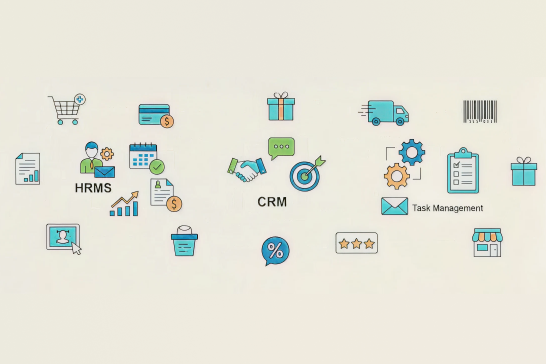
The three major areas comprehended by modern ecommerce operations are:

  • HR‍‌ (Human Resources) – refers to the control and management of people, talents, and business operations.
  • CRM (Customer Relationship Management) – the management and control of customers, sales, and communication.
  • Task Management – scheduling of daily activities across the teams

An enterprise single, unified automation platform that combines the functional interactions of HR, CRM, and task management will make business operations more efficient. It will also scale it and prepare it for a future where AI-powered tools and automated technologies will dominate.

At present, leading brands are adopting an ecommerce management suite that combines HR, CRM, and task management features into a single, seamlessly integrated automation platform. The adoption of such a strategy is a step toward increased operating efficiency, higher accuracy, and long-term scalability.

The Growing Need for Ecommerce Automation

With the changes piling up fast in the e-commerce world, the company is facing numerous challenges, such as:

  • Customers’ increasing expectations for speedy delivery and customized experiences
  • A large number of orders calling for the establishment of scalable systems
  • The management of customer data on different platforms
  • The coordination of employee tasks in the fulfillment, support, and marketing departments

To overcome these hurdles, businesses are moving towards automated ecommerce operations equipped with advanced technologies such as AI in ecommerce, workflow automation, and integration dashboards.

Automation is a must for:

  • Decreasing common manual errors
  • Giving better speed and accuracy
  • Supporting ecommerce growth and scalability
  • Enabling data-driven decision-making

HR Automation in Ecommerce: Streamlining Talent Management

HR is at the very heart of e-commerce: from recruiting warehouse workers to managing the customer support team. Ecommerce HR automation enables businesses to execute HR processes quickly and effectively, even at scale.

Main HR activities facilitated by automation:

HR Function

How Automation Helps

Recruitment Automated filtering, scheduling, and applicant tracking
Onboarding Digital forms, instant training modules, and employee onboarding software
Payroll Error-free calculations and timely payments
Attendance Automated time tracking for remote and on-site staff

Automation helps HR teams by lightening their workload and enhancing the employee experience. Some of the benefits of HR automation in the ecommerce industry are that it leads to better compliance, quicker hiring, and more accurate data ‌management.

What Will Be The Future Trends In HR Automation?

  • Talent acquisition with AI support
  • Workforce management using the prediction model
  • Employee morale system

A tool such as WeekMate HRMS gives ecommerce businesses a great chance to make their HR work more efficient and gather workforce data in one place.

CRM Automation in Ecommerce: Enhancing Customer Relationships

What is CRM in ecommerce?

CRM software enables web-based businesses to track user actions, manage communication, segment audiences, and increase customer loyalty.

Keys CRM duties automated in ecommerce

  • Transforming targeted marketing through customer segmentation and lead scoring
  • Personalized and sequenced email marketing campaigns
  • Customer-support chatbots
  • AI-powered recommendations and responses

Customer data automation via integrated ecommerce + CRM workflows

By leveraging effective CRM automation, companies can elevate retention, drive more repeat purchases, and deliver personalized experiences that foster loyalty.

Where will CRM automation be in the future?

The implementation of AI in the ecommerce industry will go on and play an increasingly important role in predictive sales insights, behavior forecasting, and ultra-personalized communication.

WeekMate e-CRM, together with the WeekMate Email Marketing tool, is an excellent way for ecommerce brands to link their stores to customer data for a 360-degree customer view.

Task Management Automation: Boosting Productivity Across Teams

Task management is at the core of activities such as order processing, inventory management, packaging, and customer communication.

Ways in which automation enhances task management:

  • Auto-assign work based on free time, skill, or importance
  • Automate the repetitive workflows, like order updates or inventory alerts
  • Instant sync with HR and CRM systems
  • Real-time dashboards for tracking KPIs and performance

Having a great task management tool means easier work, quicker turnaround, and better collaboration.

WeekMate TaskHub and similar tools provide visual pipelines, automated task flows, and seamless collaboration.

Advantages of Integrating Three Modules: HR, CRM, and Task Management in a Single Suite

The primary advantages of a unified system, such as an ecommerce management suite are:

Main Benefits

Streamlined workflows

The need for different tools is eliminated; data sharing becomes effortless.

Improved accuracy

Data from CRM, HR, and tasks are harmonized throughout the company.

Enhanced insights

Access to up-to-the-minute analytics on the workforce, customers, and tasks.

Better employee and customer experiences

Quick responses, transparent communication, and process automation.

Lower costs

A single suite provides the functionality of 4–6 separate software subscriptions.

High scalability

Designed for the expansion of stable e-commerce brands.

A scope for such integration facilitates workflow optimization and aligns teams around shared goals.

For example, TaskHub and HR work seamlessly together. Employees punch in and out via TaskHub, and all working hours are instantly synced with HR for accurate tracking and payroll. If the working hours are not completed, a system-automated reminder will be mailed to complete the remaining hours.

The Future of Ecommerce Automation: What to Expect

The following wave of ecommerce technology innovations will be shaped ‍‌by:

Main Trends

  • Advanced machine learning for predictive analytics
  • AI-supported workforce and customer management
  • Extensive CRM and HR integration 
  • Tightening of data security and compliance requirements
  • Uninterrupted integration with marketing, logistics, and finance tools
  • Expansion of integrated business management software

As a result, the leaders who invest in the ecommerce business automation tools will be ahead of their rivals and build a stable, sustainable business model for the future.

Case Studies and Examples

Mid-Size Fashion Brand

  • Integration of HR, CRM, and task management
  • Onboarding time cut by 40%
  • Repeat customer rate increased by 22%
  • Marketing automation saved 15 hours per week

Electronics Retailer

  • Automated order workflows
  • Improved inventory updates through synced task management
  • Customer support response time improved by 35%

Beauty & Wellness Ecommerce Store

  • Automated segmentation and email campaigns
  • Staff productivity increased by 30%
  • Faster customer resolution through CRM-linked tasks

These case studies demonstrate what motivates the best ecommerce automation platforms to integrate various business functions into a single hub, such as WeekMate e-Connect for communication and collaboration.

Conclusion

The use of automation in HR, CRM, and task management is a key factor driving the momentum of change in ecommerce. The whole operation, from employee onboarding to customer engagement and daily task coordination, becomes more efficient with the help of ecommerce automation.

An ecommerce company looking to scale must consider an ecommerce management suite that combines workforce management, customer relations, and task workflows. Such a consolidated approach will not only streamline operations efficiently but also minimize errors and enable the company to grow further in the long term.

By the time automation reaches its next stage of development, those firms that decide to equip themselves with smart, connected solutions will find themselves in a much stronger position to expand and prosper in a fiercely competitive market. 
Principles of Human Resource Management: Understanding the Fundamentals and Basics of HRM

Human‍‌ Resource Management (HRM) is the function that supports companies in handling their staff most efficiently. It covers everything from attracting the right talent to saving employees, solving issues, building a good workplace, and, overall, shaping organizational success. The basics of human resource management are about ensuring that people are valued, supported, and aligned with business objectives.

As companies grow, they cannot do without structured HR practices. Knowing the principles of human resource management helps leaders create workplaces that are fair, productive, and people-first. The employee principles guide how people are hired, trained, managed, and rewarded. As such, they act as a lever to the entire employee lifecycle.

Nowadays, with tools such as WeekMate HRMS, companies can implement these HR practices effectively and precisely.

What Are the Fundamentals of Human Resource Management?

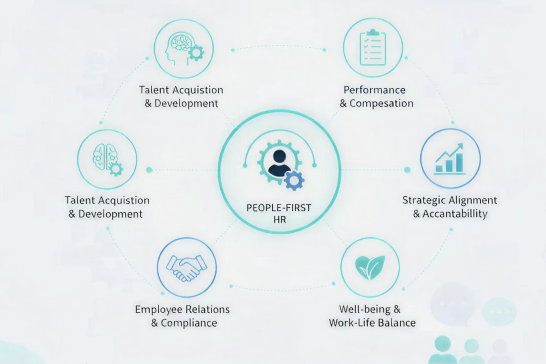
The fundamentals of human resource management are the primary elements that define how the HR department functions. These HRM fundamentals cover the handling of the people in the company, which is divided into major areas, such as:

  • Talent acquisition
  • Training and development
  • Performance management
  • Compensation and benefits
  • Workforce planning
  • Employee relations and compliance

Particularly, these Core HRM concepts serve as the basis for institutions to recruit the best candidates, nurture them, assess their performance, and keep them engaged through the creation of effective employee policies. HR goes beyond administration and serves as a business growth engine.

The basics also serve as the platform for wider principles of HRM. Without a deep understanding of recruitment, employee development, and office relations, it would be tough to implement HR principles at the right level.

Core Principles of Human Resource Management

Recognition of the principles of human resource management is essential, as they underpin every HR decision. In line with the fundamentals of human resource management, these guidelines ensure that organizations establish solid, people-centred approaches.

The essential HRM principles that any company has to abide by:

1. Fairness and Equity

Each employee is entitled to equal treatment, opportunity for personal development, and, of course, respect. Fair HR practices are the main drivers of D&I and thus help to create trust.

2. Transparency and Communication

One of the keys to a successful organization is an open communication process between all involved parties. This makes everything clear, eliminating the chance for misunderstandings, and a collaborative culture results. All this has a direct impact on organizational culture, enhancing employee satisfaction.

3. Employee Development and Empowerment

Employee training and development programs serve as a platform for skill enhancement, which in turn facilitates employee growth. Empowerment gives employees a sense of ownership, which, in turn, increases overall productivity and motivation.

4. Performance and Accountability

Helping employees have a clear understanding of what is expected of them and providing constructive feedback is the way to keep them working towards organizational goals. An efficient performance management system is the primary vehicle for accountability and recognition.

5. Strategic Alignment

The functions of HR, its policies, and strategies must support the business goals. The reason companies get along well with a long-term strategy is that HR initiatives align with it. This allows businesses to build a strong talent pool that is ready for the future.

6. Legal and Ethical Compliance

The role of HR in this respect is to implement labor laws and workplace ethics, and to ensure compliance with safety regulations. Thus, it safeguards both the staff and the employer.

7. Employee Well-being

The promotion of work-life balance, employee health, and the provision of well-being programs all benefit employee engagement and retention, too.

By applying these principles of HRM, leaders can build transparent, ethical, and growth-oriented workplaces. One can implement these ideas with the help of instruments such as WeekMate HRMS, which automates procedures, supports performance reviews, and centralizes HR data.

Why the Principles and Fundamentals of HRM Matter?

The importance of HRM principles lies in their ability to create high-performing teams. Those organizations that follow these principles:

  • Become more productive
  • Clients of the company feel trust, and that is why the loyalty of employees also increases
  • Turnover goes down
  • Employee engagement improves
  • Working together becomes a natural way

In the real world, companies that emphasize HRM principles usually experience a positive organizational culture and stronger retention. For instance, through investments in training, feedback, and recognition programs, companies can boost not only employee morale but also overall results.

There is a very strong link between the fundamentals of human resource management and the principles: the fundamentals guide the processes, whereas the principles address behavior and approach. These two together lead to continuous workforce development.

Challenges in Applying the Principles of Human Resource Management

Situation with the best intentions in place, organizations may still have to deal with challenges such as:

  • Resource-strained by either a limited budget or a short-handed HR team
  • Highly traditional mindset and a reluctance to change
  • Lack of knowledge or training in this area
  • HR department with antiquated strategies and policies
  • Communication that is far from excellent or fragmented systems

In overcoming these obstacles, the management should be working towards tiny but continuous victories. One may take the example of digital innovations such as WeekMate HRMS: by investing in such a solution, the organization simplifies not only its compliance but also its processes, and at the same time ensures transparency, making it easier to apply the principles of HRM.

The Shift Toward Tech-Driven, People-Focused HR

The changes in workplaces today are a direct result of globalization, hybrid work, and digital transformation. Therefore, the basis of human resource management has changed significantly and now goes beyond administrative work.

Some of the new HRM fundamentals are:

  • HR decisions are now based on analytics
  • Digital onboarding and performance tools
  • Automated workflows
  • Employee-centric practices

Technology is a very important factor in this case. HR solutions such as WeekMate HRMS enable organizations to automate routine work, enhance accuracy, and make HR more strategic. With this digital shift, HR teams can focus more on people and less on manual work.

Conclusion: Creating a People-First Organization

Grasping the principles of human resource management and knowing the fundamentals of human resource management are the keys to having strong, healthy workplaces. The businesses that combine good ground with clear HRM principles foster an environment where workers recognize, encourage, and drive themselves.

The fundamentals of human resource management are still evolving, but the aim remains the same – to manage people effectively and appropriately while contributing to business growth. It doesn’t matter if your organization is big or small; it is the right moment to improve your HR practices and build a people-first culture.

Innovative solutions like WeekMate HRMS empower companies to simplify HR operations and maintain compliance with these principles.

FAQs


1. What are the main principles of Human Resource Management?

The main principles of HRM include inclusiveness, strong communication, strategic alignment, employee development, responsibility and accountability, legal compliance, and ensuring overall employee well-being.

2. Why are the principles of HRM important for organizations?

Implementing these principles leads to increased productivity, higher trust, enhanced employee engagement, better retention, and improved overall organizational effectiveness.

3. What are the fundamentals of Human Resource Management?

The fundamentals of HRM include recruitment and selection, employee training and development, performance management, compensation and benefits, workforce planning, and maintaining healthy employee relations.

4. How do the basics of Human Resource Management differ from HRM principles?

The basics describe the core functions that HR is responsible for, while HRM principles explain how HR should operate—ethically, strategically, transparently, and with a focus on people.

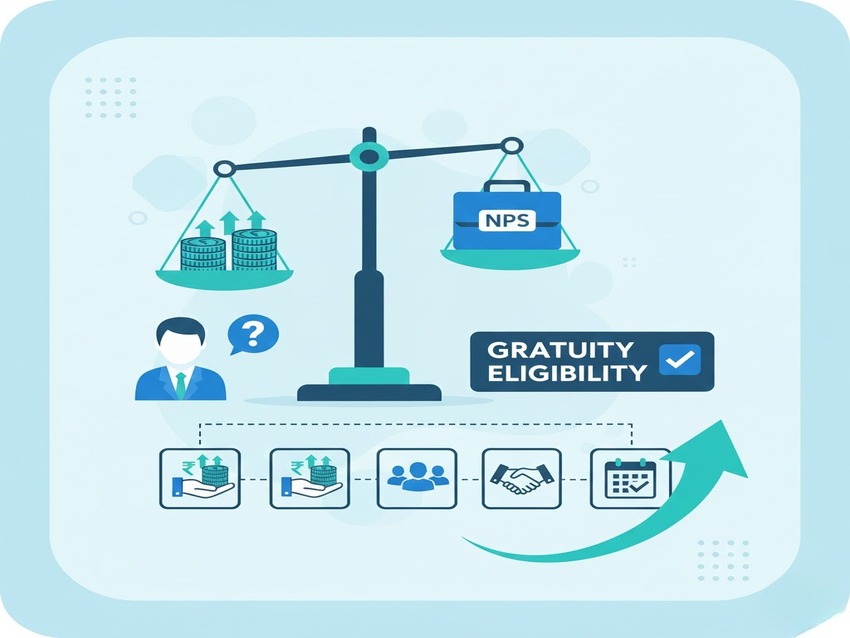
NPS Gratuity Rules on Resignation: 2025 Guide for Central Government Employees

The government has finally clarified one of the most debated questions among Central Government employees under the National Pension System (NPS): Does an NPS employee receive gratuity if they resign?

In November 2025, the Department of Pension & Pensioners’ Welfare (DoPPW) released an important Office Memorandum (O.M. No. 2/8/2025-P&PW(F)/11164) that clearly defines when gratuity is payable, when it is not, and how resignation affects eligibility.

This Article explains the updated NPS gratuity rules in a structured, easy-to-read format.

What Is Gratuity for NPS Employees?

Central Government employees who joined service on or after January 1, 2004, are covered under the National Pension System (NPS). While they do not receive old-pension benefits, they do receive gratuity, governed by:

Central Civil Services (Payment of Gratuity under NPS) Rules, 2021

These rules define:

  • Conditions for gratuity payment
  • Events that qualify as “retirement”
  • Forfeiture of service
  • What is considered technical resignation
  • Rules for absorption into PSUs or other government bodies

The 2025 circular resolves common misunderstandings about resignation.

Why the 2025 Clarification Was Issued

The government received repeated questions and RTI applications about:

  • Is gratuity payable after resignation?
  • Does five years of service guarantee gratuity?
  • Does joining another department protect service?
  • What is the difference between resignation and absorption?

To avoid inconsistent interpretations across ministries, DoPPW issued a structured clarification.

Eligibility for Gratuity Under NPS

According to Rule 22 of the CCS (Payment of Gratuity under NPS) Rules, 2021, an employee must meet two conditions:

Minimum Service Requirement

  • Must complete at least 5 years of qualifying service.

Must Retire Under Specific Conditions

Gratuity is payable only if the employee retires under these circumstances:

  1. Superannuation (normal retirement at age 60)
  2. Invalidation/Disability retirement
  3. Compulsory or premature retirement under Rule 56 or Rule 12
  4. Special Voluntary Retirement Scheme (SVRS)
  5. Absorption in PSU/Autonomous Body (Rule 32)

Completing five years alone is not enough; the type of exit matters.

Gratuity Calculation Formula

Gratuity under NPS is calculated as:

One-fourth of last drawn emoluments × Completed six-monthly service periods (maximum 16.5 times emoluments)

Component Value
Last drawn emoluments 50,000
Service completed 20 years (40 six-month periods)
Calculation 0.25 × 50,000 × 40
Gratuity 5,00,000

The Most Important Rule: Resignation Forfeits Gratuity

This is the main highlight of the 2025 clarification.

If an NPS employee resigns, all past service is forfeited and gratuity is not payable.

This rule is based on Rule 17 of the CCS (Payment of Gratuity under NPS) Rules, 2021.

What forfeiture means:

  • Employee loses all past qualifying service
  • Gratuity becomes zero
  • Years of service do not count

This applies even if an employee resigns after 10, 20 or 30 years of service.

Exceptions: When Resignation Does Not Cancel Gratuity

There are two important exceptions under Rule 17 and Rule 32.

Technical Resignation

Technical resignation is a special category of resignation that does not break service.

It applies when an employee resigns only to take up another government post with proper permission.

Conditions:

  • Proper approval obtained
  • New post is under central/state government
  • Service counts at new organisation

Benefits:

  • Past service preserved
  • Gratuity eligibility continues
  • Leave and service continuity protected

Resignation for Absorption (Rule 32)

If an employee resigns to join:

  • PSU
  • Statutory body
  • Autonomous body
  • Government-owned or government-financed organisation

and the government permits the move, it is treated as:

Deemed retirement

Result:

  • Employee becomes eligible for gratuity
  • Service until absorption is counted
  • Forfeiture does not apply

When Gratuity Is Not Payable: Complete List

Gratuity is not payable when:

  • Resignation is voluntary and normal
  • Employee resigns to join a private company
  • Employee resigns without permission
  • Employee resigns for personal reasons
  • Employee leaves service before completing 5 years
  • Employee resigns to move abroad
  • Resignation is not recognised as technical
  • Service continuity is broken

Practical Examples for Clarity

Example 1: Normal Resignation After 10 Years

Reason: Personal reasons
Result: No gratuity (service forfeited)

Example 2: Resignation to Join Another Ministry

Reason: New central govt job through proper permission
Result: Technical resignation; gratuity preserved

Example 3: Joining PSU With Government Approval

Reason: Absorption under Rule 32
Result: Employee treated as retired; gratuity payable

Example 4: Resignation to Join Private Sector

Reason: Higher salary
Result: No gratuity

Example 5: Declared Surplus and Taking SVRS

Result: Gratuity payable under Rule 22

Death Gratuity for NPS Employees

Death gratuity is independent of resignation rules.

Key points:

  • Payable even if service is less than 5 years
  • Payable regardless of resignation conditions
  • Nominees receive the benefit based on service slabs

Checklist Before Submitting Resignation

Employees should verify the following:

  • Will this resignation qualify as technical resignation?
  • Has proper permission been obtained?
  • Is the new organisation eligible under Rule 32?
  • Has the department confirmed continuity in writing?
  • Am I prepared to lose gratuity if it is a normal resignation?

Many employees lose gratuity worth several lakhs due to improper submission of resignation.

Key Takeaways from the 2025 Gratuity Clarification

The major points to remember are:

  • Gratuity is linked to retirement, not resignation.
  • Resignation results in forfeiture of service, except in specific cases.
  • Technical resignation preserves gratuity.
  • Absorption in PSU is considered retirement.
  • Completing 5 years alone does not guarantee gratuity.
  • Employees should always obtain formal permission before leaving service.

FAQ Section

1. Do NPS employees get gratuity on resignation?

No. Normal resignation forfeits past service, and gratuity is not payable.

2. What is technical resignation?

A resignation submitted to take up another government post, with proper approval. It preserves gratuity eligibility.

3. Is gratuity paid after completing five years of service?

Only if the employee retires under eligible conditions. Resignation does not qualify.

4. Does joining a PSU allow gratuity payment?

Yes, if government approval is taken and the move is treated as absorption under Rule 32.

5. Will I get gratuity if I resign to join the private sector?

No. Service is forfeited and gratuity is not payable.

6. Does death gratuity require five years of service?

No. Death gratuity is payable regardless of length of service.

7. What happens if my department refuses technical resignation?

Your resignation becomes normal, service is forfeited, and gratuity is lost.

Conclusion

The 2025 DoPPW clarification provides much-needed transparency on gratuity eligibility for NPS government employees. The most important rule to understand is that resignation does not qualify for gratuity, except in cases of technical resignation or approved absorption.

Employees planning to change careers or switch jobs should carefully evaluate the nature of their resignation and secure proper permissions to avoid losing significant financial benefits. Understanding the rules can help protect years of service and ensure that gratuity is received when eligible

Top 7 HRMS Software in India 2025

In‍‌ the business scene of the current era, it would be a considerable challenge to operate a business successfully. Manually managing human resources, payroll, and other aspects of compliance could quickly get out of hand and make this work difficult as the team grows. However, the problem is solved by HR software (also known as a Human Resource Management System), which consolidates all HR-related operations under a single roof through automation and saves time.

HR issues for small and medium-sized businesses in India may largely revolve around payroll processing, attendance recording, statutory compliance, and employee motivation. Cloud-based HR software adoption has facilitated a smooth execution of these tasks.

Companies have embraced the digital transformation in HR brought about by the pandemic and are quickly moving to technologically advanced, mobile-first, AI-enabled, and data-driven people management systems. The 2025 HR digital transformation trends continue to influence how businesses operate and position themselves significantly.

The present manual covers the best HR software in India in 2025 deeply analyzed and contrasted in terms of features, pricing, support, scalability, and user feedback alongside the real users’ reviews. In a startup, as well as in a small or medium enterprise, you will discover the appropriate HRMS tools that cater to your business requirements.

Evaluation Criteria

We evaluated each HR software on our list based on key performance parameters such as:

  1. Core HR & Payroll Processing Software
  2. Employee Self-Service (ESS)
  3. Attendance, Leave & Shift Management
  4. Recruitment & Onboarding
  5. Statutory Compliance (PF, ESI, PT, TDS)
  6. Integration Capabilities (ERP, Biometric, etc.)
  7. Mobile Access and Ease of Use
  8. Customer Support & After-Sales Service
  9. Pricing Transparency and Flexibility
  10. Indian user ratings on G2 and Capterra

We ensured, through these criteria, that our comparison presents the most trustworthy and top HR software in India, benchmarked for performance.

Top 7 HRMS Software in India (2025)

1. WeekMate HRMS

Overview:

WeekMate HRMS, developed by WeekMate, is a new-generation HR software in India that is simple and automated. It is designed for startups and small teams that value smooth and rapid onboarding.

Key Features:

  • Automated attendance and payroll
  • Employee onboarding & document tracking
  • Reports and analytics dashboard
  • Mobile app for real-time access

Pricing:

Freemium plans available; pricing based on employee count.

User Reviews:

★★★★4.7/5. 

The users praise the support and ease of use. The product’s setup is intuitive, and its favorite feature is time-saving automation.

Best For:

Innovative startups and small teams that need automated processes but want to avoid the complexity of the system.

2. Zoho People

Overview:

Zoho People is one of the attractive propositions in the extensive Zoho ecosystem, ideal for a business already leveraging Zoho Books and Zoho CRM.

Key Features:

  • Core HR, leave, and attendance management
  • Performance tracking and reporting
  • Integration with multiple Zoho apps and third-party tools
  • AI-based insights and workflows

Pricing:

₹60–₹192 per user/month (plan dependent).

User Reviews:

Rated ★4.5/5 for scalability and affordability. A handful of users report that the learning curve is a bit steep.

Best For:

Corporations that utilize the Zoho suite and require co-functional integration across platforms.

Read Also : WeekMate HRMS vs Zoho People: Detailed Comparison

3. Keka HR

Overview:

Keka is one of the top HR software in India, with employee experience as the main focus.

Key Features:

  • Payroll, performance, and recruitment management
  • Integration with accounting and biometric tools
  • Intuitive dashboards and analytics

Pricing:

The pricing plan starts at ₹17,600/month for up to 50 employees.

User Reviews:

Keka has received a user rating of 4.6 out of 5 for its excellent user experience and high payroll accuracy.

Best For:

This solution fits perfectly with medium and small businesses growing quickly, whose needs are complex, and who look for robust, feature-rich HR software solutions.

Read Also : WeekMate HRMS Vs Keka: Which is a Better Option for Businesses

4. GreytHR

Overview:

GreytHR is a solid solution for the human resource software for small business market and a dependable partner to 20,000+ Indian businesses.

Key Features:

  • Payroll, leave, and compliance management
  • State-wise statutory templates
  • Employee self-service portal and mobile access

Pricing:

₹3495//month for up to 50 employees is the starting point; small teams can also use a free plan.

User Reviews:

★★★★4.4/5. Strong compliance and quick, responsive customer support are the reasons people like GreytHR.

Best For:

Businesses that deeply value payroll precision and ‍‌compliance.

Read Also : WeekMate HRMS vs GreytHR Comparison

5. HR One

Overview:

HR One is a Human Resource Management System of enterprise-grade quality, developed for large organizations and rapidly growing enterprises.

Key Features:

  • More than 14 modules, including payroll, performance, and analytics
  • Automation of work processes and AI dashboards
  • Integration of Mobile and ERP

Pricing:

Custom pricing based on the organization’s size and selected modules.

User Reviews:

It is rated 4.5/5 stars for its all-in-one suite and detailed reports.

Best For:

Corporations that require feature-rich and scalable HRMS tools.

Read Also : HROne Alternative

6. Kredily

Overview:

Kredily stands out as the first free HR and payroll software in India, which is a good fit for startups and micro-businesses.

Key Features:

  • Attendance, payroll, and employee directory
  • HR alerts via WhatsApp notifications
  • Biometric device integration

Pricing:

A plan free forever; paid add-ons are available.

User Reviews:

It is rated 4.3/5 stars for its pricing and ease of use.

Best For:

Startups and small businesses are looking to implement HR automation cost-effectively.

7. FactoHR

Overview:

FactoHR is one comprehensive cloud-based HR software that provides easy automation, compliance, and workforce analytics.

Key Features:

  • Core HR, payroll, performance, and mobile app
  • Multi-level approval workflows and analytics
  • Full compliance with Indian labour regulations

Pricing:

₹50–₹150 per employee/month (based on modules).

User Reviews:

It is rated 4.6/5 for quick support and substantial compliance.

Best For:

Mid-market businesses that are on the path to growth and want modular and scalable hr tools.

Read Also : WeekMate HRMS vs FactoHR

Comparative Summary Table

Software Best For Pricing Model Key Strength Avg. Rating
WeekMate HRMS Startups / SMEs Freemium Ease of Use + Automation ★4.7
Zoho People Integrated Ecosystem ₹60–₹350/user/month Scalability + Integration ★4.5
Keka HR Growing SMEs ₹6,999+/month Experience + Payroll ★4.6
GreytHR Compliance Focus ₹25/employee/month Payroll + Compliance ★4.4
HR One Enterprises Custom All-in-One HR Suite ★4.5
Kredily Startups Free / Paid Add-ons Cost + Simplicity ★4.3
FactoHR SMBs ₹50–₹150/employee/month Compliance + Automation ★4.6

Final Verdict

The best HR software in India is dependent on the business size and goals:

  • Startups: WeekMate HRMS or Kredily — easy, cheap, and fast to set up.
  • SMEs: Keka, GreytHR, or FactoHR — automation, compliance, and support at their best.
  • Enterprises: HR One and Zoho People — data-driven, scalable, and highly integrative.

Don’t base your choice on the HR software list entirely on price; consider the reliability of the product, after-sales service, data security, and whether it integrates with your existing tools. The ideal solution will not only streamline your HR processes but will also support them in the long run by providing better scalability and improving the talent management system.

If your small business is set for expansion, then committing to an efficient HR software would be your next smartest move. First, check out the free demos or trial versions of the options mentioned earlier to assess usability, support quality, and how well they can be integrated into your current workflows.

Do not let your HR department sink in a sea of paperwork; instead, transform manual HR tasks into an automated system that drives employee engagement, compliance, and decision-making!

Frequently Asked Questions


1. What is HRMS software?

An HRMS is a Human Resource Management System that automates tasks related to payroll, attendance, joining, onboarding, and compliance.

2. Why do companies need HRMS software?

By automating HR tasks, the system drastically reduces manual work, helps eliminate errors, and thereby saves time, increasing overall productivity.

3. How do I get the best HRMS software in India for 2025?

Compare prices, integration features, ease of use, and customer support before deciding.

4. What is the best HR software in India for 2025?

WeekMate HRMS, Zoho People, Keka HR, GreytHR, HR One, Kredily, and FactoHR are the top HR software in India for 2025.

5. Is HRMS suitable for small and medium businesses?

Definitely. Most of the contemporary HR software in India platforms are built for SMEs and provide scalable plans and affordable automation.

Why Small Businesses Need HR Management Software Now More Than Ever

In 2025, small businesses will not be able to grow sustainably without a systemized HR function. Manually recording attendance, having a fragmented payroll, using spreadsheets for compliance and admin tasks, and having these managed by the founder are activities that consume hours, increase the risk of errors, and slow the hiring process. 

Imagine a specialty coffee roasting company with 19 employees, baristas rotating shifts at three stores: a small warehouse team packing ecommerce orders, one freelance designer in another country, a seasonal intern, and a founder who is doing the payroll in between client meetings. HR is happening in Notion pages, several Google Sheets, WhatsApp group chats, and a Dropbox folder.

This is the modern reality: small companies operate like mini multinationals.

This is where HR management software is no longer just corporate tech but now infrastructure for the smallest of teams. Why? Because today, work complexity is not based on headcount; it’s based on variables.

Employees expect transparency. Founders expect speed. Regulators expect compliance. And this is why HR software is important: it’s not an abstract philosophical question — it’s a survival and performance reality.

In this article, we will walk you through how the world of HR has fundamentally changed, what a modern human resource management system actually includes, specific pain points small companies struggle with daily, the direct value of automating HR, how to pick the right system, how to calculate the ROI, and why small companies that embrace HR tech early build the most operationally efficient teams globally.

The Changing Landscape of Small Business HR

Manual HR is not just outdated; it creates friction and legal exposure.

Traditional HR was designed for office-only teams. Today, small business teams are hybrid, async, distributed, and cross-border by default. Remote collaboration is not an enterprise idea; it is standard across micro companies.

Regulation has gotten heavier now. Employees compare their experience with the software-driven experience they see in big brands. Employee expectations have modernized faster than small business processes.

That’s why HR technology for small businesses is growing aggressively in adoption, because small businesses discovered that spreadsheets do not scale.

Global trendlines are simple:

Small teams → high complexity → automation required.

That is the core of digital HR transformation: replacing manual friction with flow. It’s not digital theatrics.

What is HR Management Software?

HR Management Software is a digital tool that helps organizations manage employee data, payroll, recruitment, performance, and other HR processes. It streamlines administrative tasks and improves efficiency in workforce management.

A modern human resource management system includes:

  • employee databases
  • payroll calculation + payslip generation
  • attendance and time tracking
  • Scheduling and Shifts
  • onboarding flows with digital docs
  • performance review
  • Analytics and Reporting

It’s not a file storage system.

It’s an employee management system that connects every element of the employee life cycle.

For lean teams, that’s the difference between being reactive all day and proactive all quarter.

Most startups start with lightweight HRMS tools for small businesses, which then scale up as headcount and complexity grow.

Common HR Challenges Faced by Small Businesses

The most serious HR problems in small teams aren’t the dramatic ones; they’re the subtle ones.

  • No dedicated HR staff; the founder becomes the HR bottleneck
  • Payroll mistakes that destroy employee trust
  • Sloppy, sluggish onboarding leads to poor results for relationships.
  • Without formal performance tracking, feedback will be subjective.
  • Attendance and hours tracked in a way that no auditor would accept
  • No operational scale, every new hire increases chaos

This, then, is the silent cost small companies pay. People-management friction is invisible—until the day it becomes painful enough to threaten retention.

How HR Management Software Solves These Problems?

The problems of modern HR software for small businesses are solved with brutal simplicity:

Centralization

One platform → one source of truth.

Automation

Low-value repetitive tasks occur without human intervention.

This is one of the direct benefits of HR software: a reduction of unproductive labor hours.

Compliance

Data is stored in an organized and auditable manner.

Analytics

Productivity, payroll costs, and churn risk emerge from the data.

Self Service

Employees manage their own data and requests.

These are precisely the HR software features that modern founders rely on to turn the administrative grind into clean systems.

Now we see the deeper truth behind why HR software is important. It doesn’t replace HR but removes the chaos around HR.

Key Benefits for Small Businesses

Here are the top direct benefits of HR software:

  • Time is released back to the founders and managers
  • Lower administrative costs since automation replaces hours
  • Fewer payroll mistakes and disputes
  • Easier growth — because systems scale better than people
  • Increased employee satisfaction due to transparency being a retention force.

Example Situation:

A 14-person architecture firm automated attendance and contract management with HR tech, freeing up ~16 hours per month internally. Their unexpected discovery: better onboarding → fewer early turnover exits.

Small companies underestimate it: the loss of talent is the costliest hidden operational cost.

Choose the Right HR Software for Your Business

When evaluating HRMS for small-business solutions, don’t start with features; start with friction.

What is that ONE recurring HR friction in your company that annoys you most?

That friction should drive tool selection.

Then consider:

  • ease of use and low onboarding training time
  • transparent pricing
  • scalability potential
  • integrations with payroll and communication tools
  • data security protections
  • quality of support

This is the core of selecting the right HR software for small businesses: it needs to simplify the NOW without blocking the NEXT.

The ROI of HR Management Software

Cost savings are simple: automation saves time. Time = money.

But the deeper ROI is strategic:

  • Better onboarding = quicker employee productivity curve
  • Better clarity = fewer political frictions
  • Better record-keeping = stronger resilience

That is the macro value of a good employee management system — it is operational leverage.

Optional Add-ons

Checklist: 5 Signs You Need HR Software

  1. You track hours manually
  2. Payroll takes over 2 hours per month
  3. PTO approvals are informal.
  4. You cannot view workforce performance patterns.
  5. Employee data lives in too many places
HR Software Infographic Idea
Manual HR fragmentation
Automated HR flow

This single contrast is enough to explain the business case for automation. 

Bonus: Best HR Tools for Small Teams in 2025

Massive feature lists are not the characteristics of the best HR tools for lean teams.

The best ones are those that have strong workflows, a clean UI, frictionless onboarding, and useful integrations that make the work week feel lighter, not more complicated.

WeekMate is a powerful standout in that category.

It was developed with the small-team scenario: founders who don’t have time for enterprise-software complexity, but still need enterprise-grade structure. WeekMate offers neat attendance tracking, automated payroll logic, straightforward onboarding flows, employee self-service, and reporting that you can actually understand without being a data scientist.

Simply put: WeekMate is centered on flow—not feature bloat.

Small companies that really want to achieve real outcomes (not dashboards for the sake of dashboards) — WeekMate is the one that gets their ‍‌attention.

Conclusion

Small business HR used to be based on good intentions. Now it must be based on systems.

Modern teams are distributed and fluid, expectations are higher, and complexity is objective even with a small headcount.

This is why the future belongs to small companies that implement HR management software early, not late. After all, modern operations require digital HR transformation, and the best results come when small teams put in place a proper structure before chaos becomes permanent.

Frequently Asked Questions

1. What is HR management software, and how does it work for small businesses?

It is a software platform that combines employee data, payroll, time tracking, scheduling, onboarding, and performance into a single harmonious system.

2. Why is HR software so crucial to small business owners in 2025?

If you manage HR manually, you will only end up with disorder, mistakes, and wasted time. Automation will provide more orderly, compliant, and scalable processes.

3. How can HR management software help save time and decrease costs?

By automating repetitive tasks like payroll, attendance, and approval workflows, while simultaneously discontinuing manual data duplication, which is very time-consuming.

4. What features should small businesses look for in HR software?

Simple onboarding, strong automation, reporting analytics, integrations, and data privacy.

5. Is HR Management Software affordable for startups and small enterprises?

Yes, most of the modern tools are subscription-based and cheaper than the cost of 5 hours of manual HR work.

WeekMate HRMS vs GreytHR: Pros, Cons & Best Fit for Your Business

For any business today, an HRMS has become an indispensable tool, whether in the United States or India. From automation of payroll to management of attendance and compliance, the use of technology in HR has taken center stage in enhancing workplace productivity and employee satisfaction.

But with so many options, choosing the right platform becomes difficult. The two names that often come up in conversation are WeekMate HRMS and GreytHR. Both are reliable cloud-based HRMS solutions that help companies to streamline and automate their routine HR activities.

In this article, we will dive into details about the differences between WeekMate HRMS vs GreytHR regarding features, pricing, pros, and cons. We will also discuss some GreytHR competitors and alternatives that could better fit your small business needs. Whether you want payroll automation, attendance tracking, or employee self-service, this detailed comparison will help you make a decision.

Overview of WeekMate HRMS

WeekMate HRMS is a new entrant in the HR tech space, built for small and medium-sized businesses that need an easy, intuitive, and affordable way to manage their teams. It’s part of the WeekMate suite and offers all-in-one functionality without the complexity of enterprise software.

Key Features

  • Payroll Management: The process of salaries and deductions is fully automated, and payslips are generated automatically. After that, the system is accountable for ensuring correctness and transparency throughout the payroll process.
  • Attendance & Leave Tracking: Through this module, an employee’s daily attendance and time-off requests are monitored and instantly updated in the records. The leaves can be approved or rejected by managers with the help of the dashboard. Employees can also easily view their leave balances.
  • Employee Self-Service Portal: The staff can use this portal to view their personal records, attendance, payslips, and leaves, thereby relieving HR of the manual burden.
  • Compliance Management: Is helpful to the HR teams in meeting corporate standards and preparing for audits due to fewer internal operational challenges.
  • Mobile App Access: Offers flexibility to employees to use the platform from anywhere and at any time, making it a perfect fit for hybrid or fully remote teams.

Best Suited For

WeekMate HRMS should appeal particularly to small and mid-sized businesses and, in particular, service-based or hybrid teams where simplicity is preferred over complex configurations. Its clean design, quick setup, and ability to perform seamless, custom migrations make it appealing to startups and growing firms without a large HR department.

Overview of GreytHR

GreytHR is among the top HR management software providers in India, with over 30,000 customers worldwide. It is a seasoned, cloud-based HR and payroll management system for companies that need support with compliance and are willing to make their processes more efficient through automation.

Main Features

  • Payroll Processing & Compliance: GreytHR will automate salary processing, tax deductions, and statutory filings of PF, ESI, and TDS. A corporation operating across diverse locations is guaranteed full legal compliance, which can be quite important.
  • Attendance & Leave Management: It integrates with biometric systems and provides thorough monitoring of attendance, overtime, and time-off ‍‌policies.
  • Employee Database Management: Storing all employee records — from hiring to exit — in one place makes HR operations more organized and transparent.
  • HR Analytics & Reporting: Powerful dashboards and analytics tools providing insights into performance, payroll summaries, and metrics on the workforce.
  • Employee Self Service & Mobile App: Employees can view payslips, apply for leave, and view attendance through the mobile app, hence increasing engagement and efficiency.

Best Suited For

GreytHR targets‌ the SME segment, which needs a full-fledged HR management software with advanced compliance features. It would be perfectly suitable for businesses with more than 100 employees, several branches, or a complicated payroll management system.

Feature Comparison: WeekMate vs GreytHR

Feature WeekMate HRMS GreytHR
Payroll Management Automated payroll, easy setup Deep compliance coverage, multi-state tax rules
Attendance and Leave Management Real-time tracking, work-from-home options, Biometric integration and detailed reports
Employee Self-Service Easy-to-use portal and application Powerful ESS with mobile access
Compliance & Reporting Basic reporting and policy tracking Advanced statutory compliance and analytics
Integrations Easy configuration, easily customizable modules Hundreds of integrations and plugins
Best For Startups and small teams Growing SMEs and compliance-heavy industries

Payroll Management

GreytHR leads the pack in comprehensive payroll and compliance automation, inclusive of tax and labor law compliance. On the other hand, WeekMate is simpler but adequate for small teams with simple salary structures.

Attendance & Leave Management

Both offer strong features, but GreytHR delivers greater power with its biometric integration and multi-location employee attendance tracking for larger workforces. In contrast, WeekMate delivers a smooth user experience for remote or flexible workspaces.

Employee Self-Service

Clean and minimal, the WeekMate ESS portal perfectly addresses common needs every day, while GreytHR offers an app with deeper functionalities like downloadable payslips, document storage, and workflow approvals.

Compliance & Reporting

What makes GreytHR stand out is its rich compliance automation with audit-ready reports. In contrast, WeekMate offers standard internal policy compliance suitable for smaller firms.

Price Comparison

WeekMate HRMS Pricing

WeekMate uses a flexible pricing model that focuses on being very budget-friendly. It’s available either as an outright purchase or a simple subscription, depending on the package. It is designed to meet the expectations of small to mid-sized budgets. Additionally, the company offers custom, seamless migration as part of its setup support, which is really great for businesses transitioning from other HR tools.

Pricing for GreytHR

GreytHR is offered on a per-employee monthly subscription model. Plans start at roughly ₹35 per employee per month, which is about $0.40, and several levels depend on both features and company size. Even if this is considered a recurring cost, the customer is also entitled to regular updates and ongoing support.

Cost-Effectiveness

  • Best for startups and small teams: WeekMate HRMS
  • Best for growing SMEs and enterprises: GreytHR

If you need full statutory compliance and complex payroll, GreytHR delivers more value. If cost control and simplicity are more important, WeekMate is a better fit.

Pros and Cons

WeekMate HRMS

Pros:

  • Simple and intuitive interface
  • Quick setup, suitable for small businesses.
  • Affordable and one-time pricing
  • Strong focus on employee self-service and attendance tracking
  • Great option over other GreytHR alternatives

Cons

  • Limited advanced compliance features
  • Smaller user base, fewer integrations with third-party solutions
  • Reporting tools, compared to GreytHR, are basic.

GreytHR

Pros:

  • Highly reliable payroll and compliance automation
  • Trusted by thousands of SMEs across India
  • Robust reporting and analytics features
  • Mature cloud-based HRMS solutions with a mobile app

Cons:

  • Ongoing subscription cost may be higher for startups
  • Interface is outdated compared to modern HR tools.
  • Some advanced configurations may require technical help.

User Experience & Support

Both WeekMate HRMS vs GreytHR fare very well in terms of ease of use, but they target different types of audiences.

  • Ease of Setup: The setup at WeekMate is fast and with custom and seamless migrations. GreytHR may take a bit longer to configure since it houses more features.
  • Customer Support: GreytHR provides extensive onboarding, documentation, webinars, and dedicated support. For WeekMate, direct support and guided onboarding are available to new users.
  • Training: Both offer onboarding support, but the larger GreytHR ecosystem will provide more training for customers.

Ideal Use Case

When to Choose WeekMate HRMS

  • Small or growing businesses with fewer than 200 employees
  • Companies that want affordable and user-friendly HR software for small businesses 
  • Hybrid or remote teams that need attendance and leave management
  • Startups in search of flexible, modular HR tools

When to Choose GreytHR

  • SMEs or large organizations with complicated payroll structures
  • Companies that require full Indian statutory compliance
  • Businesses that work in multiple locations
  • Companies with advanced analytics, reporting, and integration requirements

Conclusion & Recommendation

In a comparison of WeekMate HRMS vs GreytHR, the deciding factor is your business size, budget, and HR complexity.

If your company needs a simple, no-frills, low-cost solution for attendance, payroll, and employee self-service without unnecessary extras, WeekMate HRMS would be the right fit as one of the top GreytHR competitors.

In​‍​‌‍​‍‌​‍​‌‍​‍‌ case you are in charge of a bigger labor force, are affected by several state rules, or require an advanced payroll automation with built-in compliance, then GreytHR is definitely the leader.

Pick the one offering you the most flexibility, scalability, and automation your HR operations demand.

Frequently Asked Questions

1. Can WeekMate HRMS manage compliance across multiple states?

While it does provide general compliance and audit features, multi-state statutory management is better covered by GreytHR.

2. Is there a mobile application for GreytHR?

Yes, through GreytHR’s mobile application, employees can access their payslips, request leave, and even record their attendance.

3. Which of the two is more affordable for small-scale businesses or startups?

It would be more appropriate to say that WeekMate HRMS is a more affordable option and can be a good choice for a startup or a small business that has a limited budget for HR.

4. Do both platforms offer free trials?

Yes, both WeekMate HRMS and GreytHR welcome potential customers with free demos or trial versions that give access to feature testing before a decision is made.

WeekMate HRMS vs SuperWorks: Which HR Software Fits Your Business Best in 2025?

As businesses continue to grow even in 2025, the HR functions have never been so complicated. Scheduling payroll, attendance, onboarding, or engagement manually is no longer an option, especially for startups and SMEs that require scalability and effectiveness. That is when modern HRMS tools for startups and SMEs are introduced, changing the way companies organize their people’s business.

Among the numerous options available, WeekMate HRMS and SuperWorks are two of the strongest players in the HR automation market. Both offer a range of HR software comparison features to make HR tasks easier, but each is oriented toward somewhat different business requirements.

In this post, we’ll have an extensive HR software comparison on WeekMate HRMS vs SuperWorks to assist you in determining which platform best suits your business’s objectives, size, and budget, and find out which could be the best HRMS for businesses in 2025.

Quick WeekMate HRMS vs Superworks Comparison Table

Feature WeekMate HRMS SuperWorks
Deployment Cloud-based Cloud & Mobile
Core HR Functions
Payroll Management Advanced automation Basic payroll tools
Employee Self-Service
Pricing Affordable for SMEs Tier-based pricing with add-ons
Performance Tracking System AI-driven insights Manual review tools
Integration Extensive (Slack, Google Workspace, etc.) Limited integrations

WeekMate HRMS Overview

WeekMate HRMS is a comprehensive HR automation platform that enables a business to operate in an agile manner today. It is meant to streamline HR management, smarten it up, and connect it.

Highlights include:

  • AI-based HR automation: WeekMate is an efficient way of handling payroll, compliance, and employee data with reduced involvement.
  • Hassle-free payroll and compliance: Computer-generated processing of wages, taxes, and mandatory compliance.
  • Employee engagement software: Surveys, rewards, and real-time feedback help create a motivated team.
  • Connection to task and project management: Ideally suited to teams that love to work together and keep track of their productivity under a single cover.

Best applied to: Start-ups, growing organizations, and remote workers who are interested in affordable and scalable HRMS tools for startups and SMEs.

Overview of SuperWorks

SuperWorks is an industry favorite, an employee management software that makes the HR processes mobile-first and straightforward. It unites payroll, attendance control, and project control in a single, easy-to-use interface.

Key features include:

  • Facilitated HR and payroll: Manage employee data, attendance, and payroll on one dashboard.
  • Mobile-first approach: HR features can be accessed by the managers and employees remotely.
  • Project tracking and performance reports: Allows the HR personnel to monitor employee productivity on the fly.

Ideal For: Medium-sized businesses and human resource professionals that need onboarding management software with high mobile usability.

Feature-by-Feature Comparison

Feature Area WeekMate HRMS SuperWorks Verdict
Payroll & Compliance Management Offers advanced payroll automation with accurate tax calculations, bonuses, deductions, and compliance with local labor laws. Automatically updates with regulatory changes. Provides basic payroll tools, suitable for simpler salary structures but may require manual oversight for compliance-heavy industries. WeekMate HRMS leads with higher accuracy and automation.
Attendance & Leave Management Includes biometric and geolocation tracking, ideal for hybrid and field-based teams. Real-time attendance insights available via dashboard. Focuses on mobile-based attendance tracking and simple leave approval workflows. SuperWorks fits mobile-first teams; WeekMate suits businesses needing detailed analytics.
Employee Engagement & Performance Tracking Features AI-powered analytics for performance tracking, engagement metrics, and real-time feedback to identify top performers. Uses traditional appraisal systems with manual input and scheduled reviews. WeekMate HRMS offers deeper insights and proactive performance management.
Onboarding & Document Management Automates the entire onboarding lifecycle, from offer letters to document collection and task assignments. Ideal onboarding management software for growing teams. Provides basic onboarding checklists and file storage, better for smaller teams. WeekMate HRMS delivers a more complete and automated onboarding experience.
Integration & Customization Supports integration with third-party tools like Slack, Google Workspace, and Trello for seamless workflows and scalability. Limited integrations and customization options. WeekMate HRMS offers superior integration flexibility.

Pricing & Scalability

  • WeekMate HRMS: With its open-pricing model and SME-preferred pricing plans, WeekMate enables companies to pay for only the bare essentials they need. This makes it a highly cost-effective SuperWorks alternative and one of the best HRMS for businesses looking to scale affordably.
  • SuperWorks: Practices tiered pricing, which has higher features as add-ons.

Verdict: WeekMate is more budget-friendly for startups and small businesses, while SuperWorks is better suited for companies with larger budgets.

Customer Support & User Experience

  • WeekMate HRMS: Users frequently appreciate its user-friendly interface and responsive customer care. The onboarding team facilitates rapid workflow setup for companies, making transitions from manual processes smooth.
  • SuperWorks: Offers regular support but may sometimes take longer to respond, per user reviews.

Verdict: WeekMate provides a better user experience and quicker support for new customers.

Pros & Cons Summary

WeekMate HRMS Pros:

  1. AI-powered automation
  2. Cost-effective for startups and SMEs
  3. Simple and clean interface
  4. Robust integrations and analytics

WeekMate HRMS Cons:

  1. Less offline availability

SuperWorks Pros:

  1. Ideal for mobile-first HR teams
  2. Good attendance and project tracking functionalities

SuperWorks Cons:

  1. More expensive for small teams
  2. Fewer integration choices

Which HRMS Software to Choose?

In order to decide between WeekMate HRMS vs SuperWorks, consider your business model, staffing level, and growth level.

Choose WeekMate HRMS if:

  • You are a startup, an SME, or a growing company in need of low-cost automation.
  • You desire intelligent analytics, payroll precision, and the ease of integration with other equipment.
  • You appreciate scalability and an HR automation platform that matches your business.

Choose SuperWorks if:

  • You are using an intermediate-sized team whose HR activities are mobile-centric.
  • You desire a simple attendance and payroll management system.

Final Verdict

Both WeekMate HRMS and SuperWorks are viable HR solutions that suit various requirements.

WeekMate HRMS is a decisive winner for employee management software if you are a startup or SME that needs automation, affordability, and flawless scalability. Its AI-based insights, intelligent payroll system, and profound integrations serve as a solid option for the best HRMS for businesses in 2025.

Conversely, if your company is based on mobile workflows or requires quick onboarding and attendance registration, SuperWorks is still an excellent option.

Final Thought:

Smart automation, agility, and employee experience are the themes of HR technology in 2025. WeekMate HRMS offers all three, making it a leading SuperWorks alternative.

Learn today how WeekMate HRMS can drive your HR processes.

Frequently Asked Questions

Q1. Is WeekMate HRMS more affordable than SuperWorks?

Yes. WeekMate HRMS offers transparent pricing plans that are perfect for startups and SMEs, while SuperWorks pricing follows a tiered model with additional costs for premium features.

Q2. Which application has stronger HR automation capabilities?

WeekMate HRMS stands out with its AI-driven automation, advanced analytics, and features tailored for fast-growing businesses.

Q3. Can the two software programs be integrated with project management software?

WeekMate can be effortlessly integrated with applications like Trello and Google Workspace, while SuperWorks offers limited integration support.

Q4. Which HRMS is most suitable for remote or hybrid teams?

WeekMate HRMS is better suited for distributed and remote teams due to its cloud-based architecture, real-time attendance tracking, and payroll automation.

WeekMate HRMS vs FactoHR: Which HR Software Is Better for Modern Workforce Management?

Businesses are moving faster to digital change than ever before in 2025, and HR is no exception. Intelligent and automated HRMS platforms are replacing manual spreadsheets, time-and-attendance registers, and siloed payroll systems, and are simplifying workforce management. Companies seek fast, data-driven solutions for payroll and compliance, as well as for performance management, to support their people operations.

Two names often surface in the conversation: WeekMate HRMS and FactoHR. While both are powerful HR automation tools for SMEs and enterprises, their focus and user experience differ significantly.

In this WeekMate vs FactoHR comparison, we’ll explore how each platform handles HR operations, what kind of businesses they suit best, and which might be the better fit for your organization in 2025.

If you are considering the best HR and payroll software for your company, this comprehensive HR software comparison will assist you in making an educated decision.

Platform Overview

WeekMate HRMS: Streamlining People Management

WeekMate HRMS is a contemporary, employee-focused HRMS that streamlines all aspects of people management. From automating payroll to enhancing engagement, it enables HR teams to work smarter without compromising user experience.

Key strengths:

  • Streamlined payroll and attendance tracking tools
  • Automated leave and compliance management
  • Real-time employee engagement and performance tracking
  • Workforce analytics (AI-based)

Best use: Start-ups, SMEs, and mid-sized companies that require low-cost, yet flexible workforce management solutions that scale with growing organizations.

FactoHR: An Ultimate HR and Payroll System

FactoHR is a professional HR and payroll system designed to automate processes and ensure compliance. It is highly functional and therefore well-suited to organizations with larger, more intricate HR setups.

Key strengths:

  • Complete payroll and salary administration
  • Sophisticated compliance reporting and statutory administration
  • Onboarding, offboarding, and document tracking.
  • Analytics and KPI-based performance assessment of the workforce.

Best suited to: Mid-to-large companies that require high configurability and extensive reporting from their HRMS system.

Feature Comparison: WeekMate HRMS vs FactoHR

Feature WeekMate HRMS FactoHR
Payroll & Salary Management Yes Yes
Leave & Attendance Tracking Automated Automated
Employee Self-Service Portal Modern UI Available
Onboarding & Offboarding Streamlined Comprehensive
Performance Management Goal-based KPI-based
Compliance & Statutory Included Advanced
Mobile App Yes Yes
Integration Support Slack, biometrics, payroll tools ERP, accounting tools

This comparison of HRMS platforms shows that both tools include the basic HR essentials but vary in terms of usability, flexibility, and the target audience.

User Interface & Experience

WeekMate HRMS offers a more modern, user-friendly experience. The interface is clean and easy to navigate, making it accessible to HR professionals and managers who might not be tech-savvy. The installation process needs minimal training, which is appropriate for small HR departments, and it also acts as an HR Knowledge Hub for quick access to HR resources and best practices.

FactoHR, however, has a feature-rich platform but is associated with learning. Its layout is better suited to enterprises that depend on massive data analytics, reporting, and compliance monitoring. Despite its strength, it can take new users a long time to acclimatize to it.

Verdict: WeekMate is more approachable and less advanced, whereas FactoHR is more comprehensive and offers more advanced controls.

Pricing & Plans

WeekMate HRMS:

WeekMate adopts an open, adaptive, and usage-based pricing policy, where companies pay only for what they use. It is cost-effective for start-ups and SMEs seeking a solid solution without the need for massive initial investments.

FactoHR:

FactoHR offers organization-specific pricing plans based on the size of the organization, the number of staff, and the modules. It is best suited to companies that need a personalized package that has superior functionality.

Value Comparison:

  • WeekMate HRMS: Suitable for small to mid-scale enterprises that value affordability.
  • FactoHR: Ideal for large enterprises focused on scalability and compliance depth.
  • If you’re looking for a FactoHR alternative that’s both budget-friendly and feature-rich, WeekMate HRMS is an excellent choice.

Integration & Automation Capabilities

WeekMate HRMS:

WeekMate can be used with Slack, Google Workspace, and other payroll and attendance tracking tools. It is also compatible with biometric attendance systems and can automate routine HR tasks to facilitate work across the departments.

FactoHR:

FactoHR is integrated with ERP tools, accounting solutions, and legacy HR applications. Its automation prowess lies in handling compliance-laden, multi-location organizations.

Automation Edge:

WeekMate prioritizes ease and quickness of implementation, while FactoHR prioritizes enterprise-level automation and compliance monitoring.

Scalability & Customization

WeekMate HRMS:

Extremely customizable, WeekMate enables HR teams to tailor workflows to their evolving needs. It’s adaptable enough for companies that anticipate growth, without requiring them to rebuild their HR system.

FactoHR:

Designed for large enterprises, FactoHR is highly customizable and configurable, but takes time to set up.

Verdict:

WeekMate is the best FactoHR competitor for expanding teams seeking plug-and-play scalability, whereas FactoHR is best for enterprises requiring comprehensive customization across multiple departments.

Customer Support & Training

WeekMate HRMS:

WeekMate’s support team is recognized for its timely chat support and customized onboarding. The organization provides orchestrated setup sessions that help HR teams get up and running quickly, minimizing implementation friction.

FactoHR:

FactoHR has a wide range of knowledge, live support, and structured training courses. Regardless, onboarding can be more time-intensive in smaller organizations because the software is more complex.

Verdict:

WeekMate provides faster onboarding and more customer-specific support, whereas FactoHR offers rich, enterprise-oriented training materials.

Pros and Cons Summary

Platform Pros Cons
WeekMate HRMS Easy to implement and intuitive

Cost-effective for SMEs and startups

Good employee experience and engagement focus

Less depth in compliance for enterprises


FactoHR Strong compliance and statutory management

Suitable for large companies

Extensive payroll and reporting modules

Complicated for small HR departments

Needs setup time and training

Notably, WeekMate HRMS is a strong FactoHR competitor for small companies seeking simplicity, whereas FactoHR remains a strong solution for large companies seeking end-to-end compliance management.

So What HR Software is the Right Choice?

The difference between WeekMate HRMS vs FactoHR is based on the size and complexity of your organization.

Choose WeekMate HRMS if:

  • You’re a startup or SME seeking easy automation.
  • You value affordability, usability, and quick setup.
  • You need integrated HR automation tools for SMEs to handle payroll, attendance, and engagement in one platform.

Choose FactoHR if:

  • You manage a large enterprise with complex HR processes.
  • You require advanced compliance management and detailed analytics.
  • You need a central system that can expand by geography and department.

Overall, WeekMate HRMS would be better suited to growing companies that prioritize employee experience and flexibility over FactoHR, which is better suited to organizations that require control and advanced solutions for compliance issues.

Conclusion

WeekMate HRMS and FactoHR are both remarkable workforce management solutions, with each having its own strengths.

If you’re an SME or startup looking for an intuitive, affordable, and all-in-one HR solution, WeekMate HRMS is the apparent winner when you are an SME or startup and need an easy to use, low cost, and full-function HR solution. It streamlines payroll, attendance, and performance control and maintains employees and HR departments at work.

Nonetheless, when your company is larger, requires detailed reporting, legal compliance, and an enterprise setting, FactoHR is an excellent option.

To sum up, the WeekMate vs FactoHR comparison reveals that both tools are category leaders, yet WeekMate HRMS is the smarter, simpler, and cheaper option for progressive companies in 2025.

Discover how WeekMate HRMS can revolutionize your HR functions with wiser automation today!

Frequently Asked Questions

1. Is WeekMate HRMS suitable for large enterprises like FactoHR?

WeekMate HRMS is primarily designed for startups, SMEs, and mid-sized businesses that need quick, easy-to-use HR automation. While it can handle growing teams effectively, huge enterprises with complex compliance and reporting needs may find FactoHR’s enterprise modules more suitable.

2. What makes WeekMate HRMS a good FactoHR alternative for 2025?

WeekMate HRMS combines modern design, affordability, and AI-driven analytics, making it a great FactoHR competitor for smaller businesses. It offers end-to-end HR automation — from payroll to performance tracking without the steep learning curve or high setup costs of enterprise-level platforms.

3. How do WeekMate HRMS and FactoHR differ in employee engagement features?

WeekMate HRMS includes built-in engagement tools, such as performance insights, feedback loops, and recognition dashboards, to boost team morale. FactoHR, while offering structured performance management, focuses more on KPIs and compliance reporting. For organizations that prioritize culture and engagement, WeekMate delivers a more people-centric experience.

Outsourced payroll Services for SMEs: Benefits, Features & Comparison

One of the most important and complex functions for any company is payroll. From computing salaries to handling deductions and tax compliance, payroll operations tend to consume a significant amount of time and effort. For small and medium-sized enterprises, particularly, payroll issues can easily become compliance-related or lead to employee dissatisfaction.

This is why most companies are currently looking for Outsourced payroll solutions. With a payroll service provider, companies can automate processes, maintain accuracy, and concentrate their HR team on strategy-driving priorities. In this blog, we will demystify everything you should know about outsourced payroll services, such as their characteristics, advantages, disadvantages, and how to select the best partner.

What is Outsourced payroll Services ?

Outsourced payroll services are when a company hands over its payroll tasks like salary processing, tax calculations, and compliance to a specialized external provider, ensuring accuracy, efficiency, and hassle-free payroll management.

  • In-house payroll: Internally treated by accounts or HR staff through manual spreadsheets or HR software like Weekmate HRMS.
  • Outsourced payroll services: outsourced to a third-party supplier using sophisticated systems, automation, and knowledge of compliance to simplify the process.

A payroll services provider not only calculates salaries – it pays on time, produces compliance reports, integrates HR software, and maintains accurate audit records.

The Need for Outsourced Payroll for Organizations

Why is payroll outsourcing so popular? For most firms, it’s about doing what they do best and delegating the complex and error-prone work to specialists.

  • Compliance and accuracy: As laws constantly change, tax compliance for payroll is a challenging task. A payroll partner ensures that calculations are accurate and compliant with the law.
  • Efficiency: Removing manual intervention saves companies time and HR workload.
  • Focus on core operations: Leaders and HR managers can focus on growth strategy instead of repetitive payroll processing.

For instance, payroll services for small businesses prevent owners from incurring penalties and enhance employee satisfaction without requiring a complete in-house finance staff.

Key Outsourced Payroll Service Features

Contemporary payroll solutions for businesses provide more than mere salary computation.  Below are some of the essential resources you should look for:

  • Payroll processing and automation: Computerized calculation of salaries, deductions, and reimbursements.
  • Tax Compliance In Payroll Reporting: Punctual shipping of returns, compliance with comprehensive statutes, and reports.
  • Employee Compensation Management: Payslips, Claros, Refunds, and Online deductions.
  • Self-service portals: Pay slips, details, and leave tracking for employees without HR intervention.
  • Workforce management and HR technology integration: interface between payroll, participation, license, and performance systems.

Providers such as Weekmate HRMS integrate all of these features, providing efficient payroll processing services for small and mid-sized businesses.

Benefits of Having Outsourced Payroll

Migrating to outsourced payroll services can revolutionize the way companies function. The following are some of the most vital third-party payroll benefits:

  • Affordable payroll solutions – Outsourcing eliminates the need for a separate payroll department, resulting in cost savings on personnel, training, and software.
  • Decreased HR burden – HR experts are free to engage in talent management, employee involvement, and retention mechanisms.
  • Increased accuracy – The automated system ensures that employees receive accurate and timely pay, which increases trust and satisfaction.
  • Scalability – As your business grows, your payroll requirements change. Third-party vendors offer adaptable solutions to manage an expanding workforce without added hassle.

Likely Drawbacks and Limitations

Well, nothing comes without its drawbacks. Before outsourcing payroll, companies must be aware of possible pitfalls:

  • Data protection and security: Forwarding personal employee data to an outside partner needs strong security protocols.
  • Dependence on vendors: Excessive dependence can be a problem if the vendor experiences downtime or inefficiencies.
  • Invisible charges: Certain vendors may request an additional fee for reportability or customization, making transparency essential.
  • Loss of control: Companies might feel less hands-on oversight than with in-house payroll.

Avoiding common pitfalls, such as failing to vet providers adequately or overlooking compliance capabilities, can help mitigate these risks.

How to Select the Ideal Outsourced Payroll Service Provider

Having the ideal partner is key to success. Here is what to look for when selecting a payroll service provider:

  • Knowledge of Compliance: Ensure they understand labor regulations, tax laws, and statutory requirements for compliance.
  • Scalability: Choose a provider that can scale with your expanding workforce.
  • Technology and Automation: Look for payroll automation providers, employee portals, and HR integration.
  • Transparent Prices: Clearly understand the rate structure, including the cost of additional services.
  • Customer support: Good support means that payroll problems are solved efficiently.

Comparing several payroll outsourcing options is a good idea before making a decision. Request demos, client references, and security measures for data.

Outsourced Payroll vs In-House Payroll: Which is Better?

The choice between third-party payroll and in-house payroll often depends on a company’s size, workforce complexity, and budget. Here’s a side-by-side comparison:

Criteria

In-House Payroll

Third-Party Payroll

Control Greater control with direct oversight of payroll processes. Less control, dependent on the provider’s systems and processes.
Expertise Requires trained staff who must stay updated on tax and compliance laws. Access to professional expertise and compliance specialists.
Technology Relies on in-house HR/payroll software, which may need upgrades. Advanced payroll automation, reporting, and HR integration are offered by providers.
Cost Higher long-term costs (staff salaries, training, software, compliance management). Cost-effective payroll solutions with flexible pricing models.
Efficiency Time-consuming for HR teams, especially in growing businesses. Saves time, reduces HR workload, and improves accuracy.
Compliance Responsibility lies fully on the company to meet legal and tax obligations. Compliance assurance is handled by the payroll service provider.
Scalability Limited by internal resources; adding staff increases workload. Highly scalable—easily adapts to growing workforce needs.
Best Fit Large enterprises with dedicated HR technology and resources. Startups and SMEs seeking efficiency, compliance, and cost savings.

Verdict: For startups and small to mid-sized companies, outsourcing payroll often provides more advantages. Larger organizations with established HR departments may prefer to keep payroll in-house if they have the resources to manage it effectively.

Conclusion

Payroll management is more than just scribbles – it is about maintaining a system that is compatible, accurate, and reliable for employees. Third-party payroll services offer companies the means to automate, streamline, and focus on growth, minimizing risks.

By weighing the payroll outsourcing advantages and limitations, companies can make informed choices that meet their needs. Whether you are a startup that looks for payroll services for small businesses or a growing company that needs advanced payroll solutions for companies, outsourcing can be the key to efficiency and long-term satisfaction. 

If you are exploring reliable partners, platforms like Weekmate HRMS offer personalized outsourced payroll services that combine compliance, automation, and easy-to-use features. Consider your requirements, assess the providers carefully, and step toward smarter payroll management.

Frequently Asked Questions

1. What is a third-party payroll?

A third-party payroll is where a company outsources tasks such as salary processing, deductions, and compliance to an outside provider.

2. What are the key features of a good payroll service provider?

Automation, tax compliance, reporting, employee self-service, secure data handling, and integration with HRMS such as WeekMate HRMS.

3. What are the advantages of outsourcing payroll vs keeping it in-house?

Outsourcing saves time, ensures compliance, and reduces costs with easy scalability, while in-house payroll offers greater control but requires trained personnel, software, and frequent updates.

4. How do I choose the right payroll service provider?

To choose the right payroll service provider, look for expertise in compliance, scalability, transparent pricing, strong data security, integration with HRMS like WeekMate HRMS, and reliable customer support.

5. What is the difference between payroll software and a payroll service provider?

Payroll software is managed by your team and requires regular updates, while a payroll service provider is an external specialist that handles payroll end-to-end on your behalf.

Become A Partner