Audit-Ready Accounting: How SaaS Platforms Ensure Client Compliance

Accounting firms and KPOs cannot view compliance as a one-time task; it is rather a daily obligation multiplied by the number of clients they handle. Every client is different and brings along different tax rules, payroll cycles, reporting standards, and audit expectations. Going manual with this management, or using disconnected tools, makes compliance a dangerous juggling act. Even experienced teams will get frustrated when they face overlapping deadlines, documents in email, and audit trails scattered across various systems.

Spreadsheets and legacy tools undoubtedly still dominate many accounting operations; however, they have never been capable of supporting audit readiness at scale. You can get penalties, disgruntled clients, or scary last-minute audit scrambles if you miss an approval or lose a document. The more firms grow and the more clients they get under tighter regulatory scrutiny, the higher the pressure.

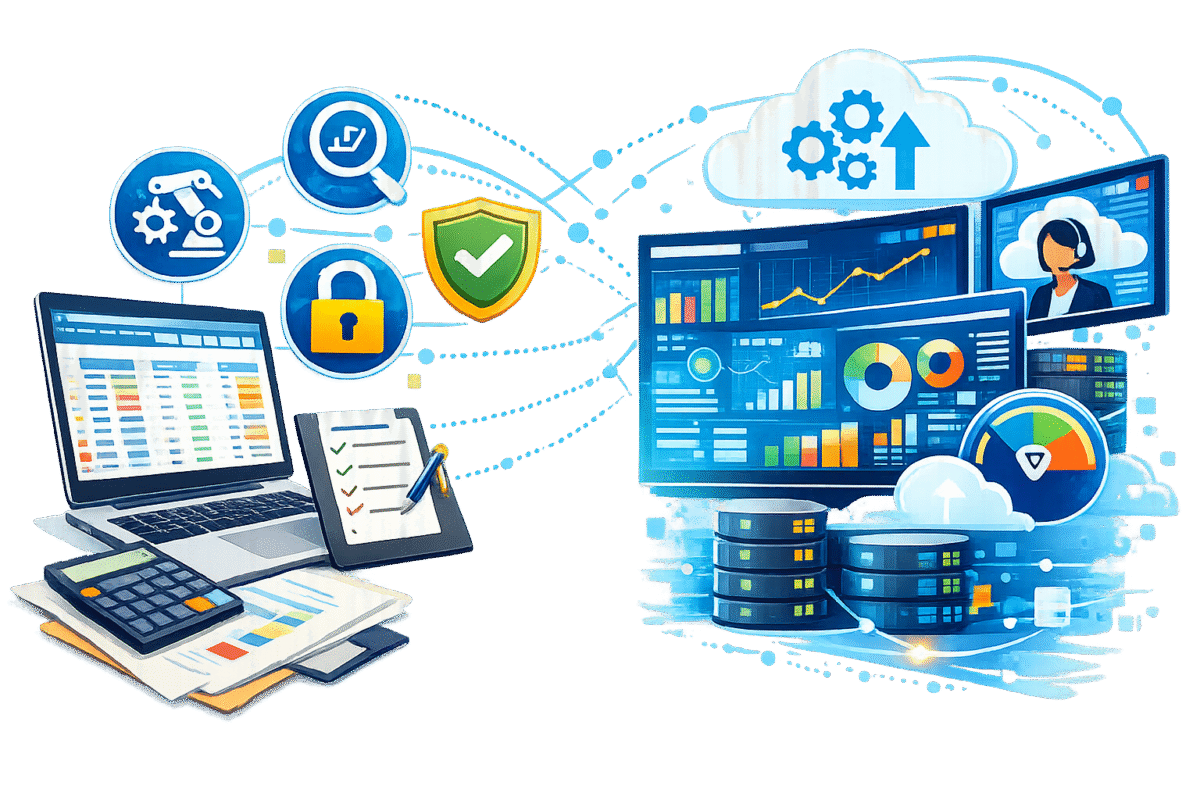
Modern SaaS accounting platforms are making a difference in the field. Instead of making an audit-ready accounting system for something done at the last minute, they turn it into a built-in feature by centralising workflows, approvals, documents, and reporting. Firms don’t prepare for audits; they’re always ready.

A cloud platform, powered audit, and ready accounting give the team a sense of being able to go about their work stress-free, as they are completely sure that each transaction, change, and approval has already been recorded, is traceable, and is compliant for every client they handle.

Why Manual Accounting Processes are Non-Compliant?

Most people think manual accounting processes fail because staff lack expertise. However, the real culprit is that these systems are not designed to be integrated. Tax declarations are stored in one application, salaries in another, invoices in Excel, and audit papers in either shared folders or email threads. This quilt approach makes it hard to keep a full compliance record for every client.

It gets riskier when the backlog of work builds up. The margin for mistakes gets smaller when you forget to upload a document, miss a tax regulation change, or forget to get an approval for a document. An audit trail is intended to demonstrate the workflow of a process, that is, the process activities (who did what and when). Yet traces are regularly left incomplete or conflicting, especially when multiple team members access the same documents.

The impact of these actions can be felt in reality. In a 2024 Thomson Reuters survey, 64% of accounting professionals agreed that manual operations increase audit risk and heighten anxiety about compliance during the busiest filing periods.

Besides the fines, inefficiencies demoralise and bind up valuable time. Teams are spending more time correcting mistakes than adding value to their clients. Reactive mode thus translates into gradually losing trust, both internally and with clients who expect accuracy, transparency, and reliability.

That’s why businesses are moving away from manual processes toward accounting automation software that integrates compliance into the core of day-to-day operations.

How SaaS Accounting Platforms Alter the Audit-Readiness Paradigm

Unified compliance environment: A modern SaaS accounting platform brings all customer data, financial transactions, and documents into one secure, closed system built specifically for accountability.

Single source of truth: Teams no longer need to chase information across multiple tools. Every record lives in one place, reducing errors and saving time during reviews and audits.

Built-in audit management: When audit management software is integrated, every transaction from input and approval to reconciliation is automatically logged without manual effort.

Automated digital audit trails: All activities are time-stamped, securely stored, and instantly available, making it easy to present clear evidence when auditors request it.

No manual evidence gathering: The system captures and records data in real time, eliminating the need to piece together information from scattered sources.

Role-based access control: Sensitive financial data is restricted to authorised users, ensuring strong data security and controlled visibility.

Auditor-friendly access: Auditors can be granted read-only access, allowing them to review records without disrupting daily accounting operations.

Clear compliance visibility: Compliance dashboards highlight deadlines, required approvals, and filing statuses, helping teams stay organised and avoid missed obligations

The evidence of the result is significant. According to a 2023 Deloitte report, organizations that adopted cloud-based accounting and compliance platforms reduced audit preparation time by up to 30%.

Audit readiness is no longer a last-minute panic; it is ingrained in the firm’s everyday operations.

Efficiently Managing Multi-Client Compliance

Compliance issues for a single customer can be sorted out without any hassle. After all, handling the tax issues for 50 or 500 accounts is where the complexity really hits the ceiling. Multi-client accounting software is the answer in such a scenario, as it is programmed to provide a firm with a single dashboard for the compliance status of the entire client portfolio.

Instead of group members having to keep deadlines in their heads, they can all see upcoming tax filing deadlines, payroll cycles, and statutory submissions from a single pane of glass. Things stay on track with automated reminders, ensuring documents are requested, reviewed, and approved on time. Standardised workflows create consistency, so whether the client is large or complex, each can be compliant with the same discipline.

The true value lies in the management having real-time visibility. They can therefore, without delay, distinguish the clients who are fully compliant from those who require their help and identify the point of congestion in the workflows. Instead of managing fires, proactive teams can prioritize their work effectively, especially during peak times.

Bringing Payroll, Tax, and Financial Reporting Together

Compliance issues are not your concern alone, and your systems should not be isolated either. Cutting-edge software platforms unify payroll and compliance software, tax workflows, invoicing, and Accounting reporting and analytics software under one roof.

Such an integration ensures that payroll data is used directly to prepare financial reports, tax assessments are based on real-time transactions, and compliance records are in sync at all levels. Audit-ready reports, along with the supporting documentation and approval histories, can be produced without delay for each client.

By minimizing manual handoffs across tools, firms can drastically reduce errors and duplication. The outcomes go beyond cleaner audits; the firms also experience their daily operations running very smoothly, easily scalable without causing disorder.

Data Security and Regulatory Compliance

Trust is at the heart of the accounting profession, and security is a significant part of it. Cloud-based accounting automation software employs encryption, access controls, and continuous monitoring to safeguard highly sensitive client data. Thorough audit trails ensure that every system interaction is recorded, helping both internal and external audits. 

Leading platforms are designed to comply with global and regional requirements, such as GDPR and AICPA standards. Such built-in compliance allows firms to remain audit-ready without having to manually supervise or frequently check their systems. In this way, security and compliance are established as core necessities rather than optional extras.

How WeekMate Takes the Hassle Out of Auditing Your Books

  • All-in-one accounting management software for accounting firms/KPOs that serve multiple clients with complex compliance requirements
  • Integrate tax, payroll, reporting, and compliance workflows in a single, cloud-based platform that offers full operational transparency
  • Eliminates manual monitoring in favor of automated processes, helping to minimize errors and compliance steps that get overlooked
  • Features real-time dashboards that instantly inform managers and auditors of client compliance status
  • It automatically records every transaction and document, providing a complete and trustworthy audit trail.
  • Delivers a uniform record of compliance across all clients, with no extra manual work
  • Allows firms to be audit-ready all year long, not just in audit season

Conclusion: How to Achieve Compliance Without Compromise

Manual accounting practices not only increase the probability of non-compliance but also make it unnecessarily difficult, especially if the firm has to manage several clients under stringent regulatory requirements. It is very difficult to conduct an error-free, stress-free audit when using disjointed tools.

SaaS platforms are very different, as they combine several workflows into a single platform, making work easier, creating comprehensive audit trails, and helping eliminate manual processes. Accounting automation software, as the engine of a firm, enables the firm to grow without worry while remaining fully compliant at every step.

Audit-ready accounting is not about working harder, but about creating and using efficient systems that, at every step, facilitate accuracy, transparency, and confidence.

FAQs

1. What is audit-ready accounting?

Audit-ready accounting is the process of maintaining digital records, approvals, and reports in a manner that meets compliance requirements at all times, so financial information can be audited at any time without scrambling during month-end or year-end closing.

2. How does a SaaS platform facilitate audit compliance across multiple clients?

It consolidates all client information, automatically tracks every transaction and approval, and delivers real-time compliance and audit reports at the client level.

3. Can multi-client accounting software lead to error-free audits?

Yes, automation reduces manual data entry, standardizes workflows, and provides a full, consistent audit trail for each and every client.

4. Does audit-ready accounting software also include payroll and tax management?

Today’s platforms are providing these features – payroll, tax filings, invoices, reporting – in a single system, thus aligning and ensuring the consistency and compliance across the functional areas.

5. How secure is client data in cloud-based, audit-ready platforms?

Enterprise SaaS platforms use encryption and role-based access controls and comply with regulatory requirements to protect their clients’ sensitive information.

How Workflow Automation Helps Pharmacies Stay Compliant & Focused?

Running a pharmacy today is tough. You deal with strict rules on one side. On the other side, customers want fast service with zero errors.

Manual work creates chaos everywhere. Your staff wastes hours on paperwork. Billing drags on forever. Inventory numbers go wrong. Prescription tracking turns into a mess during audits.

Recent healthcare and pharmacy industry studies highlight growing pressure on pharmacies to stay compliant while maintaining service quality. Operational inefficiencies, billing errors, and slow customer service continue to drive complaints and strain pharmacy teams.

Here is where pharmacy automation software steps in.

These systems handle boring tasks without human mistakes. They track every prescription. They monitor each transaction. They record inventory changes as they happen. Your team quits chasing papers. They start doing what actually matters, taking care of patients and following the rules.

WeekMate delivers this change to pharmacies of any size. It covers billing and staff scheduling. It builds workflows that keep your business safe and your customers happy. Now let’s get started:

Why Manual Processes Limit Pharmacy Efficiency?

Most pharmacies stick with old methods. Spreadsheets handle inventory. Paper logs track controlled substances. Staff schedules sit in notebooks or shared documents.

These systems break down fast.

Picture this scene. Your pharmacist fills a prescription. They forget to mark it in the inventory sheet. Two weeks have passed. You run out of that medication during your busiest hours. A customer who desperately needs it leaves angry and empty-handed.

Think about compliance audits too. Inspectors want prescription records from six months back. Your team digs through filing cabinets. They search digital folders for hours. Finding everything takes multiple days.

Manual billing brings more headaches. Staff enter insurance codes by hand. Mistakes happen constantly. Processing refunds eats up valuable time. Customers stand at the checkout way too long.

Staff management falls apart as well. Nobody has automated scheduling. Someone gets stuck working surprise overtime. Others miss shifts because reminders never went out.

These problems wreck your pharmacy’s reputation. Customers stop trusting you. Regulatory bodies start asking questions. Your team burns out from stress.

Pharmacy management software fixes all these issues from the ground up.

What Pharmacy Workflow Automation Really Means?

Workflow automation goes beyond simple software. It transforms how your entire pharmacy runs.

See it as a connected system. Billing communicates with inventory. Inventory speaks to suppliers. HR coordinates with staff schedules. Everything moves without anyone typing manually.

Check out what automation handles:

  • Task assignments – Staff get instant alerts. They know when prescriptions need filling. They see when the stock drops low.
  • Approval workflows – Controlled substance requests flow through the correct channels. The system does this by itself.
  • Notifications – Expiry dates trigger warnings. Reorder points send alerts. Compliance deadlines pop up automatically.
  • Record keeping – Every single action creates a digital trail. Auditors can review it whenever needed.
  • Pharmacy workflow automation kills the stress of managing multiple systems. Your team operates from one platform. Data stays accurate across every operation.

You stop wondering about updates. You quit asking who approved orders. The system tracks all of it. It alerts the right people at exactly the right moment.

Customer experience gets better right away. Prescriptions get filled faster. Billing wraps up without delays. Stock numbers show the truth.

Your pharmacy turns into a smooth machine. It stops being a stress factory.

Ensuring Compliance Through Automated Workflows

Compliance keeps pharmacy owners up at night. One missing document can trigger penalties. It might even cause license reviews.

HIPAA-compliant pharmacy software ends this worry.

Automated systems build digital audit trails. They capture every action that happens. When your pharmacist gives out a controlled substance, the system logs specific details:

  • Exact date and time
  • Patient information
  • Doctor who prescribed it
  • Pharmacist who filled it
  • Dosage and quantity

Nobody has to remember writing this stuff down. The pharmacy operations management software grabs it automatically.

Here is how automation protects compliance:

Compliance Feature

How Automation Helps

Controlled Substance Tracking Real-time logging with automated alerts for unusual patterns.
Expiry Date Management Automatic notifications 60, 30, and 15 days before expiration.
Patient Privacy (HIPAA) Role-based access control and encrypted data storage.
Prescription Monitoring Digital records prevent duplicate dispensing and fraud.
Regulatory Reporting One-click export of audit reports in required formats.

Automated alerts stop violations before they start. Is someone trying to refill a prescription too early? The system flags it immediately. A medication nears its expiry date? Inventory managers get notified fast.

Regulatory updates push straight to your dashboard. You never miss new requirements. You catch every compliance standard change.

Pharmacy compliance software flips your biggest risk into your strongest advantage. You get clean records. You breeze through audits. You sleep better.

Improving Customer Experience With Workflow Automation

Customers judge pharmacies on two things. Speed and accuracy. They want prescriptions ready quickly. They expect billing done right. They need medications available when promised.

Manual systems fail at all three.

Pharmacy automation software gives customers what they really want.

  • Billing wraps up in seconds. The system pulls insurance details automatically. It figures out copays without errors. Customers get digital receipts through email or text.
  • Stock availability shows real numbers instantly. Someone calls asking about medication? Your staff checks the system. They give an answer right then. No guessing games. No ten-minute searches in the back room.
  • Automated reorders prevent stockout nightmares. The system watches usage patterns closely. It knows which medications fly off shelves. Reorder alerts go out before you hit zero.

Look at these improvements:

Customer Pain Point Automation Solution
Long wait times Faster prescription processing and billing.
Billing errors Automatic insurance verification and copay calculation.
Medications out of stock Predictive reordering based on usage trends.
Inconsistent service Standardized workflows across all staff members.
No purchase history access Patient profiles with medication and transaction history.

Personalization opens up too. The system remembers each customer’s medication history. It stores their preferences. Someone picks up a monthly prescription regularly? The software sends refill reminders without being asked.

Your pharmacy quits being just another store. It becomes somewhere customers feel understood and valued.

Pharmacy billing software manages the technical work. Your team focuses on actual human connections.

Streamlining Inventory and Supplier Management

Inventory management creates more problems than almost anything else. Too much stock locks up your cash. Too little stock makes customers angry.

Pharmacy inventory management software discovers the sweet spot.

The system tracks items from arrival to dispensing. Barcodes or RFID tags link physical products to digital records. Someone dispenses medication? Inventory counts update that second.

Automated reorder alerts work like having a smart assistant. The medical store management system or software looks at several factors:

  • Current stock levels
  • Average daily usage
  • Seasonal demand patterns
  • Supplier lead times

It uses this data to suggest perfect reorder amounts and timing. You stop guessing. You work with accurate predictions instead.

Supplier management gets simpler too. The platform stores vendor details. It saves pricing history and delivery schedules. Multiple suppliers carry the same medication? You compare costs and pick the best option.

Check this example of automation logic:

Example: Automated Reorder Logic

IF (current_stock < reorder_point) AND (pending_orders = 0)

THEN generate_purchase_order(supplier, quantity)

SEND notification_to_purchasing_manager

FIFO automation stops waste. First In, First Out happens automatically. The system makes sure older stock gets used before newer batches. Expiry dates stay visible on every dashboard.

Prescription tracking software links to inventory systems. Does a prescription need specific medication? The software checks stock right away. Levels sitting low? It triggers a priority reorder immediately.

Your pharmacy runs lean. You never run out. Cash flow improves. Waste drops. Customer satisfaction climbs.

Optimizing Staff Scheduling and Task Assignment

Staff scheduling in pharmacies gets messy fast. You need the right mix during peak hours. Pharmacists, technicians, support staff – all balanced perfectly. Too few people? Service slows down. Too many people? You waste money.

Pharmacy staff scheduling software cracks this puzzle automatically.

The system studies historical data. It spots your busy periods. Monday mornings need more coverage than Wednesday afternoons. Flu season demands different staffing than summer months.

Automated scheduling weighs multiple factors:

  • Employee availability and what they prefer
  • Required certifications (not every technician handles controlled substances)
  • Labor laws and mandatory break requirements
  • Peak traffic patterns

The schedule generates and staff get notifications. Shift changes happen through the platform. Time-off approvals process there. Swap requests go through it. No more phone tag. No more missed messages.

Task assignment becomes crystal clear. Prescriptions need filling? Available pharmacists get notified. Inventory counts come due? Assigned staff see alerts. Controlled substance audits happen? The right people know instantly.

See how scheduling improves:

Scheduling Challenge Automation Benefit
Last-minute callouts Automatic alert to backup staff with one-click shift coverage.
Overtime management Real-time tracking with alerts before overtime thresholds.
Peak hour coverage AI-based scheduling that matches staff to predicted traffic.
Compliance with labor laws Built-in break reminders and maximum hours tracking.

Accountability jumps up because every task carries a timestamp. It shows who did what. Something goes wrong? You trace exactly what happened and when it occurred.

Pharmacy workflow automation turns chaotic scheduling into smooth operations. Your team stresses less. Customers get consistent quality service.

Data-Driven Decisions and Analytics

Running a pharmacy on gut feelings worked years ago. Today you need actual data to compete and grow.

Pharmacy management software turns operations into usable information.

Dashboards display metrics that truly matter:

  • Daily, weekly, and monthly sales trends
  • Top sellers and medications that sit too long
  • Insurance claim success rates
  • Staff productivity numbers
  • Customer retention rates

You catch problems before they explode. A medication’s sales suddenly drop? You investigate the cause. Billing errors spike on certain days? You identify why it happens.

Multi-location pharmacies gain even bigger advantages. Centralized reporting lets you compare stores directly. Which location turns inventory fastest? Which one needs better staff training? Where should expansion money go?

Real-time data kills the monthly report waiting game. You pull out your phone. You see today’s performance right there. Decisions get made from current reality. Not from numbers that are already a month old.

Check this sample dashboard:

Sample Dashboard Metrics:

Today’s Performance

Prescriptions Filled: 247

Revenue: $12,340

Average Wait Time: 8 minutes

Inventory Alerts: 3 items low

Staff Utilization: 87% 

Forecasting becomes accurate and reliable. The system predicts medication demand increases. It bases predictions on historical patterns and current trends. You stock up before the rush arrives.

Pharmacy reporting and analytics software hands you advantages that competitors lack. Smart decisions replace costly mistakes.

About WeekMate

WeekMate delivers automation tools for growing businesses. Our platform handles HR, operations, billing, and customer management. No monthly subscription fees exist. More than 700 users across 5+ countries trust WeekMate. They use it to simplify their workflows daily. We believe in ownership-first software. It scales with your success.

How WeekMate Helps Pharmacies Automate Workflows?

WeekMate gets pharmacy operations. We built our platform around real challenges you face daily.

Our system unifies everything into one place. Sales, inventory, billing, HR, and compliance – all there together. Your team quits switching between five different applications. All data lives in a secure cloud environment.

Key features for pharmacies:

  • Real-time prescription tracking – Connects directly to billing and inventory
  • Automated compliance reporting – Handles controlled substances and HIPAA requirements
  • Intelligent inventory management – Uses predictive reordering
  • Staff scheduling tools – Optimizes coverage based on actual traffic patterns
  • Customer relationship features – Tracks medication history and individual preferences

Security matters with patient data. WeekMate uses enterprise-grade encryption. Role-based access controls protect information. Only authorized staff view sensitive details.

The platform grows with your pharmacy. Start with one location. Expand to ten locations. The system handles growth without breaking. No per-user fees mean adding staff costs nothing extra.

We support high-volume operations. Regulatory standards remain maintained. Need to fill 50 prescriptions daily or 500? WeekMate keeps everything running smoothly either way.

Your pharmacy becomes efficient and customer-focused at once. Staff work faster. Customers leave happier. Compliance stops causing headaches.

Conclusion: Workflow Automation as the Key to Compliance and Customer Satisfaction

Pharmacies get pressure from everywhere. Regulators want perfect documentation. Customers demand instant service. Staff juggle way too many tasks.

Manual processes cannot keep pace anymore. They create errors. They slow operations down. They build compliance risks.

Workflow automation changes everything completely.

Automated systems handle billing without mistakes. They track inventory as events happen. They schedule staff based on real demand. They create audit trails that satisfy regulators.

Most importantly? They free your team. Staff focus on patients instead of endless paperwork.

Pharmacies adopting pharmacy automation software gain a real competitive edge. They deliver superior service. They keep spotless compliance records. They make decisions from data instead of hunches.

The future belongs to pharmacies embracing efficiency. They refuse to sacrifice quality. Automation stopped being optional. It became the foundation for sustainable growth.

WeekMate makes this transformation reachable. Our platform brings enterprise-level automation to any pharmacy size. No monthly subscription traps exist. No hidden costs appear. Just powerful tools that actually work.

Your pharmacy can run better starting right now. Compliance becomes automatic. Customer satisfaction goes up. Your team feels less overwhelmed every day. That is what modern pharmacy management should look like.

Want to see WeekMate transform your pharmacy operations? Start your free trial today.

FAQs

1. What is pharmacy workflow automation?

Pharmacy workflow automation means systems handling repetitive tasks without manual input. This covers billing, inventory tracking, prescription management, and staff scheduling. The software cuts human errors way down. It speeds up operations significantly. Teams can focus on customer care instead of pushing papers.

2. How does automation help pharmacies stay compliant?

Automated systems create digital records for every transaction. They create records for every action too. They track controlled substances as events happen. Expiry date alerts prevent giving out expired medications. Built-in audit trails satisfy HIPAA requirements. They meet other regulatory demands. The software flags potential violations before they actually occur.

3. Can workflow automation improve customer service?

Yes, it improves service dramatically. Automation speeds up billing and prescription filling. Customers wait less time. Accurate inventory tracking prevents running out of stock. The system sends refill reminders automatically. It tracks complete medication history. This builds more personalized experiences. Staff members get more time for actual face-to-face interactions.

4. Does workflow automation integrate with existing pharmacy software?

Most enterprise-grade platforms integrate smoothly. WeekMate connects with HRMS, billing systems, inventory tools, and CRM software. APIs allow data to flow between applications seamlessly. You do not need to replace everything at once. Integration rolls out in phases based on what you prioritize first.

5. Can pharmacy workflow automation scale for multiple stores?

Yes, it scales excellently. Centralized dashboards provide visibility across all locations. You compare performance easily. You share inventory between stores. You standardize workflows everywhere. Multi-location pharmacies benefit from consolidated reporting. Operations stay consistent. The system grows with your business. Major overhauls never become necessary.

6. How secure is the data in automated pharmacy systems?

Enterprise pharmacy software like WeekMate uses military-grade encryption. This covers data storage and transmission. Role-based access control ensures proper information protection. Only authorized staff view sensitive details. Audit logs track who accessed what data. They record when access happened. Cloud hosting includes automatic backups. Disaster recovery stays built in. Patient privacy is protected at every single level.

Signs Your BPO Company Has Outgrown Manual Tools

Imagine a scene at your BPO firm: it’s just Monday morning, and the operations manager is already swamped with spreadsheet work. She’s jumping between Excel files trying to understand why Client A’s SLAs are slipping while Client B is asking for an urgent update. The information is there, but it’s spread out across different trackers, emails, and chat threads.

Sounds familiar?

Most BPO companies go through this initial phase. In the beginning, spreadsheets for BPO management, along with email coordination and simple trackers, seem to be more than enough. These manual tools in BPO operations are adequate when you have a small team, a few clients, and relatively simple processes. However, there is a turning point as your business expands. You lose control of what is happening. Mistakes start slipping through. You get more and more tired of scaling rather than being excited.

The global business process outsourcing (BPO) market size was $347.95 billion in 2025 and is anticipated to grow to $906.27 billion by 2035, according to Precedence Research. This kind of growth is obviously going to bring with it more complex SLAs, more demanding customers, and operational complexity that spreadsheets just won’t be able to handle.

Outgrowing manual tools doesn’t mean your team is failing; it’s an indication that your business is on the move. It is that moment when coordination becomes more difficult than the actual work, and when ensuring consistent quality across clients feels like a gamble.

Hence, visionary BPOs consider implementing BPO operations management software, such as WeekMate, as a first step toward reclaiming operational control and scaling sustainably.

1. You Do Not Have Real-Time Operational Visibility

There is hardly any real-time view, if at all. Because operational data is scattered across spreadsheets, inboxes, and other disjointed applications, managers are unable to quickly answer even the simplest questions. How many tasks are past due? Which agents are overloaded? Which queues are at risk? 

Instead, at best, leaders rely on end-of-day or weekly reports, by which time problems have already grown beyond control.

SLA breaches, response delays, and escalation of client complaints tend to become the norm. The resulting BPO operational bottlenecks impede decision-making and increase the need for firefighting.

Modern BPO operations management software eliminates this blind spot. WeekMate provides centralized dashboards with real-time visibility into tasks, workloads, queues, and performance. Decisions move faster, issues surface earlier, and teams operate with confidence rather than guesswork.

2. Handling Multiple Clients is a Challenge

The first casualty when client numbers grow is manual tools. Eventually, each client will have their own set of trackers, documents, and reporting styles. Priorities will get mixed up. Ownership will be unclear. Teams will keep wondering, Which task is the most important right now?”

Such disorder results in mistakes, missed deadlines, and uneven service classic challenges in BPO operations. Your team is spending more time on handling complexities than producing results.

Through structured BPO workflow management, a platform such as WeekMate can offer client-specific workflows within a single integrated system. Every customer has its own processes, SLAs, and dashboards, yet management has full visibility across all accounts.

3. You Team Is Invested More in Managing Their Work Than Doing the Work

Keep an eye on your supervisors. If the majority of their day is spent assigning tasks, checking availability, and chasing updates through chats and emails, you have reached a point where your business has significant growth limitations.

Manual task assignment is an energy and time-consuming process. Agents have to wait for the next command. Supervisors turn into bottlenecks. Productivity is declining, not because people are not working hard, but because they are managing workflows rather than carrying them out.

BPO process automation can significantly help solve this problem. WeekMate TaskHub automatically allocates tasks based on skills, workload, and priority using rules. Work is passed along to the right person without delay, thereby saving the need for manual coordination and increasing throughput.

4. The Reporting Process Is Slow, Difficult, and Unreliable

Reporting with legacy tools in BPO companies is rarely smooth. One has to collect data from different sources, manually combine it, and then prepare it separately for each client. It takes a long time, and the numbers are still inconsistent.

Different teams measure different metrics. Clients raise concerns about accuracy. The trust is deteriorating.

Delivering BPO operational efficiency at scale is hardly possible without real-time reporting. WeekMate produces live, standardized reports featuring preset KPIs and client-ready dashboards. No need for consolidation. No waiting. Just spot-on data at the right time.

5. Errors and Rework are Becoming More Common

Undoubtedly, manual processes will cause mistakes such as duplicate entries, skipped steps, overwritten data, or lost information in long email chains. Gradually, such errors grow into major BPO delivery challenges.

According to a 2024 report, automation-first BPO operations achieved 7% higher customer satisfaction than manual handling (ARDEM Incorporated). Fewer reworks mean both cost savings and more satisfied customers. 

Utilizing organized procedures, WeekMate integrates validations, check-ins, and approvals. Without accomplishing the necessary steps, tasks can’t be forwarded. Audit trails visualize the sequence of events, reducing misunderstandings and, hence, rework.

6. It Is Too Time-Consuming to Onboard Clients and Agents

Slow onboarding is another sign when manual tools stop working for BPOs. New agents are almost 100% dependent on documentation and watching others work. Senior crew members become bottlenecks in the process. It’s as if every time a new client is onboarded, the company has to start from scratch with its processes.

So, what happens? Revenue generation is postponed, the scale-up period slows, and more and more reliance is placed on key individuals.

WeekMate TaskHub facilitates onboarding through ready-to-go workflow templates, task execution guidance, and role-based permissions. New agents follow well-defined processes from the very first day, and new clients are onboarded more quickly using proven frameworks rather than improvised spreadsheets.

7. Compliance and Security Are Becoming Risky

Spreadsheets and emails were never designed to be compliance-friendly. There is no clear audit trail, access controls are weak, and the level of visibility into who accessed what data and when is very limited.

For regulated industries, this is a significant threat. Compliance gaps can lead to fines, lost clients, and reputational damage some of the most dangerous challenges in BPO operations.

WeekMate HRMS Management Software addresses this through role-based permissions, activity logs, and secure access controls. You can confidently answer client queries about data security because the protections are built into the system.

8. Scaling Requires More People Every Time

When every increase in volume necessitates a proportional increase in supervisors and coordinators, this means that your operations are not scaling but only stretching.

Manual processes scale linearly with the number of employees, which leads to margin pressure. Your competitors who have figured out the secret of how BPOs manage operations at scale can produce the same output with fewer people and better profitability.

By using standardized workflows and automation, BPO operations management software such as WeekMate disrupts the linear growth pattern. You can increase volume without increasing overhead, thereby protecting your margins as your business grows.

9. Customers Demand Increased Transparency

Nowadays, customers demand transparency; hence, they expect to have real-time insight into SLAs, performance, and service quality, not just through weekly summaries or delayed reports.

If you depend on manual tools, it will be tough for you to provide transparency locally and globally. A big procrastinated custom report takes a lot of time. Instant answers to the questions are impossible. This scenario erodes trust and increases the likelihood of churn.

WeekMate e-CRM offers customers real-time SLA monitoring and performance analytics, available anytime. Thus, transparency becomes a competitive advantage rather than a chore.

When Manual Tools Are No Longer Good Enough

Any thriving BPO eventually reaches this turning point. First, you get help from spreadsheets and emails, then they become your biggest roadblocks. It’s not failing it’s tripping and getting back up. But switching means real losses: exhausted staff, diminishing profits, inconsistent quality, and departing customers.

Contemporary BPO operations management software, such as WeekMate, WeekMate HRMS Management Software, WeekMate TaskHub, and WeekMate e-CRM, helps BPOs move away from reactive firefighting to well-organized, scalable service delivery.

The change is not only operational but also strategic. Your clients recognize the regularity. Your employees experience clarity. And your enterprise gains the operational effectiveness needed to keep growing.

Summary: Better Tools Required For Growth

Outgrowing manual tools is not a problem. It is a sign that your BPO is growing, winning more clients, and is capable of handling real operational complexity. However, over-reliance on spreadsheets, emails, and disconnected trackers beyond this stage will create unnecessary friction. Hence, there will be a lack of visibility, teams will waste hours on coordination, there will be more mistakes, and scaling will be costly.

The fact is, manual tools in BPO operations have never been intended to support multi-client workflows, strict SLAs, compliance requirements, or rapid growth. It is a sign that your operations need structure, not more effort, when these tools start to slow you down.

BPO operations management software specifically designed for the purpose brings that structure. With centralized visibility, automated workflows, standardized reporting, and built-in compliance afforded by platforms like WeekMate, BPOs can transform from reactive firefighting to predictable, scalable delivery.

Growth is manageable again when your tools work with your team not against them and that’s when your BPO is really ready for the next stage.

FAQs

1. What are the clearest signs a BPO has outgrown manual tools?

A lack of real-time visibility, increased errors, slow reporting, challenges with scaling, and teams spending more time managing work rather than delivering it.

2. What are the ways in which BPO operations management software improves efficiency?

By means of saving time through automated systems, using standardized work procedures, and implementing real-time dashboards that help to avoid errors, make quick decisions, and increase production without a rise in the number of employees.

3. Why not just use generic project management tools?

Generic tools cannot support multi-client SLAs, compliance, or the level of automation required for managing complex BPO workflows. WeekMate and other such purpose-built platforms are made exclusively for BPO realities.

4. What is the time frame for the BPO process automation to provide results?

The majority of BPOs achieve a significant improvement in efficiency, transparency, and control within 3060 days of a gradual implementation.

One Platform to Orchestrate and Optimize Manufacturing Operations

In the race to secure market share today, manufacturers aren’t just racing for output they’re racing for operational mastery. That pursuit is at the center of a friction that turns complexity into simplicity. Traditional ISO manufacturing floors are not just rows of machines and workers; they’re dynamic ecosystems of data, decisions, and processes. The problem is that legacy systems and cobbled-together tools make it nearly impossible to get a whole view. This is where manufacturing operations management software turns the tables, enabling fragmented processes to operate in harmony.

Many manufacturers still juggle spreadsheets for scheduling, handwritten logs for machine uptime, and disconnected systems for supply, production, and quality checks. These disconnected approaches lead to errors, delays, and reactive firefighting every time something changes on the line. It’s not just about doing things faster, it’s about doing them smarter, with systems that help teams respond in real time, not after the fact.

So it makes sense that more and more companies worldwide are turning to manufacturing operations management software to address visibility concerns, improve collaboration, and minimize operational chaos. When data flows uninterrupted from machine to manager, teams achieve the predictability they need to consistently deliver quality products on time, every time. As the market grows, demand for integrated solutions is increasing: wholesalers and manufacturers who are embracing all-inclusive platforms are at the forefront of both innovation and efficiency.

Why Manufacturing Operations Struggle with Fragmented Systems?

Ask any plant manager, and they’ll tell you: the biggest bottleneck isn’t the machines it’s the systems.

Production teams have one set of tools, supply chain planners have another, and maintenance teams have a separate set. When systems don’t speak, you end up with misaligned priorities, redundant work, and a lot of manual reporting.

Take a shop floor where work orders live in legacy software, inventory is substituted via email between teams, and key performance metrics are pulled weekly if at all. This segregated area makes simple questions unanswerable, such as: Is the shift on target? Will we meet the delivery schedule today?”

These visibility challenges aren’t just headaches they delay decision-making and increase risk. With limited real-time information on machine health, the team is busy hunting for problems rather than preventing them. Communication is also hindered between shifts, so what is learned in the morning is forgotten in the afternoon. And in the absence of an integrated data stream, leaders must rely on stale reports rather than live dashboards that show precisely how operations are performing.

This lack of cohesion is especially costly when plants must respond to unexpected disruptions  like a delayed shipment or an unplanned machine stoppage. Decisions made on incomplete data lead to reactive fixes rather than proactive strategies. It’s no wonder that manufacturers pursuing excellence are turning to manufacturing operations management software that unifies production, supply chain, and plant functions into a single, coherent workflow with real-time visibility at every turn.

What “One Platform” Really Means in Manufacturing?

When we say “one platform,” we’re not simply describing the consolidation of tools we are redefining how operational decisions are made. A true manufacturing operations platform unifies all disciplines around a common view of the truth, including production status, inventory levels, material flows, machine health, and labor allocation.

At its core, this involves replacing disconnected spreadsheets, manual logs, and ad hoc email chains with connected digital workflows and dashboards. Traditionally, ERP systems have been more concerned with financials and planning – but what is required on the shop floor is visibility into execution, real-time alerts, and task synchronization. This is where ERP-integrated manufacturing software comes into its own: It supplements core enterprise planning rather than replacing it, providing accurate, live data for day-to-day execution.

Instead of a tug-of-war between departments, one platform aligns teams around shared metrics. Cross-functional collaboration becomes seamless no more waiting for reports that were due yesterday. Users of quality, production, and supply all have access to the same data at the same time. This single source of truth ensures we communicate better internally, achieve faster decision cycles, and build confidence across the business.

Simply put, “one platform” is about replacing complexity with clarity enabling teams to focus on performing rather than firefighting. Connected systems allow makers to respond to variation with agility and accuracy.

Coordinating Production Teams for Reliable Delivery and Quality

A significant manufacturing advantage begins with real-time intelligence. Traditional batch reporting is inadequate to keep pace with production speed, but with the right solutions, the team can watch as the action unfolds. This transition from lagging indicators to real-time production monitoring provides managers with the visibility they need to catch variances early and fix them before they become issues.

Various tools, such as plant operations dashboards, provide visibility for all production leaders. Teams no longer need to wait until the end of the day for reports; they can track production, downtime, and quality in real time. When there are outliers a decrease in throughput or an increase in defects alerts can trigger immediate action, reducing scrap and rework.

Structured shift handovers are also essential. In many plants, it is as if an incoming shift loses all knowledge to the outgoing one. A single console tracks ongoing issues, checkpoints, and responsibilities, removing the uncertainty that is so prevalent during shift changes. This enhances accountability and consistency.

By streamlining everyday quality tests and hardwiring notifications for deviations, manufacturers not only uphold quality benchmarks but also build operator confidence. Production is not guessing where the problems are; they know, right down to the machine and the step in the process. It fosters a culture of continuous improvement in which issues are raised constructively and collaboratively resolved.

The result? Consistent output, better quality, and a workforce that feels they are empowered, not inundated.

Aligning Supply Chain with Production Schedules

Manufacturing happens in a bubble of sorts, your data should not have to. When supply chain functions are disjointed and operate separately from production planning, disruptions are bound to occur. Lacking real-time inventory data, those teams either overstock raw materials, needlessly tying up capital, or run out, forcing production lines to halt.

A unified supply chain visibility software component is essential. It provides real-time access to inventory, insights on supplier performance, and streamlined material planning so planners and producers are always on the same page. Stakeholders don’t have to guess about inventory; now they have access to real-time information about what’s on hand and what’s committed to future orders.

This coordination avoids costly shortages and late deliveries. Supplier metrics are woven into the same platform as production schedules, so manufacturers can respond to potential risks proactively by rerouting orders, prioritizing, or issuing alternative purchase orders well before problems arise.

The benefit to delivery reliability from planning and execution consistency is huge. Material availability, production capacity, and shipment timing are aligned to a single flow rhythm, which helps reduce lead times and increase customer satisfaction. It’s an orchestration that eliminates waste, improves responsiveness, and brings your people, processes, and partners in sync.

Enhancing Plant Efficiency Through Preventive Control

One important benefit of integration is the ability to track machine health and plan maintenance before failures occur. Reactive fixes are expensive and disruptive; proactive maintenance, supported by preventive maintenance software, is efficient and predictable.

Real-time equipment status monitoring enables the operations team to see and analyze performance trends. Data on vibration, temperature, and utilization are no longer passive readings but active triggers for maintenance at the right moment. This not only prevents unplanned downtime but also extends asset lifecycles.

Furthermore, products such as OEE improvement software also assist in calculating potential improvements. When paired with smart sensors and cloud analytics, OEE solutions can deliver quantifiable improvements. For instance, some reports indicate that end-to-end solutions can enhance overall factory OEE by as much as 21% through better scheduling and maintenance planning.

This holistic approach ensures that resources, human, machine, and material are optimized. Teams gain confidence in their ability to hit targets, and executives can view performance through comprehensive dashboards rather than scattered reports.

Leadership Visibility Without Micromanagement

Real control of operations is not achieved by monitoring everything that is going on; it is achieved by knowing the patterns and results. Thanks to centralized dashboards, top leaders can observe meaningful performance indicators without being buried in details. The unified dashboard provides production cadence, workforce efficiency, quality trends, and supply data on a single screen.

Which means that our planning sessions are not only strategic but also prospectively strategic. Rather than hypotheses drawn from quarterly reports, leaders react to real-time insights that are both precise and actionable. The level of oversight changes, too, so there’s more transparency about what’s expected, and it’s fairer.

Visibility at this level allows managers to coach teams, streamline processes, and focus investments, all while building trust rather than creating apprehension. Operational discipline is a cultural asset, not a compliance instrument.

Why Manufacturing Leaders Are Embracing Unified SaaS Platforms?

Cloud-based manufacturing platforms aren’t futuristic anymore; they’re the norm. A manufacturing SaaS platform can scale to support numerous plants and teams as your business expands , without the IT & financial burden of traditional on-premises systems.

Teams can be deployed quickly, scale as the requirements change, and respond to production-related problems faster than ever.

SaaS platforms provide a platform and environment for updates and security, and COMs and manufacturers reduce their operational risk while achieving similar levels of consistent uptime across shifts and locations worldwide. Compliance and audit processes are automated, giving you peace of mind without adding more work to your internal teams.

The digital manufacturing landscape has been forever changed by the arrival of unified SaaS platforms, which leaders are adopting not for their cool factor but for the substantial, quantifiable operational improvements, enhanced agility, and clearer strategic vision they bring to the industry.

How WeekMate Orchestrates Manufacturing Operations?

WeekMate stands out as a purpose-built manufacturing SaaS platform that supports production, supply chain, and plant operations in a single unified environment. Rather than cobbling together a mess of tools that barely connect, WeekMate provides unified workflows that integrate execution and strategy.

With native production tracking, shop floor management solutions, and ERP-integrated manufacturing software, WeekMate brings clarity through your existing systems not by changing them, but by complementing them. Plant managers, supervisors, and executives all receive the same data and must be united behind a common purpose.

Resource planning, quality-control checks, maintenance scheduling, and supplier metrics are just a few of the things that come under one dashboard and it’s about encouraging your teams to collaborate, not compete. Plus, enterprise-grade security and cloud reliability mean you’re not only efficient but also protected and prepared for the challenges of tomorrow.

Summary

Successful manufacturing is not about working harder, it’s about working together. Disparate systems result in friction, confusion, and waste. But by consolidating operations on a single platform, makers achieve transparency, accountability, and uniformity.

Manufacturing operations management software isn’t just another tool; it’s the central nervous system that allows teams to orchestrate complexity with confidence. Organizations that adopt unified systems outperform those stuck in silos, consistently delivering quality, efficiency, and predictable outcomes.

The future belongs to manufacturers who not only make great products but also master the processes behind them.

FAQs

1. What is manufacturing operations management software?

Manufacturing operations management software consolidates the essential tasks of production planning, supply chain management, plant management, and more into a single platform, offering up-to-date insights, automated workflows, and collaboration tools to help your teams synchronize their efforts.

2. How does one platform simplify production and boost efficiency?

One platform houses all data, prevents data silos, enables live production monitoring, triggers quality alerts, and supports handoffs between shifts. It supplies the various teams with reliable, real-time data, which means less guessing and more aligned execution of planned production goals.

3. Can manufacturing SaaS products integrate with ERP systems?

Indeed. Modern manufacturing SaaS products are built to work with your existing ERP system, allowing you to bring visual management and detailed operational insight to execution without replacing your core financial or planning solutions.

4. How does real-time tracking improve OEE?

Real-time monitoring of equipment and production enables personnel to identify bottlenecks, increase productivity, and minimize unforeseen stoppages, all factors that enhance overall equipment efficiency.

5. Is a consolidated manufacturing platform useful for multi-plant scenarios?

Absolutely. These platforms offer centralized dashboards that aggregate data across multiple facilities while still allowing plant-level teams to manage their daily operations — a must for companies with distributed manufacturing environments.

6. Are the manufacturing and production data on the SaaS platform secure?

Enterprise-strength SaaS platforms protect sensitive manufacturing and operational data through encryption, role-based access controls, audit logs, and compliance certifications, giving businesses confidence and control.

7. How long does it take to “go live” with a manufacturing operations platform?

Implementation times depend on the complexity of processes and integrations. However, modern SaaS solutions support phased rollouts, allowing manufacturers to implement core workflows first and expand gradually without disrupting production.

Why SaaS Platforms Are Replacing Custom Spreadsheets in IT Operations?

Spreadsheets have been the backstage hero of IT operations for several years. They have quietly been the tool for tracking incidents, managing deployments, etc., thus becoming, in many ways, the unofficial control centre for the teams. At the initial stages of IT environments, the use of spreadsheets for such purposes felt quite reasonable. There were fewer people on the teams, the systems were quite simple, and spreadsheet-based IT management was considered flexible enough to allow the work to continue without interruption.

Spreadsheets had a big advantage: they were familiar. It was common knowledge how to operate them. They were very affordable, could be set up in no time, and could be customized to any extent. When there was a problem, the team members found a way to add a new column. A process change required an adjustment to the formula. It was good enough for a while.

However, IT operations have changed drastically from how they were ten years ago. The present-day environment is influenced by such factors as cloud infrastructure, agile development cycles, DevOps pipelines, remote teams, and continuous releases. Everything happens at a much faster pace; thus, the risks are greater, and the need for visibility becomes even more important. Manual tracking cannot be effective.

To address challenges today, SaaS platforms for IT operations have been introduced. It has turned from a mere enhancement to a necessity. Instead of logging the work after it has been finished, SaaS solutions can run IT workflows in real time. The refusal to use spreadsheets is not motivated by a desire to get rid of simplicity, but rather by a desire for control, reliability, and scale.

In fact, more and more IT leaders are acknowledging that using SaaS platforms for IT operations is no longer a matter of choice; they have to rely on them.

The Traditional Role of Spreadsheets in IT Operations

Spreadsheets became the default IT management tool for one simple reason: they solved immediate problems with minimal friction. If teams required an IT task tracking system, a spreadsheet was the fastest solution. No procurement process. No training. No approvals. Just opening a file and starting tracking.

Teams were using spreadsheets for different purposes: incident logging on shared sheets, manual deployment tracking, resource allocation across projects, and release planning in colour-coded tabs. For quite a while, spreadsheet based IT management seemed to be a good idea as it gave teams complete freedom.

Indeed, spreadsheets had their merits. They were versatile enough to implement almost any work process. Besides, they cost very little, required no special software, and were compliant across departments. What was most important, however, was that everybody understood how they were working. Such a level of familiarity lowered the barriers to change and made adoption easier.

Nevertheless, the same traits that initially attracted users to spreadsheets became their downfalls. The great flexibility they enabled led to inconsistencies. Going from unfamiliarity to familiarity also led to complacency. As IT environments have become increasingly sophisticated, spreadsheets face the challenge of maintaining accuracy, ownership, and visibility.

It is quite common for what was considered control to now feel more like guessing. In fact, the updates became outdated versions at odds. Decisions of high importance were quite frequently made based on data that was no longer valid. The tools remained the same, but the IT operations requirements had changed.

The Growing Complexity of Modern IT Operations

IT operations today are incredibly complex, and there is significant pressure to perform quickly and efficiently. For starters, the various teams no longer work in the same office or follow linear release cycles. Working with distributed teams, remote work, and handling global time zones is standard practice these days. Implementing Agile development and DevOps programs requires shorter feedback loops and continuous delivery.

On the other hand, the bar has been raised when it comes to security and compliance. IT managers require up-to-the-minute visibility into digital systems, incident alerts, and workload information, rather than yesterday’s snapshot. This is exactly when conventional toolsets come up short.

Spreadsheets demand to be manually updated. The problem is that they depend on someone to remember to change a cell, update a status, or upload the newest version. Version control is a nightmare, especially when multiple people are editing at the same time. Reporting gets delayed, collaboration suffers, and it becomes unclear who is responsible.

This is the main reason why several teams have switched to IT operations management software that is made for live environments. In contrast to spreadsheets, the latest software operations management tools are deliberately designed to show reality as it unfolds. They are not only self-updating but also provide a single source of truth, giving managers an instant understanding of what is good and what is not.

Gartner’s research indicates that in 2025, 70% of companies will adopt SaaS-based platforms for managing their IT operations, whereas in earlier years, this figure was less than 40%.

The complexity issue still remains and increases, in fact. And spreadsheets are just not the tool for handling such an increase.

Key Limitations of Using Custom Spreadsheets for IT Operations

Let’s break down the key challenges of relying on custom spreadsheets for IT operations.

Lack of Real-Time Visibility

Because they are static, spreadsheets only display the information that was last entered. Even if online sharing is allowed, such as with Google Docs, it is still the last update that is being seen, not the current state. Based on previously known data, IT managers have to make decisions, which leads to missed incidents, slower responses, and ultimately greater downtime.

No Workflow Automation

Every change to a spreadsheet has to be made by hand. Changes in the status of tasks, staff-to-staff communication, and approvals all rely solely on human intervention. Consequently, without IT workflow automation, teams waste valuable time updating cells rather than solving issues. Moreover, this increases the risk of human error.

Poor Accountability & Ownership

Another shortcoming of spreadsheet use is that it is difficult for them to demand the owners of a particular job or task. They become the reason some tasks may not get done, why there is confusion over who is responsible, or why there is no structured method to track who did what and when. This directly impacts IT team productivity tools and weakens accountability.

Limited Scalability

Spreadsheets become highly vulnerable to change when teams are large. Having more users means more mistakes. More projects also mean more files. And at some point, the whole system breaks down under the load of its own complexity. After a success with five people, the formula does not work with fifty.

What SaaS Platforms Bring to IT Operations

Let’s see what SaaS platforms bring to the table for modern IT teams.

Centralized IT Operations Platform

Using a centralized IT operations platform is like having a single source of truth rather than scattered files. Tasks, incidents, workflows, and reports live in one system accessible to everyone.

Automated Workflows

SaaS platforms bring the real IT workflow automation to the forefront. Tasks are automatically forwarded when a certain condition is met, the proper people are notified immediately via alerts, and repetitive work is completely eliminated. It cuts down on manual effort and at the same time makes it more reliable.

Role-Based Access & Control

Today’s SaaS applications include granular permissions, so only the appropriate people can access the data they need. Besides enhancing security, this also makes the audit process easier and generates clear accountability.

Real-Time Collaboration

People collaborate in real time, which means that any changes are immediately visible, communication is in context, and problems are resolved rapidly. This is why SaaS tools for IT teams are becoming the operational backbone of modern organizations.

How SaaS Improves IT Team Productivity & Reliability?

The biggest difference between spreadsheets and SaaS is not the features but the outcomes. SaaS platforms enable teams to deliver work faster, respond more quickly, and improve coordination among development, DevOps, and IT operations.

Spreadsheets monitor work. SaaS platforms operate workflows.

Using suitable task management software for IT teams, incidents can be resolved more quickly, downtime is minimized, and handovers between teams are much smoother. Workflow management for software teams is an effective way to ensure that all issues are properly tracked.

According to a recent McKinsey study, companies that use workflow automation tools increase operational efficiency by as much as 30%.

Example Scenarios – SaaS vs Spreadsheets in Real IT Situations

In incident management, using a spreadsheet means that issues are logged after the incidents. On the other hand, SaaS platforms can send alerts as soon as an issue happens and follow up on the resolution in real time.

For sprint and deployment tracking, spreadsheets need to be updated manually, whereas SaaS tools display progress, dependencies, and blockers in real time.

The allocation of resources in a spreadsheet is fixed and outdated very quickly. SaaS, however, can generate dynamic, real-time workload views.

Management reporting with spreadsheets takes hours. With SaaS, dashboards update automaticallyno manual effort required. This is where software operations management really stands.

Reasons IT Leaders No Longer Favor Spreadsheets

IT leaders are focusing on predictability, reducing risk, and establishing operational discipline. The inefficiency cost, such as unrecorded incidents, releases that are delayed, and employee exhaustion, is way higher than the investment in the right tools.

Hence, IT operations management software is no longer only a technical decision but has also become a strategic one. SaaS platforms for IT operations enable scalable growth without losing control or management.

How Platforms Like WeekMate Contribute To This Change

Platforms like WeekMate are an excellent match for this change. They provide a unified ecosystem for IT and software teams, thus clearing the clutter of tool sprawl. In addition to acting as a centralized IT operations platform, WeekMate enables visibility, accountability, and controlwithout adding complexity.

Its main focus is to support growing IT operations departments by providing structure rather than creating friction. Also, it allows the teams to grow without repeating the cycle of operational chaos.

Final Thoughts: From Spreadsheets to Scalable IT Operations

Spreadsheets were a good helper for IT teams back when systems were simple and teams were small. Nowadays, modern IT prioritizes structure, automation, and reliability. SaaS platforms for IT operations are tools that can help bring transparency and speed to environments.

The change is not about giving up simplicity but upgrading discipline with technology. Therefore, for IT teams who want to scale effectively, a SaaS is not a future solution but a present one.

FAQs

1. Why are spreadsheets no longer suitable for modern IT operations?

Spreadsheets were effective when IT operations were simple and teams were small. Modern IT environments involve continuous deployments, distributed teams, and real-time incident handling. Spreadsheets lack automation, real-time visibility, and structured accountability, making them inefficient and risky for today’s IT operations.

2. How do SaaS platforms improve IT operations compared to spreadsheets?

SaaS platforms provide centralized dashboards, automated workflows, real-time updates, and role-based access control. Unlike spreadsheets that only store data, SaaS platforms actively manage IT workflows and help teams execute tasks faster with fewer errors.

3. Are SaaS platforms secure for managing IT operations data?

Yes. Most SaaS platforms are built with enterprise-grade security features such as data encryption, access controls, audit logs, and compliance support. These security measures are far more robust than spreadsheet files shared through email or cloud storage.

4. Can SaaS platforms replace spreadsheets completely in IT teams?

In most operational use cases, yes. SaaS platforms handle task tracking, incident management, reporting, and collaboration more effectively. Spreadsheets may still be used for quick analysis, but core IT operations are better managed through structured SaaS systems.

5. How does SaaS help improve accountability in IT operations?

SaaS platforms assign clear ownership to tasks, track progress in real time, and maintain detailed activity logs. This ensures transparency and accountability across development, DevOps, and IT operations teams—something spreadsheets struggle to enforce.

6. What types of IT teams benefit most from moving to SaaS platforms?

Software development teams, DevOps teams, IT support teams, and growing IT departments benefit the most. Any team managing multiple projects, workflows, or users gains better visibility and control with SaaS platforms.

7. Is migrating from spreadsheets to SaaS platforms complex?

Most modern SaaS platforms offer easy onboarding, data import options, and guided setup. IT teams can migrate gradually by starting with a single workflow, ensuring minimal disruption to existing operations.

8. How do SaaS platforms support workflow automation in IT operations?

SaaS platforms automate repetitive tasks such as ticket routing, approvals, alerts, and reporting. This reduces manual effort, minimizes errors, and allows IT teams to focus on higher-value work instead of administrative tasks.

Proof of Investment Explained: Meaning, Purpose & Importance

Every year, as the financial year comes to a close, salaried employees all over India are reminded by HR of a very familiar task: “Please submit your Proof of Investment.” For a large number of people, it is just another administrative task that gets done and forgotten. However, Proof of Investment (POI) is the major player in the background in deciding how much tax you pay, as well as how your payroll runs.

Quite simply, what is proof of investment? It is the evidence of the tax, savings investments, or the expenses for which you have claimed, and which actually exist. For employees, it is a direct effect on take-home pay. For employers, it is the guarantee of payroll accuracy and compliance with income tax laws.

This guide will help you understand what a POI declaration means, why proof of investment is important, walk you through the Income tax proof submission process, and demonstrate how POI is related to payroll and tax calculations without any confusion.

What Is Proof of Investment (POI)?

Proof of Investment refers to the documents that substantiate an employee’s tax claims, savings investments, and expenses for a given financial year. These documents are the evidence in your proof of investment for income tax and the means by which employers arrive at the correct tax deductions.

POI is an integral part of payroll, as it determines the amount of tax deducted each month. Employers are required to deduct tax at higher rates if employees fail to provide valid proof of investment, even if the employee initially declared a lower rate.

Purpose of Proof of Investment

The proof of investment purpose goes beyond documentation—it ensures fairness and accuracy in taxation.

First, it enables employers to determine the exact tax burden by reviewing the employee’s declared investments. It also helps account for income tax regulations, ensuring employees and organizations are protected from fines. Lastly, POI avoids mismatches between declared income and actual tax liability, ensuring no surprises at tax filing.

In a nutshell, POI facilitates trust and transparency among employees, employers, and tax authorities.

Why Proof of Investment Is Important

Importance for Employees

An employee can directly notice the importance of proof of investment in their monthly salary.

The correct POI results in the proper tax calculation, and TDS is deducted at source only to the necessary extent. If employees do not have valid documents, their take-home pay may be reduced, and they may need refunds when filing returns. A POI also facilitates filing income tax returns, reducing the risk of mismatches and notices from the tax authorities.

Importance for Employers

From an employer’s perspective, proof of investment is essential for accurate payroll processing. It is the means by which all tax deductions can be verified as legal, uniform, and hence, audit-friendly. Submission of POI in time is also a way to lessen the risk of non-compliance and safeguard the organization from fines or even ‘visits’ from the fiscal department during payroll audits.

Proof of Investment in Payroll Processing

POI is an integral part of the payroll cycle and is mainly associated with tax months. In the beginning, employers rely on employee investment declaration as the basis to estimate tax liability. Then, in the course of the year, actual documents are cross-checked via proof of investment submission.

This verification directly affects monthly TDS deductions and final TDS calculation with POI. This is the TDS data, which is finally linked to Form 16, on which yearly income, along with any tax-saving investments, is reported.

In short, how proof of investment works in payroll determines whether salary processing is accurate or error-prone.

Common Types of Proof of Investment

Section 80C Investment Proofs

These are the most attractive tax-saving options, including life insurance premiums, PPF deposits, ELSS mutual funds, EPF contributions, and NSC certificates. These are the investment proof documents that most employees submit.

Section 80D & Other Deductions

Health insurance premium receipts under Section 80D, education loan interest certificates, and home loan interest statements are examples of this group. These tax-saving investment proof documents often result in significant tax savings.

HRA & Other Allowance Proofs

To claim HRA and other allowances, rent receipts, rental agreements, and travel allowance bills are required. These documents are a critical part of the proof of investment documents.

Proof of Investment Submission Process

Declaration vs Actual Proof Submission

At the beginning of the year, employees submit an estimated POI declaration outlining the investments they plan to make. Near the end of the year, actual documents are submitted to validate the claims, including proof of investment for employees.

POI Submission Timeline

Most organizations open a POI window from January to March. Knowing when to submit proof of investment is crucial, as missed deadlines often lead to higher tax deductions.

Accepted POI Documents

Employers may accept documents in either digital or physical formats, depending on the internal policy. Most of the time, digital uploads via HRMS portals are used nowadays, which makes payroll investment proof verification very easy.

What Are The Consequences Of Not Submitting Proof Of Investment?

According to a 2024 ClearTax report, over 65% of salaried taxpayers face higher TDS deductions due to delayed or incorrect POI submission.

Not submitting a POI may result in higher TDS deductions, loss of tax benefits to which the individual may be eligible, and additional adjustments when filing the tax return. Although refunds can be claimed later, the process is lengthy and can be avoided by submitting income tax proofs on time.

Common Mistakes in POI Submission

Employees, even those well-intentioned, may inadvertently make minor errors when submitting POIs, which in turn affect salary and tax calculations. The common issues are:

  • Submitting documents that are incomplete, unclear, or invalid, and do not meet the requirements of verification.
  • Missing employer-defined POI submission deadlines results in higher TDS deductions.
  • Claiming deductions or exemptions that are ineligible and under incorrect sections.
  • Uploading mismatched documents that do not correspond to the original POI declaration.
  • Not retaining the supporting investment proof documents for future reference or audit.

Such mistakes lead to POI rejections, incorrect tax deductions, and unnecessary filing adjustments when filing income tax returns.

Role of HRMS & Payroll Software in POI Management

HRMS and payroll software make POI management easier by providing a framework for accuracy and transparency. These systems help with POI management in the following ways:

  • Automated POI collection through employee self-service portals.
  • Verification workflows that are built-in and thus leave fewer exceptions for errors or manual review.
  • Direct integration with payroll ensures accurate TDS calculation for POI.
  • On-time tracking of submission status for employees and HR teams.
  • Seamless Form 16 generation by using verified payroll investment data.

By digitizing POI workflows, organizations not only reduce compliance risks but also make the process more convenient for employees and payroll teams.

Final Words

Proof of Investment is not just a set of documents; it is the basis for fair taxation and correct payroll. Understanding the definition, necessity, and importance of proof of investment enables employees to save tax appropriately and employers to remain compliant.

Timely and accurate proof of investment for income tax is key to seamless payroll processing, accurate tax deductions, and financial year-end closings with no issues. As companies expand, integrating digital POI management into HRMS and payroll solutions is no longer an option; it is the way of the future.

1. What is proof of investment in payroll?

Proof of investment in payroll refers to the documents employees submit to verify their tax-saving investments and eligible expenses. These documents help employers calculate accurate taxable income and deduct the correct amount of TDS from salary.

2. Is POI mandatory for all employees?

POI is mandatory only for employees who wish to claim tax deductions or exemptions under income tax laws. If proof is not submitted, employers are required to deduct tax at higher applicable rates.

3. When should proof of investment be submitted?

Proof of investment is usually submitted between January and March, as defined by the employer’s payroll policy. Submitting POI within this window ensures correct tax calculation and avoids excess TDS deductions.

4. Can proof of investment be submitted online?

Yes, most organisations now allow proof of investment to be submitted online through HRMS or payroll portals. Digital submission makes verification faster, reduces errors, and ensures better payroll compliance.

How Overtime Is Calculated in India: Step-by-Step Explanation

An HR manager at a manufacturing unit in Pune recently underwent a labor inspection that identified overtime payment discrepancies. The problem? Overtime was calculated on the entire salary, when it should have been calculated on basic wages only. In this case, underpayment of the workers is the direct consequence. Moreover, such minor negligence was bound to result in heavy fines and a loss of trust among employees.

If you perform payroll or HR duties in India, the notion of overtime calculation in India shouldn’t be just about compliance but also about fairness, transparency, and preventing legal issues. It doesn’t matter whether you are paying factory workers or staff working in shifts overtime is a very important matter.

A 2024 report by the Ministry of Labour & Employment reveals that more than 68% of labor violations at registered establishments are related to incorrect wage calculation, including overtime. Hence, overtime pay calculation India becomes a must-have skill for any employer.

What is Overtime According to Indian Labour Laws?

Overtime refers to the hours that an employee works on his or her own time after the regular working hours have been completed. Under Indian labour laws, particularly the Factories Act, 1948, and state-level Shops and Establishments Acts, overtime is well defined and regulated.

The core idea is quite straightforward: employees should get retributed at a higher rate, in most cases double their standard hourly rate, if they work for more hours than the ones fixed by law. This is not an optional policy the company can decide on; it’s a legal requirement imposed to protect workers’ safety and ensure they receive adequate remuneration for their long hours.

How overtime is calculated in India depends on the category your employees fall under. The Factories Act applies to factory workers, whereas different state laws apply to office staff and commercial establishments. Nevertheless, the calculation method follows the same principles and is similar across categories.

Overtime Relevant Legislation In India

A handful of labour law provisions govern overtime in India, with the Factories Act, 1948, as the primary legal framework. According to Section 59 of this Act, a worker should not be engaged in work for more than 48 hours per week or 9 hours per day. Any time spent outside these working hours is considered overtime, and the worker is entitled to double the wage rate.

Every state has its own Shops and Establishments Act that regulates the working hours and overtime in commercial establishments. For example, most states require 8-9 hours of work per day and 48 hours per week. Under India’s overtime rules, employers must compensate employees for overtime at a rate at least twice the normal wage rate; however, some states may have different provisions.

The Payment of Wages Act, 1936, guarantees that overtime remuneration is given on time and that no unauthorized deductions are made. A 2024 study by TeamLease Services found that approximately 42% of the organized sector workforce in India is entitled to overtime benefits, even though many employers struggle to calculate overtime accurately.

Who Qualifies For Overtime Pay In India?

Just because an employee works outside their usual hours does not automatically entitle them to statutory overtime pay. It is crucial to understand employee overtime eligibility to prevent both situations of underpayment and overpayment.

Employees covered by the Factories Act automatically receive overtime pay. Here, the Act refers to blue-collar workers, machine operators, factory-floor supervisors, and most employees directly involved in manufacturing processes. Likewise, employees in retail and commercial establishments, as well as some service-sector employees, are covered by state laws.

Factory overtime calculation applies when these workers exceed daily or weekly hour limits. Shift-based employees, contract workers, and temporary staff are generally eligible if they fall under the purview of applicable labour laws.

However, managerial, administrative, and supervisory employees earning above certain salary thresholds are often exempt from overtime provisions. Senior executives, managers with discretionary powers, and employees in confidential positions normally do not get statutory overtime. However, organizations may offer compensatory time off or additional benefits to these employee groups.

Standard Working Hours in India

Knowing when overtime really starts is essential before the overtime calculation formula India. The Factories Act sets the baseline: 48 hours per week and 9 hours per day (inclusive of breaks). As for overtime provisions for shops and establishments, most states set a daily limit of 8-9 hours and a weekly limit of 48 hours.

Over time is triggered by working more than 9 hours a day or 48 hours a week for factory workers. Employees are entitled to receive at least one day off a week. If an employee works on the day they finish work, that period is generally considered overtime and is typically paid at a higher rate.

Workers also need to take their proper breaks during a shift, and that time is not counted as working hours. Recognizing these limits helps you determine the right amount of overtime salary calculation India accurately.

Overtime Pay Rate in India

The overtime pay rate in India is calculated as twice the normal rate of wages.

Overtime is calculated in factories when workers’ hours exceed the daily or weekly limit. Employees working on a shift basis, contract employees, and temporary employees are usually eligible, provided they fall within the applicable labour laws.

Nevertheless, those in managerial, administrative, and supervisory roles who have exceeded specified salary thresholds are typically not covered by the overtime rules. But is the “ordinary rate” really what it means? Many employers get this part wrong.

The ordinary rate of wages is generally considered to be basic salary and dearness allowance only. However, it excludes other components such as house rent allowance, conveyance, medical reimbursements, and special allowances. This is an important factor because if gross salary is mistakenly used as basic wages, the calculation base will be unnecessarily increased.

For overtime wages in India calculation, firstly, you need to derive the hourly rate by dividing the monthly basic wages by the total number of working hours in that month. Then, for overtime hours, the double-rate multiplier applies.

Step-by-Step Process to Calculate Overtime in India

Let us walk through the overtime calculation step by step, a must-have skill for every HR professional.

Step 1: Identify Eligible Overtime Hours

The first step is to determine the exact number of hours an employee has worked beyond normal limits. e.g., if an employee works 10 hours when only 9 hours were set as the limit, 1 hour is overtime. Attendance documentation, including accurate records of the employee’s time, must be kept and signed by both the employee and the manager. Many companies now use biometric systems or digital time-tracking tools to ensure accuracy in working hours and overtime India.

Step 2: Determine the Applicable Overtime Rate

Check the multiplier rate applicable to your business location.

In addition to the standard overtime rate, which is double the normal rate, certain situations (for example, working on national holidays) may be paid at even higher rates, depending on company policy or collective agreements.

Step 3: Calculate Hourly Wage Rate

Hourly Rate = (Monthly Basic Wage) ÷ (Total Working Hours in Month)

If an employee earns ₹15,000 as basic wage monthly and works 26 days at 8 hours per day, their hourly rate is:

  • ₹15,000 ÷ (26 × 8) = ₹72.11 per hour

Step 4: Apply the Overtime Formula

The overtime calculation formula India is:

  • Overtime Pay = Hourly Rate × 2 × Number of Overtime Hours
  • If the same employee works 10 overtime hours in a month:
  • Overtime Pay = ₹72.11 × 2 × 10 = ₹1,442.20

Step 5: Verify Compliance Before Payroll Processing

Don’t finalize payroll without first verifying calculations with labour law requirements. Double-check that you have sourced the correct wage components and that overtime payment compliance is maintained. Inspect the attendance registers, recalculate, and maintain accurate records for the next audit.

Overtime Calculation Illustration (With Numbers)

Let’s take a closer look at payroll overtime calculation through very relatable figures.

Example 1: Monthly Salaried Factory Worker

Rajesh works in a textile factory with a monthly basic wage of ₹18,000. The factory operates 26 days per month, 8 hours daily. In March, Rajesh worked an additional 15 hours beyond his regular schedule.

First, calculate his hourly rate:

  • ₹18,000 ÷ (26 × 8) = ₹86.54 per hour

Now apply the overtime formula:

  • Overtime Pay = ₹86.54 × 2 × 15 = ₹2,596.20
  • Rajesh’s total March salary = ₹18,000 + ₹2,596.20 = ₹20,596.20

Example 2: Shift-Based Worker

Priya works in a retail warehouse on a shift basis. Her basic monthly wage is ₹12,000, paid for 24 working days at 9 hours per day. She worked 8 extra hours this month.

  • Hourly rate: ₹12,000 ÷ (24 × 9) = ₹55.56 
  • Overtime pay: ₹55.56 × 2 × 8 = ₹888.96

Typical Errors Made in Overtime Calculation

Many employers unknowingly commit errors in overtime calculation for employees in India.

Using gross salary instead of basic wages, or failing to apply the mandatory double-rate multiplier, can result in incorrect overtime amounts and disputes.

Manual calculations often cause errors, especially with multiple employees and varied shifts, and ignoring eligibility rules creates compliance risks.

Poor record-keeping is a major risk; missing attendance and overtime records can result in penalties for incorrect overtime calculation, like fines, back wages, or legal action during inspections.

Overtime Calculation for Different Scenarios

Overtime rules work differently when special cases are involved, such as:

  • Weekly offs: Generally, overtime rates are paid along with weekly offs
  • Night shifts: Additional hours qualify as overtime even at night
  • Holidays: Most states pay double the rate for holidays
  • Contract workers: The responsibility of the principal employer covers them

Each instance must comply with applicable overtime laws.

Statutory Compliance & Record-Keeping for Overtime

It is not an option; it is a legal requirement to comply with statutory overtime.

Employers are required to maintain registers of daily attendance, working hours, overtime hours, and wages paid. The Factories Act and different Shops and Establishments Acts, in particular, prescribe the formats for these registers.

Accurate shops and establishments overtime tracking requires recording clock-in and clock-out times, meal breaks, overtime hours, and overtime wages separately. These documents must be retained for a minimum of three years and made available for a labour inspection.

Thanks to digital attendance systems, it has become much easier to comply with the regulation; however, the employer remains responsible for ensuring accuracy.

Conducting regular internal audits helps identify discrepancies before they lead to legal issues.

How HRMS Software Simplifies Overtime Calculation

Modern HRMS (Human Resource Management System) solutions, such as WeekMate HRMS Management Software, have revolutionized payroll processing and overtime management. These systems automatically track attendance through integrated biometric or digital clock-in tools, calculate overtime based on predefined labour law rules, and generate fully compliant payslips.

Automated systems help perform calculations accurately and consistently, reducing errors that manual calculations can introduce in the organization. They are also capable of handling complex scenarios, such as shift rotations, multiple overtime rates, and different eligibility criteria, without confusion. Rule-based engines embedded in HRMS software automatically carry out the correct overtime pay calculation India formulas.

The great benefit is a compliance guarantee. Excellent HRMS products are synchronized with the latest labour law amendments, keep the necessary registers digitized, and produce audit-ready reports. This significantly reduces the administrative workload for HR teams and increases accuracy.

Final Words

Understanding how overtime is calculated in India is essential for both employees and employers. Each step counts – from determining the hours for which an employee is entitled to overtime, getting the correct rate, to checking that everything is done according to the law. Precise overtime calculation in India not only protects employees’ rights and ensures payroll accuracy but also helps organizations avoid legal issues. It is no longer just an option for organizations to employ automated systems and maintain compliance; it is a requirement.

You may want to consider an automated payroll solution that handles overtime calculations without issues. Investing in robust systems and training at the outset will pay off in the future through fewer mistakes, greater compliance, and greater confidence in achieving goals. After all, your employees should be compensated for the extra effort they make, and your organization should be protected against compliance failures that can be costly.

FAQs

1. What is the maximum amount of overtime allowed under law in India?

Under the Factories Act, total working hours including normal working hours and overtime must not exceed 10 hours per day or 60 hours per week. Overtime is generally limited to 12 hours per week or 50 hours per quarter, and exceeding these limits may attract penalties.

2. Do I get overtime pay if I work more than 48 hours in India?

Not in all cases. Overtime pay is commonly applicable to factory, shop, and establishment workers. Employees working in managerial, administrative, or supervisory roles, especially those earning above prescribed wage limits, are usually exempt from overtime provisions.

3. Is it possible to calculate overtime on gross salary?

No. Overtime must be calculated based on basic wages plus dearness allowance. It should not be calculated on gross salary, as gross pay includes HRA and other allowances that are excluded from overtime calculations.

Statutory Compliance: A Complete Guide for HR & Businesses

What happens when a workplace policy silently considers unpaid overtime as “normal”?

What Is Statutory Compliance in HR?

Statutory compliance in HR refers to adhering to labor laws, payroll regulations, employee benefits, and workplace safety laws mandated by government authorities.

Hidden Compliance Risks: When Workplace Policies Violate Labor Laws

An established Indian company once had a policy requiring employees in certain roles to work beyond standard hours without additional pay. It was called flexibility and commitment, and even appointment letters and policy manuals documented it. The organization looked superficially compliant. In reality, the practice conflicted with statutory compliance laws related to wages, working hours, and overtime key aspects of labour law compliance and employment law compliance.

Financial and Operational Risks of Non-Compliance

The problem was unnoticed internally for a long time. This changed when, during a routine labour inspection, the authorities pointed out the policy as a violation of statutory compliance requirements. The company had to make backdated overtime payments and was financially penalised. Employee trust declined, internal morale weakened, and the organization’s approach to HR legal compliance was questioned; these were among the consequences beyond the immediate cost.

This instance underscores why statutory compliance in HR should not be treated as a mere formality or a one-time exercise. If internal HR policies are not aligned with legal requirements for employers, they will notwithstand regulatory scrutiny or evolving employee expectations.

This blog explains the concept of statutory compliance, emphasizing its importance in HR, outlining the principal legal obligations businesses must fulfill, and showing how HR teams, with the right systems and tools, can navigate compliance efficiently.

Understanding Statutory Compliance in India

For startups, SMEs, and large organizations alike, statutory compliance for businesses is essential. Such compliance acts as a shield, protecting organizations from potential legal and financial risks, maintaining the integrity of payroll statutory regulations, and, at the same time, granting employee rights and regulations a stronger foothold in daily operations. The HR teams are at the forefront of this initiative, translating complex laws into actionable policies and ensuring uniform HR statutory compliance across the organization.

India’s rapidly expanding business ecosystem further underscores this obligation. At present, the country has more than 118,000 DPIIT-recognized startups, making it the world’s third-largest startup hub (Source: startupindia.gov).

As organizations grow at an unprecedented pace, compliance is no longer a choice. Robust statutory compliance enables business to remain legally safe, operationally stable, and ethically responsible to society. This manual provides a concise, up-to-date perspective on statutory compliance in India for 2025, including HR, payroll, labour laws, and governance, enabling organizations to expand with certainty and transparency.

What Is Statutory Compliance?

Statutory vs Non-Statutory Compliance

Aspect Statutory Compliance Non-Statutory Compliance
Nature Legally mandatory Voluntary internal policies
Enforcement Government authorities Internal management
Penalty Fines, lawsuits, legal action Internal consequences
Examples PF, ESI, Minimum Wage Company code of conduct

Statutory compliance is the legal framework that outlines the mandatory rules businesses must follow under central and state government regulations. These rules, among other things, are set to regulate employment conditions, wages, safety, taxation, and corporate conduct.

Statutory rules are legally enforceable, whereas non-statutory obligations, such as internal policies or voluntary codes, are not. Non-compliance can result in fines, lawsuits, licence cancellations, or even imprisonment.

Governments impose statutory regulations to protect public interest, ensure fair labour practices, and maintain economic stability. Examples are minimum wage laws, provident fund contributions, maternity benefits, and professional tax deductions. Every organization, regardless of size, is subject to statutory compliance requirements applicable to its industry and workforce.

Why Statutory Compliance Is Necessary for Organizations?

Compliance is not simply about avoiding legal penalties. It determines how a company operates and how society sees it.

From a legal perspective, it serves as a shield against disputes, audits, and punitive measures. For instance, in India, non-compliance with labour laws may incur heavy fines of several lakhs, along with backdated payments and interest.

Trust is equally important. Employees are more comfortable and feel respected when their wages, working hours, and benefits align with employee rights and regulations. The fairness experienced directly affects retention and morale.

Financial security was also a consideration. Cash flow can be affected by payroll errors, non-compliance, or over-deductions. Investors and partners also evaluate statutory compliance for businesses as a signal of operational maturity and risk management.

Statutory Compliances in Human Resource

Statutory Compliance in HR is the intersection where the law meets everyday work life. The Human Resources team must interpret legislation and incorporate it into policies, payroll, and people practices.

The main compliance areas relate to paying wages in line with minimum wage laws, adhering to regulated working hours, paying overtime, and granting leave in accordance with the law. Health, safety, and welfare standards are also very important, especially in manufacturing, construction, and service industries.

This is where HR statutory compliance gets tricky. Laws differ at the state level, as well as by employee type and business size. Handling this manually can increase the risk of errors you can afford to make, so this is another process that definitely needs technology-based systems.

Today’s HRMS solutions, such as WeekMate, enable HR teams to stay compliant while keeping pace with the changing needs of the organization – and not get buried in paperwork.

Key Statutory Compliance Laws Every Company Needs to Know

Indian businesses are subject to a comprehensive set of labour and employment laws, including the Factories Act, the Shops and Establishments Acts, and the Industrial Relations Code. These laws serve as the foundation for labour law compliance as well as employment law compliance.

Payroll obligations consist of provident fund, ESI, professional tax, TDS, and gratuity; together, these are governed by payroll statutory regulations. Mistakes in this area have a direct impact on employee compensation and the employer’s liability.

Data protection and privacy are coming to the forefront. Employee data, biometric information, and salary details must be stored, processed, and secured to comply with developing HR legal compliance standards.

These days, the HR team struggles to keep track of statutory compliance in general, and specific sectors such as IT, manufacturing, and healthcare also have industry-specific requirements.

Statutory Compliance Checklist for HR in an organization

A good statutory compliance checklist can help keep HR teams organized. It begins during onboarding with the monitoring of offer letters, contracts, identity documents, and documented interview records for compliance, especially when structured screening methods such as one-way video interview software are used during recruitment.

The payroll service needs to calculate statutory deductions correctly and pay on time. Regular tax filings and government returns are not optional. Leave, attendance, and working hours records are kept transparently and auditable.

Periodic internal audits and updated policies mitigate the risk of last-minute panic and ensure you remain on track with evolving statutory compliance requirements.

Typical Statutory Compliance Issues in HR

One of the biggest challenges is the pace of regulatory change. Laws can often be amended, consolidated, or judicially interpreted, making manual tracking impractical.

Paper-based systems can lead to errors and missed deadlines. This becomes even more difficult for companies running businesses in 2 or more states, each with its own local rules.

Another neglected problem is awareness. When directors and staff aren’t familiar with mandatory HR laws for companies, they unwittingly break them—and they often do so at the policy or team level.

What Role Does HRMS Software Play In Ensuring Statutory Compliance?

Comparison: Statutory vs Non-Statutory Compliance in HR

Feature Manual Process WeekMate HRMS Solution
Payroll Calculation Spreadsheet/manual Automated & accurate
Statutory Deductions Error-prone Rule-engine driven
Compliance Alerts Manual Real-time notifications
Reporting Delayed, fragmented Audit-ready & centralized
Scalability Difficult
Handles multi-state & growing workforce


Automation has become a game-changer. HRMS software calculates payroll, statutory deductions, and government contributions using rule engines that are updated to reflect changes in law.

They offer real-time alerts, centralized document management, and audit-ready reports. This diminishes the reliance on spreadsheets and manual verifications.

Software such as WeekMate HRMS Software enables HR to spend less time on compliance firefighting and more time on people strategy, while still meeting all legal requirements for employers.

Best Practice to Keep Statutory Compliances 

Compliance is most effective when it is proactive and woven into the fabric of day-to-day HR activities.

  • Conduct compliance audits regularly to identify gaps well in advance of inspections or litigation.
  • Provide ongoing HR training for your staff to keep them informed about evolving laws and legal interpretations.
  • Leverage automation and HRMS solutions to reduce human errors and to enable successful statutory filing.
  • Consult external compliance professionals when dealing with complex matters or rapid business growth.

Conclusion

Statutory compliance should not be viewed as merely a legal formality; it is the foundation of a workplace that is both stable and ethically sound. Statutory compliance requirements, such as those related to payroll and leave policies, safety, and benefits, directly affect employee trust and business continuity. For HR teams, HR statutory compliance refers to maintaining consistent compliance with statutory requirements while ensuring that the organization’s internal policies align with statutory requirements and that employee rights and regulations are upheld.

Companies that view statutory compliance as a continuous process rather than a one-time task are better positioned to manage risks, comply with legal obligations, and grow with confidence. When an organization is properly equipped with the right systems, has sufficient awareness, and uses automation, statutory compliance can become a business advantage rather than an operational challenge.

Frequently Asked Questions

1. What is the meaning of statutory compliance?

Statutory compliance refers to an organization’s obligation to follow the laws, rules, and regulations that are applicable to its business operations.

2. What are the three types of compliance?

The three main types of compliance are statutory compliance, regulatory compliance, and internal or policy-based compliance.

3. What is statutory non-compliant?

Statutory non-compliance occurs when an organization fails to meet legally mandated requirements, which may lead to penalties, fines, or legal action.

4. What are the statutory requirements?

Statutory requirements are mandatory legal obligations defined under government acts and related regulations that businesses must adhere to.

Payroll Management Explained: Process, Components & Best Practices

For most employees, payday is personal. It’s the moment their effort turns into something tangible: security, savings, and stability. For businesses, however, payroll management is a complex operational responsibility that requires accuracy, compliance, trust, and timely execution. One missed detail can lead to unhappy employees, legal trouble, or financial chaos.

At its core, payroll management ensures employees are paid correctly, on time, and in compliance with applicable laws. But it’s much more than transferring salaries. This guide will help you understand how payroll management works, why accuracy and compliance are vital, and what it takes to run payroll smoothly at scale. We will also analyze the payroll management process, discuss necessary tools, and share business insights from the real world.

In this blog, we break down what payroll management really involves, from understanding the complete payroll management process and key payroll components to exploring common challenges and practical payroll management best practices. You will also learn how an advanced payroll management system simplifies salary processing, enhances compliance, and improves the employee experience, enabling businesses to manage payroll with confidence and clarity.

What Is Payroll Management?

Payroll management is the process of calculating, paying, and managing employee wages, salaries, bonuses, and deductions while ensuring compliance with tax laws and labor regulations.

Most organizations entrust payroll to HR teams, finance departments, or payroll specialists. Small businesses usually do it as a shared responsibility. Regardless of ownership, administering payroll requires accuracy, repeatability, and a deep understanding of labor laws.

Beyond employee payments, effective payroll management supports budgeting, compliance reporting, andorganizational trustworthiness.

Importance of Payroll Management

According to the 2024 Deloitte Global Payroll Survey, more than 70% of organizations recognize that payroll accuracy is a key factor in employee trust and retention. Doing payroll correctly is not just a back-office job; it directly affects the business’s health.

Accurate payroll is the primary way to ensure employees receive what they deserve, thereby building trust and minimizing conflicts. From a compliance perspective, it shields businesses from penalties for tax filings, provident fund contributions, and labor law violations.

On the other hand, from a financial perspective, on-track payroll systems enable leaders to estimate costs, plan cash flow, and produce reliable payroll reports for audits and strategic decision-making.

Payroll Management Process (Step-by-Step)

Understanding the steps involved in payroll management helps businesses eliminate confusion and errors. Clearly, the payroll management process provides structure to a task that can be quite overwhelming from a different perspective. Using a modern payroll solution like Weekmate HRMS Software further simplifies these steps by automating workflows and reducing manual intervention.

Step 1: Employee Data Collection

Employee information is the starting point for payroll. In addition to the employment contract, employee data must be collected, including addresses, tax information, and bank account details. Earnings depend on the role and branch, and on whether the person has a part-time or full-time contract, which is why this step is the basis of the entire payroll cycle.

Step 2:  Attendance, Leave & Time Tracking

Attendance figures directly impact the amount going to the employee’s account. Thus, the calculation is influenced by overtime, shifts, unpaid leave, and other factors. The connection is between the workforce activities and the payroll process for the employees.

Step 3:  Payroll Calculation

This is the moment when calculations bring satisfaction. An employee’s gross wage is calculated by combining basic pay, allowances, and incentives. The payroll calculation process must be followed and documented for any variable pay. Mistakes in this stage usually have a domino effect on the rest of the payroll cycle.

Step 4:  Deductions & Taxes

The deductions also include the mandatory ones, such as PF, ESI, professional tax, and income tax. A few voluntary ones may be in the form of loan instalments. Giving employees confidence by handling their deductions and allowances accurately is critical to compliance.

Step 5:  Salary Disbursement

Employee salaries are transferred to their respective bank accounts after approval. Payslips are created, showing earnings, deductions, and net pay. It is the most straightforward outcome of payroll processing steps that employees generally see.

Step 6:  Payroll Reporting & Record Keeping

Listening to the sound of accurate records, audits, compliance checks, and future analysis is supported. Payroll reporting serves as a guardian of transparency and helps protect organizations during inspections or disputes.

Key Components of Payroll Management

ADP figures show that nearly 49% of payroll errors are due to manual data entry, underscoring the need for automation. By understanding the components of payroll management, businesses can assess the depth of their systems.

Employee information management involves maintaining personal and statutory records. Earnings are composed of basic pay, allowances such as HRA or DA, and performance bonuses. On the contrary, deductions consist of statutory obligations and internal recoveries.

Taxation and compliance ensure all filings are completed accurately and on time. Additionally, documentation such as payslips, Form 16, and payroll summaries supports transparency and governance. When combined, these payroll elements act as the foundation for salary processing to be carried out lawfully and predictably.

Typical Issues in Payroll Processing

Even established businesses face payroll issues that can silently undermine accuracy, compliance, and employee confidence if not managed properly. Some of the biggest issues are:

  • Human errors and miscalculations from a spreadsheet-based or partially manual payroll process, adding to the possibility of erroneous salary payments
  • Frequent changes in compliance, such as tax laws and labour regulations, put pressure on the payroll administration team to stay up to date at all times.
  • Risks associated with data security arise from payroll processing systems that store sensitive employee information, including bank details, tax information, and salary records.
  • Complex payroll operations for distributed teams, where managing payroll across multiple locations, states, or time zones adds layers to the payroll cycle
  • Lack of process visibility makes it difficult to identify problems, obtain necessary approvals, and retrieve past payroll reports.

Best Practices In Payroll Management

Good payroll management is not so much about complexity as about establishing stable, dependable systems that scale with the business. With tools like WeekMate, organizations can implement reliable payroll workflows that grow alongside their operations. The good practice recommendations are:

  • Standardising payroll workflows to ensure the same payroll processing steps are followed every payroll cycle, reducing dependency on individuals
  • Automating payroll calculations through a reliable system to minimise human errors and speed up the payroll calculation process
  • Staying updated with compliance laws by regularly reviewing statutory requirements, tax rules, and government notifications
  • Maintaining accurate employee records with periodic audits to ensure payroll components, deductions, and allowances are always correct
  • Ensuring data security and access control by limiting payroll system access and protecting sensitive information, supporting the management of payroll efficiently

Manual Payroll vs Automated Payroll Processing

Manual payroll relies on spreadsheet-based calculations and manual processing, which increases risk as organizations grow and payroll volume rises. Without a clearly defined payroll management process, missed entries, incorrect formulas, and compliance gaps can easily creep into day-to-day payroll administration.

By contrast, automated payroll is fully automated in the necessary payroll processing steps, with less reliance on manual work and more standardized calculations. When businesses automate the payroll calculation process, they can boost accuracy, compliance, and gain visibility in real-time throughout payroll cycles—enabling them to take a more secure, sustainable route in managing payroll.

A detailed understanding:

Feature

Manual Payroll

Automated Payroll Processing

Core Method Relies on spreadsheet-based calculations and heavy manual processing. Uses fully automated software to handle necessary processing steps.
Accuracy Prone to human error, including missed entries and incorrect formulas. High accuracy due to standardized, system-driven calculations.
Risk Level High: Risk increases significantly as the organization grows and payroll volume rises. Low: More secure and sustainable; reduces reliance on fallible manual work.
Compliance Susceptible to compliance gaps due to a lack of clearly defined processes. Boosts compliance by automatically adhering to regulatory standards.
Visibility Limited; often opaque during processing. Real-time visibility throughout the entire payroll cycle.
Scalability Difficult to scale; becomes chaotic without defined management processes. Scalable; designed to handle volume growth efficiently.

Significance of Payroll Management System

As organizations become increasingly complex, they rely more on a solid payroll management system to provide structure/reliability for their payroll process. A best-practices solution will automate salary calculations, manage statutory compliance, and minimize bottlenecks in the end-to-end payroll management process.

Going beyond automation, the best software integrates key payroll elements earnings, deductions, compliance filings, and reporting—into a single centralized solution. A well-executed payroll management system will serve as the foundation for an efficient payroll that enhances accuracy and scalability.

How Payroll Management Affects Employee Experience?

Although employees may never have visibility into the backend systems, they still see the benefits of good payroll management every pay cycle. A dependable payroll service enhances the experience of employees by:

  • Providing on-time and accurate salary payments, resulting in increased trust.
  • Providing transparent payslips with clear explanations of payroll components.
  • Reducing disputes through a consistent payroll calculation process
  • Establishing trust with regimented, reliable payroll processes.

How to Find the Best Payroll Solution?

You need to consider your current needs versus your growth potential when choosing the right payroll service. Companies should consider solutions based on:

  • The complexity of their payroll management process and workforce size
  • Capacity to facilitate compliance with changing statutory regulations.
  • Scalability of the payroll management system as the organisation grows
  • Alignment with proven payroll management best practices
  • Cost efficiency without adding to payroll administration burden.

The right solution should simplify payroll, not complicate it.

Final thoughts

Fundamentally, payroll management is about trust, compliance, and predictability. Businesses can have confidence in their ability to administer payroll as they grow by clearly defining the payroll management process, maintaining strong knowledge of critical payroll elements, and applying payroll best practices.

Whether you’re doing payroll manually or with an up-to-date payroll system, investing in robust, accurate processes and automation today will save you money on costly mistakes later. When payroll is successful, staff are engaged, and organisations develop enduring sustainability and trust.

Frequently Asked Questions (FAQs)

1. What is the payroll management process?

The payroll management process is a recurring cycle that includes collecting employee data, calculating salaries and deductions, processing payments, and generating payroll reports for every pay period.

2. What is included in payroll?

Payroll typically includes employee salary or wages, statutory and voluntary deductions, employee records, compliance filings, and payroll-related documents such as payslips and reports.

3. What is the best frequency to do payroll?

Most companies process payroll on a monthly basis, while some organizations prefer weekly or biweekly payroll depending on workforce structure and business requirements.

4. Is there an automated way to manage payroll?

Yes. Automated payroll systems help reduce manual errors, ensure statutory compliance, and simplify salary processing, reporting, and record management.

Become A Partner