How Custom CRM Solutions Improve Customer Retention and Sales Performance

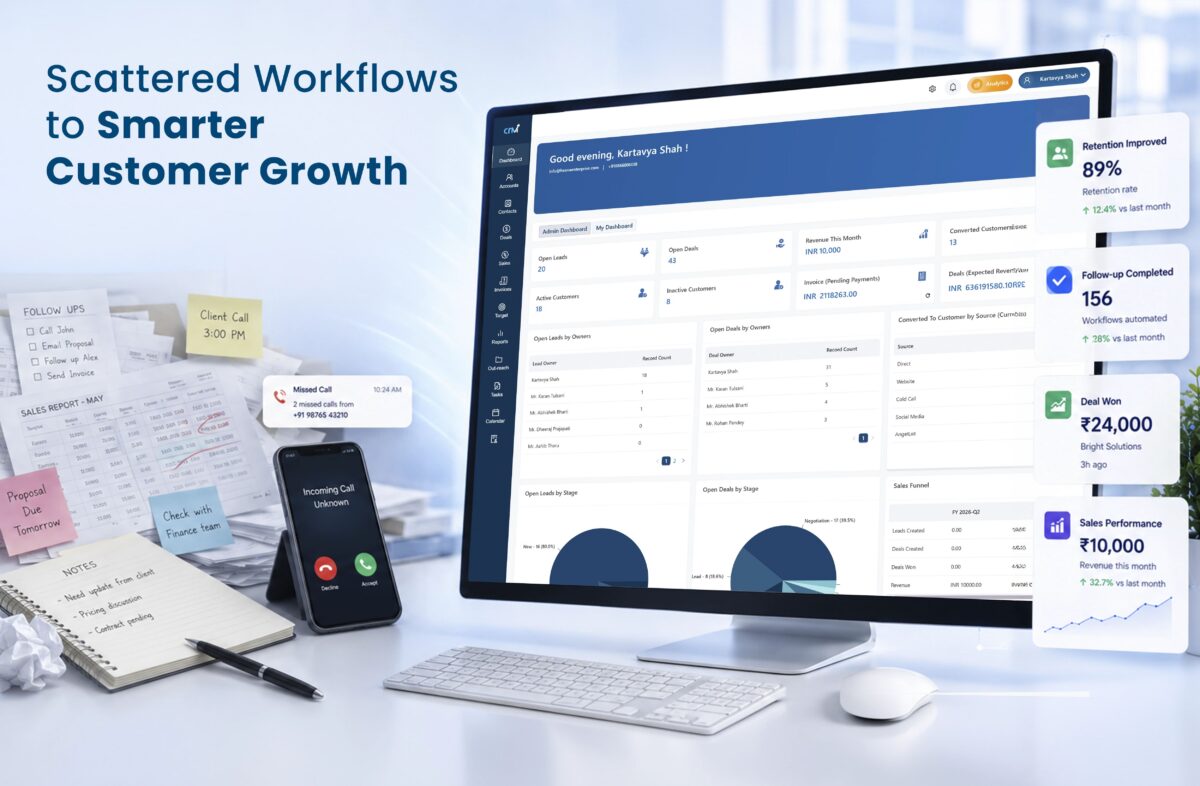
Modern businesses can no longer afford to rely on spreadsheets, sticky notes, or isolation to maintain their customer relationships. As the sales cycle gets longer and customer demands rise, organizations are moving toward smarter systems that deliver greater efficiency and greater visibility.

That’s where custom CRM solutions are revolutionizing business operations. Unlike generic platforms, tailored CRM systems adapt to specific workflows, automate repetitive sales activities, and provide real-time insights that help teams make faster decisions.

Businesses today are also focusing heavily on how to improve customer retention strategies and increase sales performance with CRM software. Automation has become central to achieving these goals because it reduces manual effort while improving customer engagement consistency.

Solutions such as WeekMate allow businesses to merge productivity management with smart CRM workflows to establish a trusted, more efficient ecosystem.

What Are Custom CRM Solutions?

Custom CRM solutions are customer relationship management systems built specifically around a company’s day-to-day operations, sales process, and customer interaction methods.

Traditional CRM systems generally have predefined features and standard workflows. Although these programs may be suitable for certain small businesses at first, they often need to be replaced as the business grows.

A CRM tailored specifically to your needs will allow you to:

  • Automate internal workflows.
  • Track customer interactions more efficiently.
  • Integrate with existing business systems.
  • Customize dashboards and reporting.

The main benefit of customization is alignment. Instead of forcing businesses to fit their processes to the software, they can create software that fits their processes. This flexibility makes tailored CRM systems significantly more valuable than rigid, off-the-shelf alternatives.

Why Businesses Need Tailored CRM Systems?

Many companies choose a standard CRM product at first because it can be up and running quickly. But the limitations begin to show as the business grows.

Common customer relationship management tools can have too many unnecessary features and too few essential ones for a particular business sector. Teams can be challenged by inflexible workflows, inadequate integrations, or ineffective reporting hierarchies.

That’s why more organizations are turning to a custom CRM software development company to design solutions that fit their business models.

73% of customers want companies to understand their unique needs and expectations. Off-the-shelf solutions usually lack the level of customization needed to meet these demands.

Businesses can scale more quickly with a customized CRM without compromising operational efficiency or the customer experience.

Must Read: Benefits of Custom CRM Software for Growing Businesses

How Custom CRM Improves Customer Retention?

Customer retention has emerged as one of the key business growth indicators in 2026. Because acquiring new customers is costly, maintaining relationships over time is crucial to profitability.

A well-developed customer data management system enables businesses to consolidate customer interactions, transaction history, communication preferences, and the ways they engage with customers.

This level of visibility also allows companies to better tailor their communication to the recipient. For instance, a series of automated reminders, customized proposals, and recovery efforts may be triggered based on the customer’s behavior. These automations provide a more engaging customer experience without the need for additional manual labor.

Businesses looking to improve customer retention strategies are increasingly investing in CRM automation because it enables proactive engagement instead of reactive communication. Automation further reduces the risk of missed follow-ups, late responses, or  uneven customer experiences.

Boosting Sales Performance with Tailored CRM Solutions

Sales teams often spend a significant amount of time on repetitive administrative tasks rather than actual selling. And this is where CRM automation makes a tangible difference. 

Tailor-made systems enable this to be done automatically for lead assignments, follow-up scheduling, and even task reminders and progress reports. This means your salespeople are more likely to focus on building relationships and closing deals.

Companies can also increase sales performance with CRM by implementing:

  • Automated lead scoring.
  • Sales forecasting dashboards.
  • Pipeline tracking.
  • Real-time reporting.

According to research, less than 40% of sales professionals’ time is spent on actual selling, with administrative duties taking up most of their workday. Automation tackles this problem efficiently.

As a result of eliminating tedious tasks, organizations achieve better response times, reduced human error, and faster deal closings.

Manual Sales Tasks vs CRM Automation

Manual Process

CRM Automation Benefit

Manual data entry

Automatic customer record updates
Spreadsheet lead tracking

Real-time pipeline management

Reminder follow-ups

Automated notifications and sequences
Separate communication tools

Centralized communication tracking

Static reports

Live dashboards and analytics

Key Features of an Effective Custom CRM

A good CRM allows you to achieve the best of both worlds: high efficiency and effective customer experience management.

One of the most critical features is a centralized customer data management system. Companies require a holistic view of the customer across channels to deliver consistent customer interactions.

Workflow automation is also a key feature. CRM platforms can be tailored and used to automate the everyday tasks and workflows specific to your business.

Just as important are the integration capabilities. Today, businesses work on different platforms for accounting, communication, marketing, and support. With CRM integration, you can ensure your data flows seamlessly between systems.

Analytics dashboards also play a key role. By tracking sales performance, customer engagement, and operational bottlenecks in real time, insights allow vice-president teams to significantly outperform their counterparts. Mobile access is also needed, particularly in remote and hybrid work settings.

Impact of WeekMate on CRM Efficiency

WeekMate enables businesses to increase productivity while improving CRM efficiency. Traditional CRM software enables users to manage only such records. With WeekMate, customers can better align teams around customers through real, daily execution and operational responsibility.

The framework supports:

  • Task and workflow visibility.
  • Tracking of customer interactions.
  • Team coordination.
  • Goal-driven productivity control.

This seamless integration enables companies to coordinate their sales and operational processes.

Choosing the Right Custom CRM Development Partner

Finding the right development partner is a key driver of CRM success. A professional custom CRM software development company should be well-versed in both technological development and business processes.

Companies should assess:

  • Industry experience.
  • Customization abilities.
  • Integration expertise
  • Scalability planning.
  • Post-launch support.

It is also important to ask practical questions before development begins:

  • Will the CRM grow with the business?
  • How flexible are the automation workflows?
  • What integrations are supported?
  • How is data security managed?

Cost matters, but long-term operational value matters more. A robust CRM is an infrastructure investment, not a quick software buy.

Predictions for Custom CRM Development in the Future

Traditional CRM is increasingly being shaped by AI, predictive analytics, and automation. Organizations are prioritizing hyper-personalized customer experiences through intelligent technologies. CRM software can now anticipate customer behavior, suggest best practices for engagement, and even automate decision-making.

Automation will continue to replace the monotonous manual tasks in sales and customer service. Integration is also getting deeper. CRM will also integrate more closely with productivity tools, communication tools, and operations management solutions such as WeekMate.

These developments will further empower custom CRM solutions in business scalability and competitive differentiators.

Must Read: Why Custom CRM Software is the Future of Business Automation?

Conclusion

Automation is no longer a nice-to-have plug-in for CRM applications; it is evolving into the very basis by which business efficiency is measured.

Modern custom CRM solutions enable organizations to reduce manual sales efforts, increase customer engagement, and scale their operations more efficiently. From internal automation to complex predictive analytics, tailored CRM systems deliver operational flexibility not often available from standardized platforms.

As companies focus on improving customer retention and increasing sales performance through CRM, automation-driven CRM systems will continue to play a central role in growth. WeekMate embodies this modern approach by combining productivity management with customer workflow optimization, helping businesses build smarter, more scalable operational systems for the future.

FAQs

1. What are custom CRM solutions?

Tailored CRMs are customized CRM systems that align with a company’s specific workflows, sales process, and customer management requirements. They are more flexible, scalable, and adaptable than traditional CRM software.

2. How does sales automation replace manual sales activities?

CRM software automates repetitive tasks such as follow-ups, lead tracking, reminders, and reporting. This gives sales teams less manual work and more time to close deals and build relationships.

3. Why is a customer data management system important?

A customer data management system allows users to store all information in one place, and teams can easily access it on the go to get precise data. It enables better personalization, communication, and decision-making between teams.

4. Is it possible to improve customer retention with CRM software?

Yes, companies can enhance their customer retention strategies by leveraging CRM platforms to better track customer behavior over time, personalize communications, automate follow-ups, and more. With CRM systems, businesses can now enhance how they interact with customers and improve customer retention.

5. How can companies improve sales effectiveness with CRM?

CRM can help businesses improve sales performance by enabling them to more effectively manage their pipelines, automate workflows, efficiently track leads, and leverage analytics to refine predictive sales decisions.

6. What should companies look for in a CRM development company?

A trustworthy bespoke CRM software development company must offer scalability, integration support, various customization options, and project-long technical support tailored to business-specific needs.

7. How does WeekMate support CRM optimization?

WeekMate integrates productivity with CRM processes to help teams streamline their activities, capture customer experiences, and drive operational efficiency through a unified platform.
Top 10 Benefits of Custom CRM Software for Growing Businesses

In a world where the customer is king, companies need more than just spreadsheets and siloed software to track their interactions with clients. Today’s CRM software for businesses enables firms to manage customer data, communications, and sales in a more organized manner. However, standard CRM systems may not meet the unique business requirements during a business scale-up.

That’s when custom CRM software is a strategic asset. Instead of making teams work within a set framework, bespoke CRM solutions are built around existing working practices, business objectives, and customer engagement models.

The growing importance of customized digital infrastructure has made custom CRM software development more vital to enterprises for growth and efficiency than ever before. Tools such as WeekMate are enabling companies to build adaptable CRM platforms that support evolving business priorities.

In this blog, we will discuss the top benefits of custom CRM software, why fast-growing companies need tailored solutions, and how custom CRM solutions empower them to achieve sustainable competitive advantage.

What is Custom CRM Software?

Custom CRM software is a specialized customer relationship management application crafted to suit the working processes and objectives of a particular business.

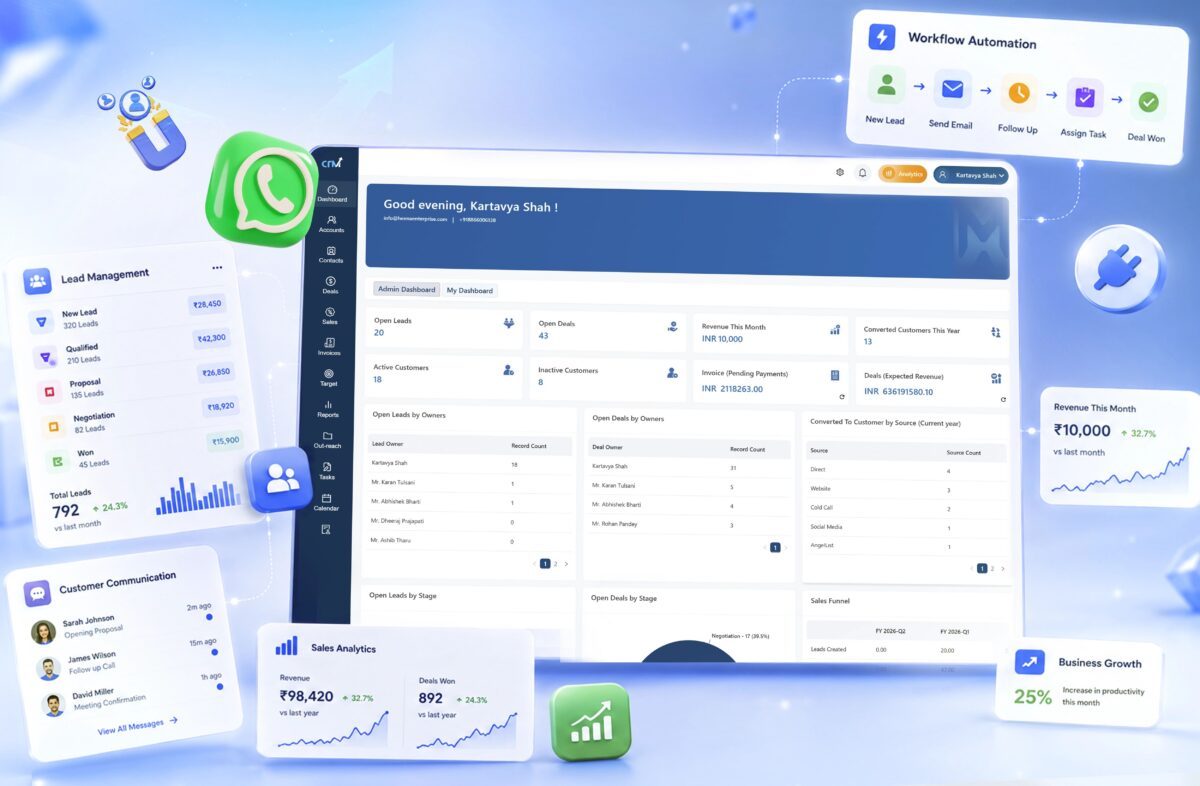
In contrast to packaged software, which provides generic features, bespoke CRM solutions are built around a business’s specific needs. They can pick and choose features that specifically relate to their sales, marketing, and support methodologies.

Custom CRM platforms typically have: 

  • A lead management system.
  • Reporting and analytics dashboards.
  • Automation features.
  • Integration capabilities.
  • Customer communication tracking.

These customized systems are more efficient because they have the resources you need without those you do not use.

Why Growing Businesses Should Utilize CRM Tools?

When companies grow, it gets much harder to interact with customers manually. Sales teams lack access to consolidated data that customer support teams are blind to, and leadership teams struggle to monitor performance metrics.

This is why companies invest in CRM tools for business growth. A CRM system pools customer data and shares it organization-wide. Teams can monitor interactions, predict customer trends, and uncover opportunities more efficiently.

Companies that implement CRM report better customer satisfaction and more productive selling. Also, studies have shown that CRM returns an average of $8.71 for every $1 invested. These are some reasons why tailored CRM systems are becoming essential growth enablers.

Generic CRM vs Custom CRM

Feature Generic CRM Custom CRM Software
Flexibility Limited; bound by pre-set architecture Fully customizable and adaptable
Workflow Alignment Standardized; team must adapt to the software Tailored to match unique business needs
Integrations Restricted to supported third-party apps Flexible integration options with any tool
Scalability May require expensive tier upgrades Built for future growth without seat-cost penalties
User Experience Generic interface with unused bloat Optimized for internal teams and high adoption
Automation Predefined and rigid Customized automation workflows for specific tasks

This comparison clearly demonstrates the long-term benefits of custom CRM software for scaling businesses.

Top 10 Benefits of Custom CRM Software

1. Custom-Made to Your Business Requirements

Among the largest benefits of tailored CRM solutions is the flexibility they offer.

Each company has its own way of working. Generic software often includes unnecessary features while lacking essential capabilities. A customized solution aligns perfectly with internal workflows.

This level of customization increases efficiency and reduces employee frustration, making it one of the key benefits of bespoke CRM systems.

2. Robust Lead Management System

An effective lead management system is essential for sales growth. In custom CRM systems, companies can create a pipeline that aligns with their sales process. Teams can assign scores to leads, monitor interactions, and even trigger follow-ups based on the lead’s behavior. Greater control increases conversion rates and reduces lost opportunities.

3. Better Customer Retention

Customer loyalty is cheaper than constant new business. Businesses can also improve customer retention with CRM by personalizing communication, automating follow-ups, and tracking customer history.

Tailored CRM software enables firms to forge powerful relationships with their customers through customized engagement models.

Must Read: How Custom CRM Solutions Improve Customer Retention?

4. Seamless Workflow Automation

Growth is being hindered by manual processes. A robust workflow automation CRM enables such tasks to be automated, like:

  • Lead assignments.
  • Follow-up emails.
  • Status updates.
  • Task reminders.

Automation increases productivity with less human error. Teams are spending less time on admin work and more time on strategic work.

5. Easy Integration with Existing Tools

Modern businesses use a combination of software. This is where CRM integration services come into play. A custom CRM can seamlessly integrate with ERP systems, accounting software, email platforms, and marketing tools. Integrated systems enhance data consistency and break down silos between departments.

6. Scalable for Future Growth

Businesses need to change as they grow. A custom CRM system is more adaptable and scalable to future needs and demands. Companies can add new features, departments, or workflows rather than swapping out entire systems. This flexibility reduces post-migration expenses and minimizes operational disruptions.

7. Better Data Security

Data privacy and compliance are top concerns in 2026. A custom CRM system offers greater control over security measures. Companies can set access control, encryption, and Compliance policies according to their Industry standards. This degree of control is especially important for companies that handle sensitive customer data.

8. Reporting & Analytics Advanced

Good reporting is essential for data-driven decision-making. Custom dashboards enable companies to measure KPIs, sales, and customer data at any moment in time. These leaders can leverage this data to better understand patterns, predict revenue, and fine-tune operational tactics.

9. Better Team Collaboration

Fragmented communication generates inefficiency. Tailor-made CRM systems consolidate all your customer information in one place, enabling your sales, marketing, and support teams to work more effectively together. Increased visibility leads to better coordination and a harmonized customer experience across functions.

10. Competitive Edge

All industries are different and have distinct operational requirements. Tailored CRM platforms offer a range of specialized features designed for niche businesses. That leads to faster workflows, improved customer experiences, and greater agility to make better decisions. These operational advantages become critical differentiators in competitive markets.

Key Features to Include in Custom CRM Development

Everything goes your way, scale, and ease of use for a great occasion plan in the successful custom CRM development roadmap.

Features:

  • Advanced lead management system.
  • Built-in workflow automation CRM tools.
  • Reporting and analytics dashboards.
  • Access through mobile.
  • Robust CRM integration services.

The intent is to create a platform for operational efficiency without the complexity of many other software solutions.

How WeekMate Helps with Custom CRM Development?

WeekMate helps businesses build scalable CRM ecosystems that fit their work.

Its development process includes:

  • Business consultation and requirement analysis.
  • Customized CRM architecture planning.
  • Development and deployment.
  • Integration and optimization success.

Unlike many generic solutions, WeekMate is designed to seamlessly integrate CRM functionality into your business processes. This also ensures that your team gets more out of the platform faster and maximizes ROI.

Companies interested in learning more about operational insights and workflow services are encouraged to read this blog post: The Business Case for CRM Software.

Best Practices for Implementing Custom CRM Software

Strategic planning is necessary for CRM success. Businesses should:

  • Set clear expectations for day-to-day operations.
  • Involve key stakeholders early.
  • Plan the integration.
  • Evolve your processes continuously.

CRM adoption improves significantly when employees understand how the platform supports their daily responsibilities.

Also Read: Why Custom CRM Software is the Future of Business Automation?

Common Mistakes to Avoid While Implementing Custom CRM Software

Many CRM implementations fail because companies make the development too complex. Frequent mistakes include:

  • Adding unnecessary features.
  • Neglecting user training.
  • Poor integration planning.
  • Not to set measurable objectives.

The best CRM should be easy to use and scale well, rather than being too complicated for users.

Conclusion

As businesses scale, operational complexity increases. Generic systems often end up imposing constraints that are more limiting than the original challenges they were designed to address.

Some of the long-term benefits of custom CRM software include better alignment with business workflows, enhanced automation, increased customer retention, and scalable infrastructure suitable for business expansion.

With high-level insights to smooth integrations, personalized CRM solutions enable providers to boost operational efficiency while enhancing customer care.

WeekMate plays a key role in helping businesses build flexible, future-ready CRM ecosystems. By combining automation, integration, and tailored workflows, WeekMate enables companies to build CRM systems that support sustainable growth and long-term competitive advantage.

FAQs

1. What is custom CRM software?

Custom CRM software is a customer relationship management (CRM) system tailored to a company’s specific workflows, processes, and business objectives. It offers more customization options than standard CRM solutions.

2. Why do businesses in growth need to have CRM software?

Business CRM software centralizes customer information, enhances communication, and simplifies sales processes. It becomes increasingly necessary as business grow and the volume of customer interactions increases.

3. In what ways do sales benefit from lead management?

Lead management software monitors customer interactions, prioritizes opportunities, and automates follow-ups. Sales teams use this to improve lead conversion rates and reduce lost leads.

4. What is workflow automation CRM?

Workflow Automation in CRM performs repetitive tasks, such as assigning leads and sending reminders or follow-up emails. It enhances productivity and reduces manual work and operational errors.

5. What is the importance of crm integration service?

CRM integration services enable CRM platforms to connect with your other business tools, such as ERP systems, email platforms, and marketing software. That increase in data consistency bolstered operational efficiency.

6. Is there any improvement in customer retention through custom CRM software?

Yes, organizations can increase customer retention with CRM by personalizing communication, monitoring customer behavior, and using proactive engagement techniques to foster relationships.

7. Why WeekMate for CRM development for businesses?

WeekMate provides flexible, customized CRM development services to meet any business need. Its emphasis on automated processes, integrations, and workflow determinism lies at the heart of sustainable business growth.

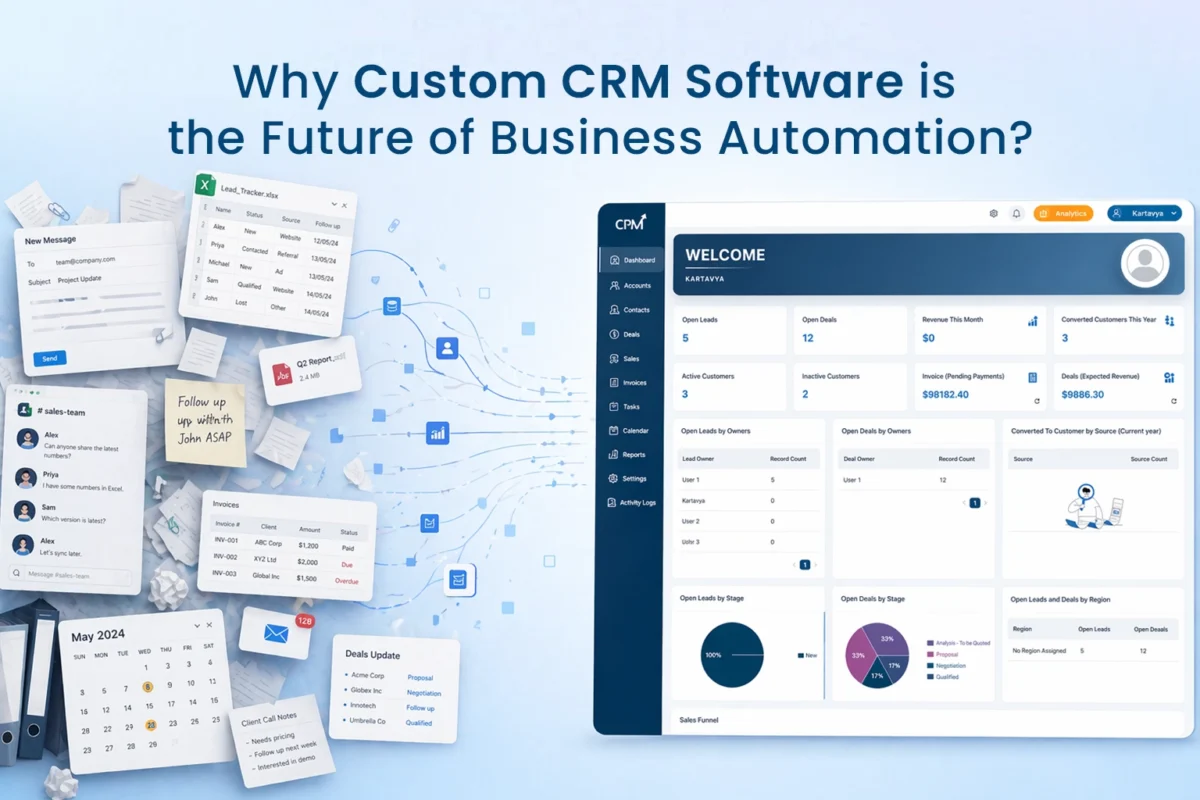
Why Custom CRM Software is the Future of Business Automation?

Indian firms are racing to implement digital transformation to survive in the quickly changing market. From startups in Bengaluru to SMEs in Kolkata, the demand for smarter systems and more streamlined operations has never been higher. This change has led to demand for automation business tools that require minimal manual work and cannot be compromised on in terms of productivity.

Among the solutions having the largest impact on industry transformation is Custom CRM software. Unlike generic systems, it adapts to your business processes and grows with you. Meanwhile, CRM powered by AI is revolutionizing how companies acquire, serve, and retain customers.

Sales can increase by up to 29%, and productivity by up to 34% when CRM systems are used. Another report also predicts that the global CRM market will grow to $157 billion by 2030. The significance of these figures underscores the crucial role of CRM software in today’s business growth.

What is Custom CRM Software?

Custom CRM software is tailored to your company’s specific needs and lets you manage customer relationships in line with your own processes and goals. It enables firms to organize interactions, follow prospects, and boost customer engagement.

Unlike ready-made CRM products, custom-built solutions are designed specifically for your workflows.  This gives them greater adaptability and expandability.

Essential Elements:

  • Consumer data control: A single storage place for customer data.
  • Workflow automation systems: Automating repetitive tasks.
  • Integration features with other tools for business.

These combined elements provide powerful CRM benefits that extend well beyond simple customer tracking.

Why Businesses Are Moving Toward Custom CRM Solutions?

Understanding why custom CRM is important for business is flexibility. Each organization runs its business its own way, and generic CRMs can be limiting.

A Custom CRM enables companies to align with their specific workflows rather than trying to adapt to technology. It also guarantees scalability as activities expand. This flexibility boosts business automation and enhances productivity.

For Indian businesses, particularly SMEs, a customized solution can give them an edge in niche markets. That’s why the importance of custom CRM for business isn’t in question but it’s a must.

Top Benefits of Custom CRM Software

The benefits of CRM software are both immediate and long-term.

  • Centralized customer data management improves accessibility and accuracy
  • Improved team collaboration between departments
  • Better customer experience via customized interaction
  • Sophisticated reporting and data analytics
  • Increased sales productivity

The following CRM software features enhance a company’s ability to shift from reactive operations to proactive growth-oriented strategies.

How Custom CRM Software Improves Business Automation?

CRM is vital to business automation. It automates repetitive tasks such as follow-ups, lead tracking, and email communication, reducing manual work.

When synchronized with workflow automation systems, CRM systems ensure the coordination of all departmental processes. This minimizes mistakes made by people and saves time.

In essence, business automation enabled by CRM allows the team to spend more time strategizing and engaging with customers rather than performing routine tasks.

Must Read: How Custom CRM Solutions Improve Customer Retention?

AI-Driven CRM Solutions: A New Level of Functionality

The emergence of AI-powered CRM systems marks a new era in managing customer relationships. These systems not only store data but also deliver actionable insights.

Highlights:

  • Forecast analytics to aid decision-making
  • Chatbots and virtual assistants for receiving immediate assistance
  • Smart lead scoring
  • Tailored recommendations

Businesses can utilize AI-powered CRM solutions to deliver higher-quality customer service while increasing productivity. These are revolutionizing how organizations use Business Automation.

The Role of CRM Software in Digital Transformation

The importance of CRM in digital transformation is mind-blowing. CRM serves as the DNA of digital activities by aggregating customer information and enabling data-driven decision-making.

It heightens the pull effect on multi-channel communications, including email and social media. It also enables work-from-home and hybrid work by making information instantly available. This knowledge of how to leverage the power of CRM in digital transformation enables companies to strengthen and deepen their customer relationships.

Custom CRM vs Traditional CRM: Which is Better?

This comparison illustrates that custom CRM solutions are becoming increasingly popular among businesses. 

Feature

Custom CRM

Traditional CRM

Flexibility

Highly customizable Limited customization
Cost Over Time Higher initial, lower long-term

Lower initial, higher recurring

Integration

Seamless with existing tools Often limited

User Experience

Tailored to team needs

Generic interface

ROI High long-term value

Moderate

Industries That Benefit Most from Custom CRM Solutions

Many industries in India are using Custom CRM software for better efficiency:

  • E-commerce: Dealing with vast customer profiles
  • Healthcare: Enhance the patient experience
  • Estate: Property sales and leads tracking
  • Finance: Deepening customer ties
  • SaaS business: Subscriptions and support management

These sectors benefit greatly from improved customer data management and automation capabilities.

Common Challenges of Custom CRM Development

While the benefits are obvious, companies also have to weigh:

  • Development time and cost
  • Selecting the right technology partner
  • Security and regulatory compliance of data
  • User acceptance and training

Addressing these challenges will ensure that you maximize your CRM software benefits for years to come.

Future Trends in CRM Software and Business Automation

The future of CRM is really about innovation. Key trends include:

Rise of AI-powered CRM systems

  • Hyper-personalization of customer engagement
  • Connection with IoT and big data
  • Voice-enabled CRM systems
  • Rise of low-code and no-code solutions

These breakthroughs will take business automation to the next level and change how businesses operate.

Also Read: CRM Software in 2026: ROI, Benefits, and Business Growth

Final Thoughts

The shift towards custom CRM software is not just a trend but a strategic move towards smarter operations. As businesses continue to automate, the need for scalable, adaptive systems that drive tangible business outcomes is greater than ever.

From advancing customer data management to creating intelligent workflows with AI-driven CRM solutions, these tools are urgently needed by today’s organizations. Benefits of CRM software go beyond process efficiency; they fuel growth, innovation, and customer satisfaction.

Platforms such as WeekMate enable firms to combine CRM functionality with workforce management and automation to deliver a complete solution that drives efficiency and profitability.

FAQs

1. What is custom CRM software?

Custom CRM software is a system designed specifically for your organization’s processes and workflows. It offers greater flexibility and scalability than generic CRM tools.

2. Why is building your own CRM essential for your business?

It enables businesses to customize the technology to their needs and requirements, making the solution more flexible and scalable. The end result is long-term growth, greater efficiency, and higher productivity.

3. What is the role of CRM in the automation of business?

CRM systems automate repetitive tasks such as follow-ups, lead tracking, and reporting. That eliminates some manual work and allows teams to prioritize more strategic, customer-focused tasks.

4. What are AI-powered CRM systems?

AI-driven CRM uses advanced technologies, such as predictive analytics and chatbots, to improve decision-making. They can even provide more personalized customer experiences at scale.

5. Which sectors are suitable for customized CRM?

Most notably in industries such as e-commerce, healthcare, real estate , and finance. These divisions are highly dependent on automation and customer data management.

6. What are the advantages of using CRM software?

Key advantages include centralized customer information, enhanced team collaboration, superior customer experience, and greater sales productivity. As a result, all these features help the business run smoothly.

7. How can WeekMate help with CRM & Automation?

WeekMate combines CRM, labor management, and automation in a single platform. This leads to better visibility, more streamlined processes, and greater overall business efficiency.

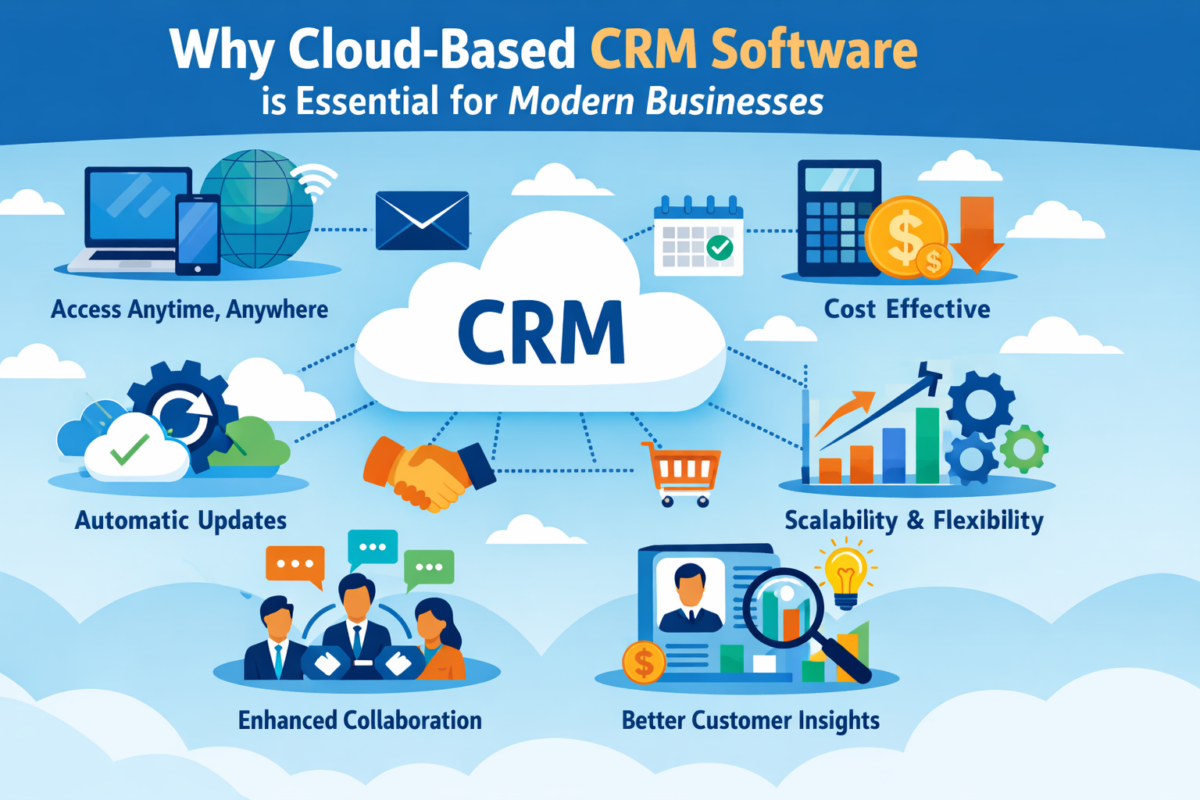
Why Cloud-Based CRM Software is Essential for Modern Businesses

Organizations are now experiencing a significant digital evolution. From the way they communicate to the way they sell, everything is getting faster, smarter, and more customer-focused. This change in times has forced companies to adopt more efficient systems for aspects of business, such as customer relationship management tools, in order to stay in the market and retain customers.

That’s where cloud-based CRM software really shines. It enables companies to organize their customer interaction, sales, and help lists from a single place. Many organizations are ditching antiquated systems and turning to modern CRM systems tailored to today’s digital landscape.

What is Cloud-Based CRM Software?

Cloud-based CRM software is a type of customer relationship management software in which data is stored on cloud servers and can be accessed by businesses at any time, from anywhere. It’s not like the old days, when you needed to have a bunch of hardware and do manual maintenance.

Cloud CRM vs On-Premise CRM

Feature On-Premise CRM Cloud CRM
Installation Local servers Online/cloud
Cost High upfront Subscription-based
Accessibility Limited Anywhere access
Updates Manual Automatic
Scalability Limited Highly scalable

Cloud CRM is a powerful component of business management software that enables teams to work cohesively and make informed, collaborative decisions using real-time insights.

Important Features of the Recent CRM System

Today’s modern CRM systems are more than an address book or a contact list.

Key features:

  • Centralized Data Management: All customer data in one accessible database
  • Automation: Sales, marketing, and support procedures are automated
  • Insights in real time: You have access to data and analytics en vivo
  • Integrations: Integrates with your e-mail, marketing, (finance), and more
  • Customization: Businesses can tailor features through custom CRM software

All of these capabilities enable CRM to be an extremely effective tool for increasing productivity and customer satisfaction.

What Are the Benefits of Cloud CRM?

The advantages of cloud CRM have been among the driving factors behind the solution’s rapid adoption.

Key Benefits:

  • Cost-Effective: No costly infrastructure installation.
  • Remote Accessibility: Work as a team, from anywhere! Work as a team, from anywhere!
  • Scalable: Scales up with your business.
  • Data Security: Advanced security and frequent updates.
  • Team Collaboration: Work from a single data set.

Industry reports state that more than 70% of companies now lean towards cloud solutions due to their flexibility and cost benefits. These cloud CRM benefits also make it a good choice for both small and large companies.

How Cloud CRM Improves Customer Relationships?

Understanding why and how cloud CRM improves customer relationships is what will help you recognize its importance.

What You Can Do:

  • Customized Interactions: Communication tailored to the customer’s information.
  • Faster Responses: You have your customers’ history at your fingertips.
  • Customer Journey Tracking: Track each interaction at every touchpoint.
  • Improved Communication: Alignment across teams.
  • Data-Driven Engagement: Insights-driven improvements.

Companies that focus on how cloud CRM improves customer relationships often have higher retention and satisfaction rates.

The Importance of CRM in Growing Your Business

The role of CRM in business growth is significant and measurable.

Growth Drivers:

  • Sales pipelines that are more efficient.
  • More efficient campaigns.
  • An increase in customer retention.
  • The business owner can better forecast and plan.

Decision-making based on data. Research indicates that companies that implement CRM systems can experience a sales productivity increase of up to 34 percent. So the impact of CRM on business growth is clearly more than operational; it affects your bottom line.

Also Read: Why More Businesses Are Investing in CRM Software in 2026

Benefits of Custom CRM Software

Each business is different, so custom CRM software development is more applicable.

What Is Means:

With custom CRM software, companies can build the features they need to reflect their own workflow, tailored to their industry needs and objectives.

Advantages:

  • Custom processes
  • Greater efficiency
  • Higher user adoption

Industries That Profit:

  • Healthcare
  • Real estate
  • E-commerce
  • Financial services

Customized solutions like WeekMate offer a much more tailored experience, with greater flexibility and long-term value, compared to generic CRM software for businesses.

Must Read: Benefits of Custom CRM Software

Selecting the Right CRM Software for Businesses

Selecting the right CRM software for businesses requires careful planning.

Things to Consider:

Factor What to Look For
Business Size Scalable solutions
Budget Clear ROI and pricing
Features Automation, analytics, integrations
Ease of Use Simple interface
Support Reliable vendor assistance

Selecting the ideal CRM software for your business that matches your long term vision and functionality requirements is crucial.

The Next Wave of Cloud CRM

Cloud CRM is evolving fast.

Growing Trends:

  • AI-powered automation
  • Predictive analytics
  • Mobile-first platforms
  • IoT & Advanced Tools Integration

By 2026, intelligent CRM platforms will be the foundation of more than 80% of businesses. This underlines the increasing role modern CRM systems play in securing business growth.

Suggested Read: Future of Business Automation with Custom CRM Systems

Summary

In the current, fast digital world, adopting cloud-based CRM software is no longer acceptable, but a necessity. It allows the company to efficiently engage with its customers, streamlining its processes and enabling informed decision-making. That contributes to everything from better collaboration to personalization, and CRM is about success over the long term. Businesses that implement modern CRM systems such as WeekMate and embrace the flexibility of custom CRM software are positioned to grow, evolve, and stay ahead of the competition.

FAQs

1. What is a cloud CRM?

It serves as a platform that stores customer information in the cloud and enables companies to access and manage that data from any location. It also provides automation, scalability, and real-time data to support smarter decisions.

2. How can a CRM grow my business?

CRM streamlines the sales, marketing, and customer service processes. CRM is very important for business growth, as it helps the company make more money and work more efficiently.

3. What are the benefits of cloud CRM?

The benefits of using cloud CRM include cost reduction, accessibility from anywhere, scalability, and ease of collaboration among team members. It also provides data protection and automatic updates.

4. How does cloud CRM endear customers to a business?

Understanding how cloud CRM improves customer relationships shows how it enables personalized communication, faster responses, and better tracking of customer interactions across channels.

5. What is a custom CRM solution?

Custom CRM software solutions are designed and developed to meet unique business needs and processes. It offers greater flexibility and efficiency than off-the-shelf CRM products.

6. How do I select the best CRM software for my company?

Businesses should evaluate features, pricing, scalability, and ease of use. The right CRM software for businesses should align with company goals and support future growth.

7. Can I use CRM as business management software?

Yes, CRM plays an integral role in business management software, as it allows you to organize customer information, sales, and communications in one easy-to-use system.

Become A Partner