8 Best CRM Software for Accounting Firms (2026 Comparison Guide)

Running an accounting firm today is not just about numbers anymore. It’s about relationships. Follow-ups. Timelines. Deadlines that don’t forgive delays.

And somewhere in between client calls, tax filings, and audits, things slip.

That’s exactly where CRM software for accounting firms steps in. Not as another tool, but honestly, more like a control center.

Let’s break this down in a simple, practical way. No fluff, no jargon.

What Is Accounting CRM Software?

A CRM, or Customer Relationship Management system, is where all your client information lives. Not just names and email addresses. It holds conversations, reminders, documents, tasks, and pretty much every touchpoint you’ve ever had with a client.

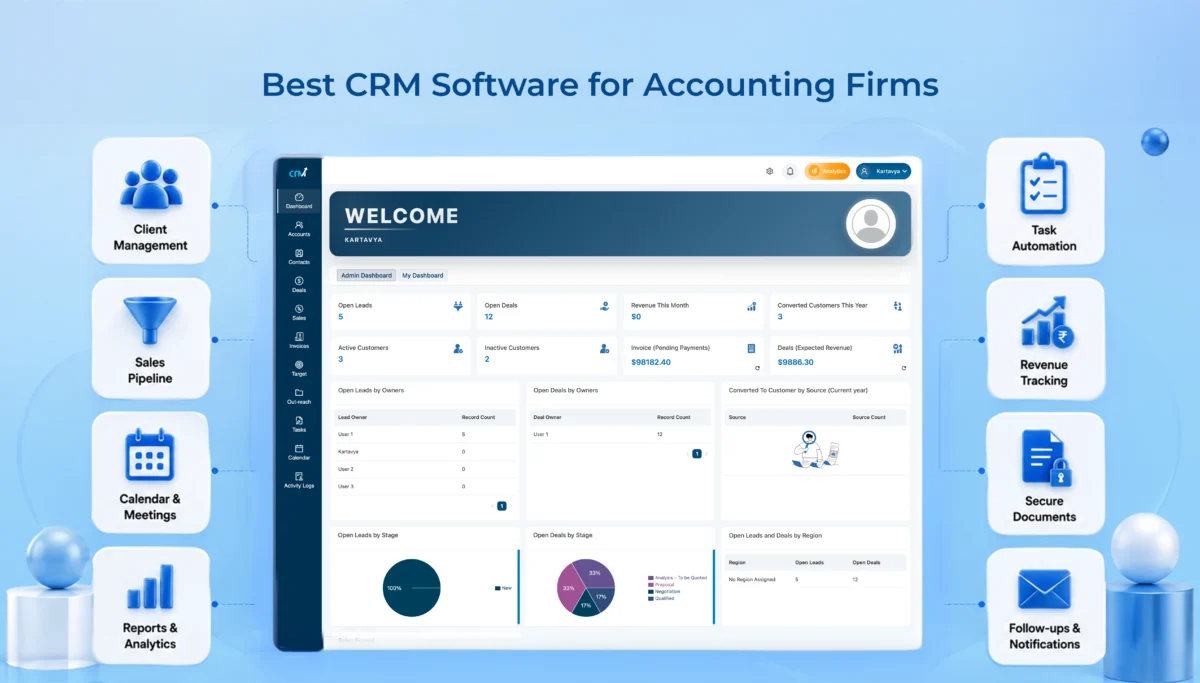
For accounting firms, that same idea gets sharper and more specific. An accounting CRM keeps track of your clients’ financial history, upcoming tax deadlines, follow-ups for pending documents, communication logs, and revenue tracking, all in one place.

Put simply, it’s your firm’s memory. The difference is, this one never forgets a deadline, never loses a document request, and never lets a client slip through the cracks.

Why Accounting Firms Need CRM Software

You can run a small firm without a CRM, sure. But once you cross even 20 – 30 clients, things get messy. Let’s talk about where CRMs actually make a difference.

1. Managing Leads and Prospects Efficiently

New inquiries come from everywhere -emails, referrals, website forms. Without a system, they get lost. Or worse, ignored.

A CRM keeps all leads in one place, tracks where they came from, and shows what needs to happen next. No guesswork.

2. Improving Client Retention and Relationships

Clients don’t leave because of pricing most of the time. They leave because they feel ignored.

Missed follow-ups. Delayed replies. No proactive communication.

A CRM helps you stay consistent. Even small reminders, like checking in before tax season, can make a big difference.

Must Read: How Custom CRM Solutions Improve Customer Retention

3. Automating Follow-Ups and Reminders

This one’s huge. Instead of remembering everything manually, you set automated reminders:

  • “Follow up for pending GST documents”
  • “Send tax filing reminder”
  • “Invoice due in 3 days”

And the system nudges you. Simple, but powerful.

4. Tracking Sales Opportunities and Revenue

If your firm is growing, you need visibility.

Who’s converting?
Which services bring revenue?
Where are deals getting stuck?

CRMs show you the full pipeline, not just closed clients.

5. Enhancing Team Collaboration

When multiple people handle the same client, confusion happens. A CRM ensures everyone sees:

  • Last communication
  • Pending tasks
  • Shared documents

No more “I thought someone else handled it…”

Suggested Read: Why Cloud Based CRM Software is Essential for Modern Businesses

8 Best CRM Software for Accountants (2026)

Alright, let’s get into the real comparison. Here are some of the best CRM tools accounting firms are actually using in 2026.

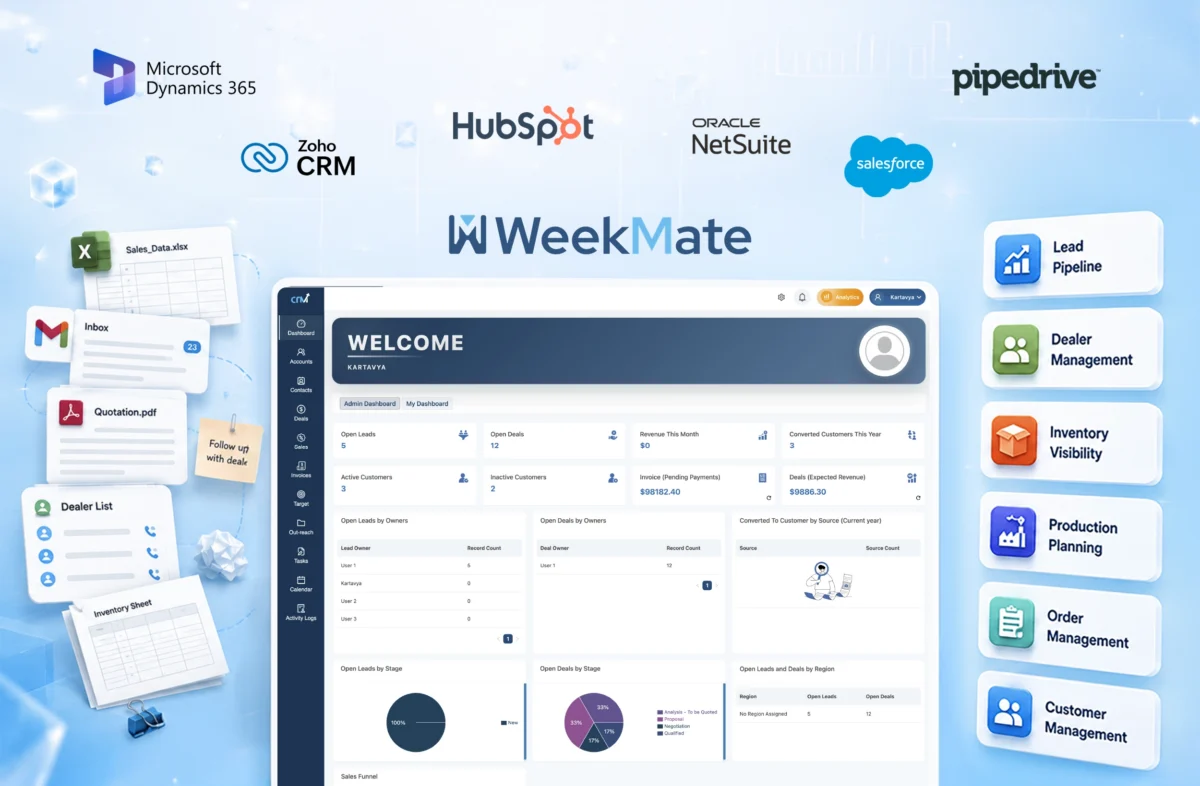
1. WeekMate CRM – Best CRM for Small and Mid-Sized Accounting Firms

WeekMate CRM is designed for accounting firms which need simplicity along with functionality. It combines client management, task tracking, and automation in one place. This helps teams stay organized without juggling multiple tools or overcomplicated systems.

Key Features

  • Client and lead management in one dashboard
  • Task and follow-up automation
  • Built-in invoicing and pipeline tracking
  • Integration with HR and operations modules
  • Real-time notifications and reminders

Pros

  • Easy to use (no steep learning curve)
  • Designed for SMEs and service businesses
  • Combines CRM + task + operations

Cons

  • Not ideal for very large enterprise setups

Pricing

Starts from custom pricing (typically more affordable than global CRM tools)

Why Accounting Firms Choose It

Because it solves multiple problems at once, without making things complicated.

2. HubSpot CRM – Best Free CRM for Accountants

HubSpot CRM is a good starting point for firms new to CRM tools. It offers essential features like contact management and pipeline tracking. Since it’s free to start, there’s no pressure or big investment upfront.

Key Features

  • Contact and lead management
  • Email tracking and notifications
  • Sales pipeline visibility
  • Meeting scheduling tools

Pros

  • Free plan available
  • Easy to use
  • Quick setup

Cons

  • Paid plans get expensive
  • Automation locked behind higher tiers

Pricing

Starts from $0 (free plan) and paid plans from ~$20/user/month

Why Accounting Firms Choose It

It removes the risk of getting started, since there is a free option, and that’s a big deal.

3. Zoho CRM – Best Affordable CRM for Accounting Practices

Zoho CRM is an affordable tool with strong customization and automation features. It is ideal for accounting firms wanting to streamline processes, manage clients efficiently, and integrate with other business tools without spending too much.

Key Features

  • Lead and client management
  • Workflow automation
  • Sales forecasting
  • Zoho Books integration

Pros

  • Budget-friendly
  • Flexible workflows
  • Strong integrations

Cons

  • Initial setup takes time
  • Interface isn’t the simplest

Pricing

Starts from ~$14/user/month

Why Accounting Firms Choose It

It balances cost and capability really well, especially for growing firms.

4. Salesforce CRM – Best Enterprise CRM for Large Accounting Firms

Salesforce CRM is a powerful, enterprise-level platform built for large accounting firms with complex needs. It offers deep customization, advanced automation, and detailed reporting, making it ideal for firms managing high volumes of clients and operations.

Key Features

  • Advanced automation
  • Deep customization
  • AI insights and forecasting
  • Enterprise reporting

Pros

  • Extremely powerful
  • Scalable for large firms
  • Industry standard

Cons

  • Expensive
  • Requires training
  • Long implementation time

Pricing

Starts from ~$25/user/month (can go up to $330+/user/month depending on features)

Why Accounting Firms Choose It

When operations get complex, simpler CRMs just don’t fit in anymore.

5. Pipedrive – Best CRM for Managing Accounting Sales Pipelines

Pipedrive focuses on simplifying the sales process with its visual pipeline approach. It helps accounting firms track leads, manage deals, and stay on top of opportunities, making it especially useful for teams actively working on client acquisition.

Key Features

  • Visual sales pipelines
  • Deal tracking
  • Activity reminders
  • Email integration

Pros

  • Very intuitive
  • Easy pipeline visibility
  • Fast onboarding

Cons

  • Limited accounting-specific features
  • Less focus on full client lifecycle

Pricing

Starts from ~$14/user/month

Why Accounting Firms Choose It

It keeps your sales process clear, and honestly, that clarity matters.

6. Freshsales – Best AI-Powered CRM for Accounting Firms

Freshsales helps you manage leads and automate communication using smart features. It’s useful for accounting firms that want to save time, stay organized, and handle client interactions more efficiently.

Key Features

  • AI lead scoring
  • Email automation
  • Built-in communication tools
  • Pipeline tracking

Pros

  • Smart insights
  • Good automation
  • Clean UI

Cons

  • AI features not always necessary for small teams
  • Learning curve for full usage

Pricing

Starts from $0 (free plan) and paid plans from ~$15/user/month

Why Accounting Firms Choose It

It helps prioritize work automatically, which saves time when things get busy.

7. Insightly – Best CRM for Client Relationship Management

Insightly combines CRM with project management features. This makes it useful for accounting firms handling long-term client work. It helps track relationships, manage ongoing tasks, and maintain visibility across the entire client lifecycle in one system.

Key Features

  • Contact and project management
  • Task tracking
  • Workflow automation
  • Reporting tools

Pros

  • CRM + project management combo
  • Good lifecycle tracking
  • Useful for ongoing engagements

Cons

  • No free plan
  • Slightly dated interface

Pricing

Starts from ~$29/user/month

Why Accounting Firms Choose It

It connects client relationships with actual work, not just sales.

8. Monday CRM – Best CRM for Workflow Automation

Monday CRM is a flexible tool that helps you manage tasks and workflows visually. It’s a good fit for accounting firms that want a simple, customizable way to organize work and team collaboration.

Key Features

  • Workflow automation
  • Visual dashboards
  • Task and team collaboration
  • Integration support

Pros

  • Highly customizable
  • Easy to visualize workflows
  • Strong collaboration tools

Cons

  • Not accounting-specific
  • Can feel overwhelming initially

Pricing

Starts from ~$10/user/month

Why Accounting Firms Choose It

It adapts to your workflow, instead of forcing you into one.

Quick Comparison Table

CRM Tool Best For Complexity Pricing Level
WeekMate CRM SMB accounting firms Low Affordable
HubSpot CRM Beginners Low Free → High
Zoho CRM Budget-conscious firms Medium Affordable
Salesforce Enterprises High Expensive
Pipedrive Sales-focused firms Medium Moderate
Freshsales AI-driven workflows Medium Moderate
Insightly Project + client management Medium Moderate
Monday CRM Workflow automation Medium Moderate

Also Check: List of Top CRM Software for Manufacturing Companies

Key Features to Look for in CRM Software for Accounting Firms

Not all CRMs are built the same. And honestly, choosing the wrong one can slow you down instead of helping.

Here’s what actually matters:

  • Client Database Management: Keeps all client details – contacts, documents, and interaction history, in one place so nothing gets lost or scattered.
  • Task and Activity Tracking: Helps you stay on top of deadlines and daily work without constantly second-guessing what’s pending.
  • Automated Follow-Ups: Sends reminders and follow-ups automatically, so you don’t miss important client touchpoints (because let’s be honest… manual reminders slip).
  • Document Management: Stores financial files, agreements, and reports securely, making them easy to access whenever needed.
  • Email and Communication Tracking: Tracks every conversation so you always know what was discussed and when – no more digging through inbox chaos.
  • Custom Reports and Analytics: Gives you clear insights into performance, revenue trends, and growth, helping you make smarter decisions.
  • Data Security and Compliance: Protects sensitive financial data and ensures your firm stays compliant with regulations; this one isn’t optional.

Also Read: Key CRM Modules That Help Businesses Grow Faster

How to Choose the Right CRM for Your Accounting Business

There’s no “one best CRM” for everyone. It depends a lot on various factors of your business. Some of the factors to be considered to choose the best CRM for accountants:

  • Consider Your Firm Size: The size of your accounting firm plays a big role in choosing the right CRM. Smaller teams usually need something simple and easy to manage. Larger firms, on the other hand, often need advanced customization and multi-user flexibility.
  • Identify Your Growth Goals: If you’re planning to scale quickly, you’ll need a CRM that can grow with you. But if your focus is on stabilizing operations, then a simpler, more structured system might work.
  • Evaluate Integration Requirements: Your CRM should connect smoothly with the tools you already use – especially accounting software. You will end up doing a lot of manual work without proper integration. This defeats the whole purpose.
  • Compare Automation Features: CRM really starts to make a difference with the automation features. The right features can save hours every week. For example, follow-ups to task reminders, they can be automated. It may not seem huge at first. But it adds up gradually.
  • Set a Realistic Budget: You can easily get carried away by feature-heavy tools. Not all of them are necessary. Focus on what your firm actually needs right now and avoid overspending on things you may never use. A practical choice usually wins here.

Benefits of Using CRM Software in an Accounting Firm

Just like all other firms have their own benefits of using CRM software, even accounting firms can benefit:

  • Better Client Retention: When clients feel heard and taken care of, they stick around longer; it’s that simple. A CRM helps you stay consistent with follow-ups and communication. Over time, this builds trust, and trust keeps clients coming back.
  • Faster Response Times: Endless emails and spreadsheets are now a thing of the past. Everything you need is in one place, organized for you. This means faster response times, and clients really appreciate that.
  • Increased Referral Opportunities: Happy clients tend to talk, and refer. When relationships are managed well and communication stays smooth, people naturally recommend your services. A CRM quietly supports this by helping you stay connected over time.
  • Improved Team Productivity: Processes become clearer, and collaboration is less chaotic. Your team is able to spend more time on important tasks by relying on CRM software to manage monotonous tasks. It allows you to work better, not harder.

Final Verdict: Which CRM Software Is Best for Your Accounting Firm?

Powerful CRM systems are not necessary for small to mid-sized accounting firms. You need the most practical one. Something your team uses daily.

Many mid-sized accounting firms can choose among Weekmate CRM, Zoho CRM, or HubSpot. On the other hand, Salesforce is a powerful CRM, and its complexities are justified among large-scale accounting firms.

The most appropriate CRMs, among the many options available to small and mid-sized accounting firms, are the ones that will best meet the needs of your workflow.

Final Thought

If you’re still managing clients on spreadsheets, it might feel manageable right now. But growth breaks that system.

A good CRM doesn’t just organize your work; it quietly removes friction you didn’t even realize was there. And once that happens, you don’t go back.

At the end of the day, choosing the right CRM accounting software can make a noticeable difference in how smoothly your firm operates and how clients experience your service.

Frequently Asked Questions

1. What is the best CRM software for accounting firms?

There’s no single answer. For most small- to mid-sized firms, WeekMate eCRM or Zoho CRM works well. Larger firms often go with Salesforce.

2. Do small accounting firms need a CRM?

Yes. Especially if you’re handling multiple clients. Even basic CRM usage improves organization and client communication, which are really important for accounting firms.

3. Can CRM software integrate with accounting tools?

Most modern CRMs integrate with tools like QuickBooks, Zoho Books, and others. It is always advised to check the integration feasibility before choosing.

4. What CRM features are most important for accountants?

Features that are important for accountants include client management, task tracking, automation, and document handling, which are the core ones.

5. How much does CRM software cost?

It ranges from free (like HubSpot Basic) to premium enterprise pricing (like Salesforce). Mid-range tools are usually the sweet spot.

6. Is a CRM worth it for tax consultants and accounting professionals?

Absolutely. It reduces missed follow-ups, improves client experience, and helps scale operations without chaos. These are all some of the crucial factors of CRM for tax consultants and accounting professionals.
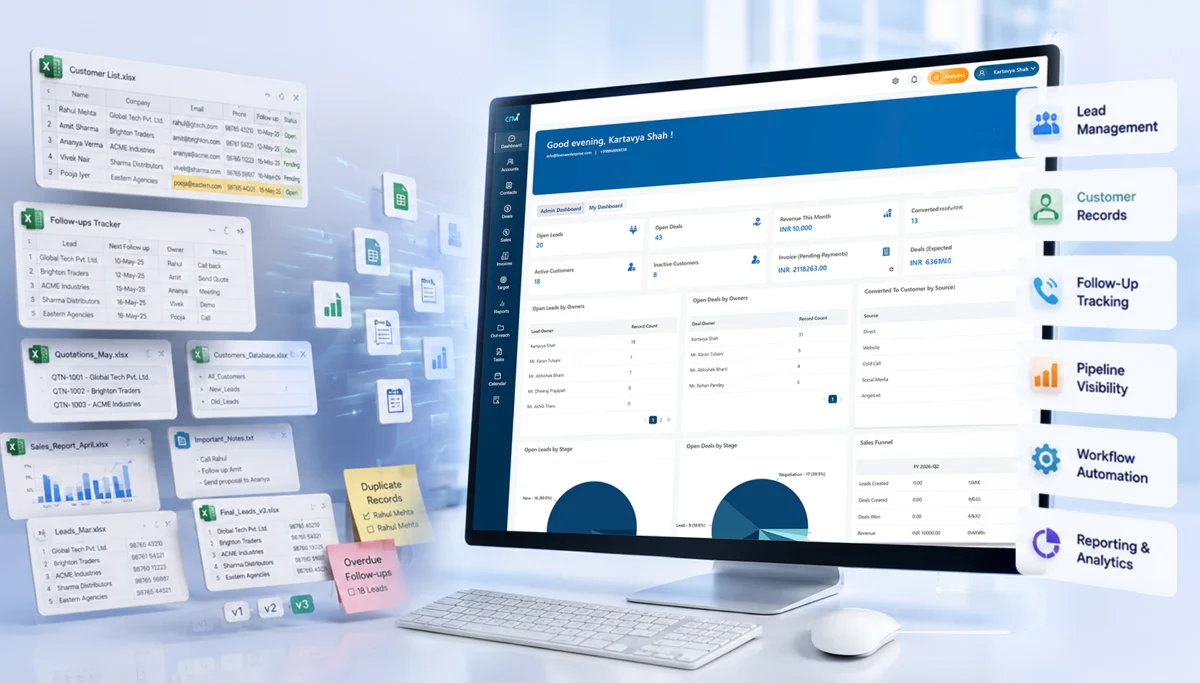
Cloud CRM vs On-Premise CRM: Which One Should You Choose?

Choosing the right CRM is a business decision. Not a tech decision. One that impacts how your teams work, how fast you respond to customers, and honestly, how smoothly your entire operation runs.

If you’re reading this, you’re likely stuck between two options that both sound reasonable – cloud CRM vs on-premise CRM. Cloud CRM keeps coming up because everyone’s choosing that. On-premise CRM keeps coming up because it’s safer, as per your IT team. 

Somewhere in between, you just want a direct answer. Let’s simplify it. No jargon. No fluff. Just a clear and practical guide to help you decide what actually fits your business model.

Cloud CRM vs On-Premise CRM: Quick Overview

Before we go deeper, here’s a simple way to understand the difference:

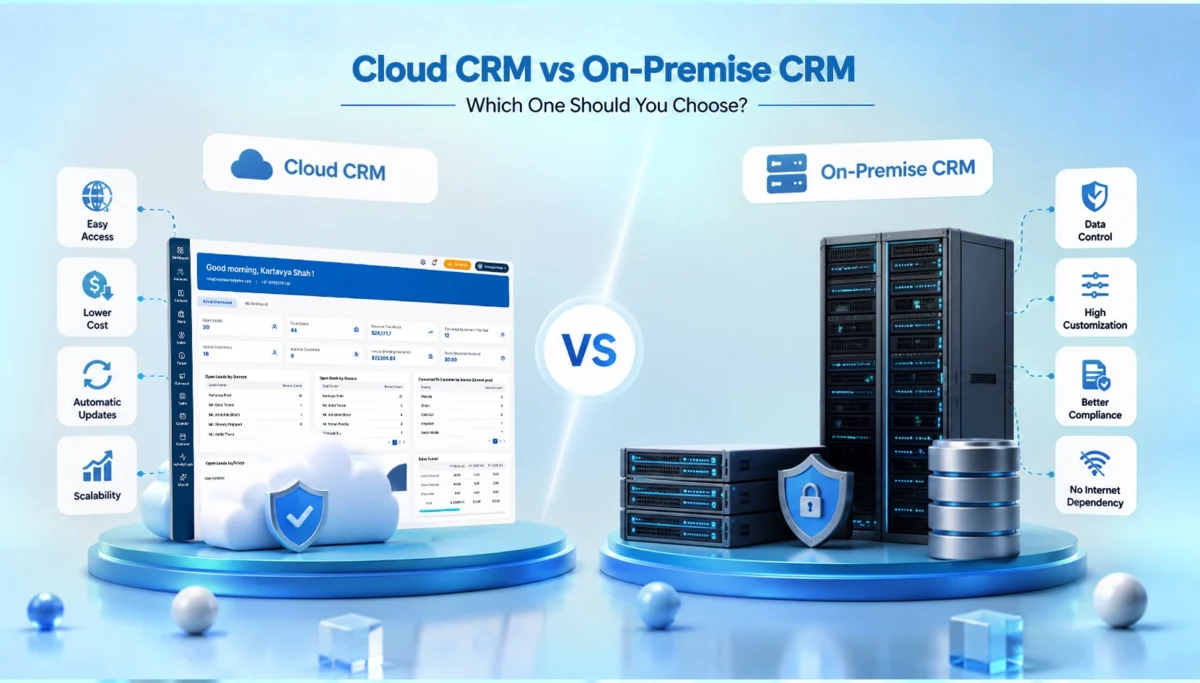
  • Cloud CRM → Hosted online, accessed through the internet
  • On-Premise CRM → Installed on your company’s own servers

This difference between cloud CRM and on premise CRM changes everything else. It impacts the cost, time to set up, accountability, data access, and the security. 

We’ll take a look at each of these, but first, let’s define both properly.

What Is Cloud CRM?

Cloud CRM, sometimes called SaaS CRM, is customer relationship management software hosted on the vendor’s infrastructure. You don’t install anything heavy. You just start working by logging in. 

You can consider options like Salesforce, HubSpot, or Zoho CRM. The vendor handles servers, updates, security patches, and backups. You just focus on the tool, not the maintenance.

Cloud CRM Features

  • Browser and mobile access from anywhere
  • Pricing based on subscription (monthly or yearly)
  • Automatic software updates
  • Built-in integrations with email, marketing, and support tools
  • Vendor-managed data storage and backups

Advantages of a Cloud CRM

This is why most businesses prefer cloud CRM. Here are some cloud CRM benefits

  • Faster Setup: You can easily get started in days or hours. No heavy installation.
  • Lower Cost: No investment in servers or infra. You only have to pay for a subscription.
  • Easy Access: You can access from anywhere. The office, home, or even while traveling.
  • Automatic Updates: No need for manual upgrades. Everything runs on the latest version.
  • Easy Scalability: Add users, features, or storage as your business grows. It just adapts.

Also Read: Benefits of Custom CRM Software for Growing Businesses

Challenges of a Cloud CRM

It’s not perfect, though. You’re relying on the vendor’s uptime and internet connectivity. If your internet goes down, so does your access. Some businesses also worry about handing sensitive customer data to a third party, especially in industries with strict compliance rules. Long-term subscription costs can add up too, more than people expect when they first sign up.

Implementation of Cloud-Based CRM

Setup usually takes days, not months. Most vendors provide guided onboarding, pre-built templates, and migration tools. It helps them pull data from your old system. Since cloud CRMs are generally built to be intuitive, training is lighter too.

What Is On-Premise CRM?

On-premise CRM software is the traditional model. You buy a license and install the software on your own servers. Then, your internal IT team manages everything from setup to security. There’s no need for the internet for it to function. Also, you have full physical control over the data.

On-Premise CRM Features

  • Hosted on your company’s own servers
  • One-time license fee (sometimes with annual maintenance costs)
  • Full control over data storage and infrastructure
  • Deep customisation potential
  • In-house IT support required

Advantages of On-Premise CRM

Some of the on premise CRM benefits due to which businesses prefer this model:

  • Full Data Control: Your data stays within your infrastructure.
  • Higher Customization: You can tailor the system deeply based on your processes.
  • Better Compliance Handling: Useful for industries with strict regulations.
  • No Dependency on Internet: Local access can work even without internet.

Challenges of On-Premise CRM

The upfront cost is high. You have to pay for servers, licenses, and IT staff to maintain everything. Updates aren’t automatic. So your team has to plan and execute them manually, which takes time and resources. Moreover, scaling up means buying more hardware. Not just clicking a button.

On Premise CRM Implementation

Implementation usually involves purchasing hardware and licenses, installing the software on servers, handling custom development and configuration, migrating data, and then testing everything before deployment. It can take weeks… sometimes months.

Cloud CRM vs On-Premise CRM: Full Comparison

Here’s where it gets practical. Let’s break this down side by side so you can see exactly where each option wins. We have covered everything from cloud CRM vs on premise CRM cost comparison to customization. Here it is:

Factor

Cloud CRM

On-Premise CRM

Cost

Lower upfront, ongoing subscription

High upfront, lower long-term recurring cost

Deployment time

Days to a few weeks

Weeks to several months

Data control

Managed by vendor

Fully managed in-house

Scalability

Easy, usually a plan upgrade

Requires new hardware/infrastructure

Accessibility

Access from anywhere, any device

Typically limited to internal network

Customisation

Moderate, within vendor’s framework

High, fully tailored to your needs

Maintenance

Handled by vendor

Handled by your internal IT team

Security

Vendor-managed, strong but shared responsibility

Fully in your control, but you own the risk too

These factors matter differently for every business. It’s not about which one is “better.” It’s about which one fits you.

Why Most Modern Businesses Choose Cloud CRM

If you look at where the market’s heading, cloud CRM adoption keeps climbing year over year, and it’s not hard to see why once you look at the practical side of running a business today.

  • Faster deployment: Teams want to start selling, not spend three months setting up software.
  • Lower initial costs: Small and mid-sized businesses especially can’t always justify a massive upfront IT investment.
  • Easier scaling: Adding ten new users on a cloud CRM often takes minutes. On-premise, it can mean new servers.
  • Better remote accessibility: With hybrid and remote work becoming normal, teams need tools that work from anywhere. Not only from the office network.
  • Automatic updates: No more waiting on IT to schedule a weekend update window. The vendor handles it in the background.

Must Read: How to Switch from Spreadsheets to CRM Software

When On-Premise CRM Is the Better Option

However, cloud is not always the best option. While some scenarios obviously require on-premise, there are others where it is more appropriate. So, it is not advised to reject it completely.

  • Industries with strict compliance requirements: Industries such as the banking sector, defence and healthcare, often require data storage within the organisation. It’s the law!
  • Data residency laws: Some countries stipulate that data of customers must remain within their borders. Cloud vendors can’t always guarantee this.
  • Specific business processes: If your business processes are industry specific. On-premise provides you the flexibility of creating what you require.
  • Infrastructure investments: If you have already made infrastructure investments and IT staff, then it might not be the best time to switch to the cloud.

Final Verdict: Cloud CRM vs On-Premise CRM

So, which is the one you should choose? Truthfully, it is dependent on the phase of your business you are in.

Have a smaller staff, limited budget, and want to get things done quickly? You’ll likely be better off with cloud CRM software

Operating in a space where compliance is critical, or already have servers and IT personnel that you invested in? However, on-premise may still be a good option.

There is no quick cut in this case. Review budget, compliance, and business plans for the next two years. That’s what should drive the decision, not what’s trending.

And if you’re still confused between cloud CRM vs on-premise CRM, it’s not a bad idea to get in touch with a CRM consultant who’s actually experienced with both. They will help you decide the best CRM software for your business. It’s time to ask now, not later – to switch systems.

Frequently Asked Questions

1. Which is the more secure CRM?

They can both be safe; it’s just whether they’re managed well or not. Cloud puts security in the vendor’s hands. On-premise installs it on your.

2. Is cloud CRM more affordable than On-Premise CRM?

Usually, at first. Cloud is less expensive in the initial stages. However, over the years, subscription prices quickly accumulate and end up at the same cost as on-premise.

3. Which CRM is better suited for small businesses?

In most cases, Cloud CRM. It’s quick to install, requires no IT staff, and can be easily scaled. However, it further depends on your business needs.

4. Can cloud CRM be customized?

Yes, but not fully. You have lots of choices, just in the vendor’s website. It’s not as flexible as on-premise CRM software.

5. Why are businesses moving to cloud CRM?

This is due to its speed, cost and flexibility. Additionally, it requires less special expertise in the IT field. In addition, remote work was even more critical.

6. Which industries still prefer on-premise CRM?

Industries such as banking, healthcare, and government sectors that have stringent compliance requirements may opt for on-premise solutions.

Excel to CRM Migration Guide: How Indian Sales Teams Can Switch Without Losing Data

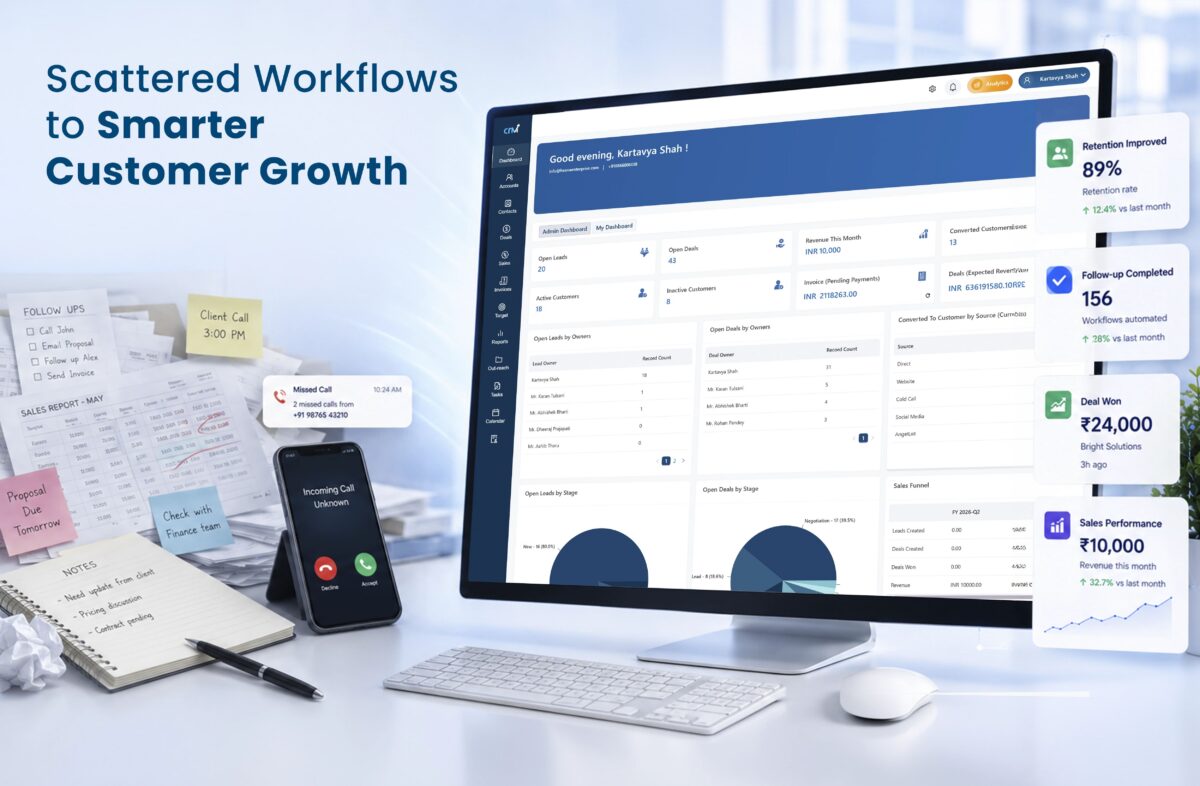
Everything looks fine from the top. Leads are in Excel, follow-ups are “tracked,” and reports are being made. But underneath? It’s messy. Files everywhere. Duplicate entries. Missed callbacks. Someone updates a sheet, someone else overwrites it.

And slowly, deals start slipping.

This calls for a cloud-based CRM software to streamline your data and make it user-friendly.

If you have been managing your sales pipeline using spreadsheets like Excel or Google Sheets, it’s fine. Most Indian businesses start like this only. It’s easy to use, widely available, and cheap. At some point or another, it stops working.

This guide helps you transition from spreadsheets to CRM software without disrupting your sales. No fluff. No theory overload. Just what actually works.

Why Businesses Move from Spreadsheet to CRM

Spreadsheets are easy to start with, but hard to grow with.

In the early days, when you’re handling maybe 50–100 leads, Excel feels manageable. But once your pipeline grows, cracks start showing, and fast. Let’s see how:

Limitations of Excel and Google Sheets

Honestly, spreadsheets were never designed for sales management. Here’s where they break:

  • Manual data entry becomes overwhelming
  • Version control turns chaotic (“Final_v3_updated_latest.xlsx”… sound familiar?)
  • Data gets scattered across multiple files and teams
  • No reminders for follow-ups
  • Zero visibility into the customer journey

And the biggest one? No accountability. You don’t really know who followed up or who didn’t.

The Hidden Costs of Spreadsheet-Based Sales

It is not about inconvenience or messy files. Spreadsheets quietly start affecting your revenue, the team’s efficiency, and even customer experience.

Here’s what really happens:

  • Lost leads: Leads drop more often than you think. A missed entry, an overwritten file, or a simple human error, and boom! A potential deal is gone.
  • Delayed responses: Follow-ups are delayed as there are no reminders or real-time updates. Even a few hours can make or break a deal.
  • Lower conversion rates: Your conversions suffer when there is no structured process. Moreover, leads are missed, conversations pause, and opportunities slip away.
  • Reporting inaccuracies: Manual reports often have errors. Data gets outdated, numbers don’t match, and decisions are made on unreliable information.

Benefits of CRM Software Over Spreadsheets

A good CRM not only stores data. It also organizes, automates, and streamlines your sales process.

  • Centralized customer database: All your customer information is stored in one place. So, your team does not have to go through multiple files to find what they need.
  • Real-time collaboration: Everyone works on the same updated data. This means fewer miscommunications and no confusion.
  • Better pipeline visibility: You can see the status of every deal clearly, making it easier to track progress and spot bottlenecks.
  • Automated follow-ups: Reminders and workflows ensure no lead is forgotten, even when your team is handling multiple conversations.
  • Improved forecasting: Your sales predictions become more reliable and easier to plan with accurate and real-time data.

5 Signs Your Business Needs CRM Software

Sometimes, the need for a CRM isn’t obvious at first.

It doesn’t suddenly become a big problem. It begins with small inefficiencies, missed tasks, and constant troubleshooting. If you look closely, the signs are usually right there, and then you realise why CRM is essential for your business.

1. Your Sales Team Is Missing Follow-Ups

This one hurts the most because it directly impacts revenue.

A lead shows interest, maybe even asks for details, and then nothing. There is no call, a message, or a reminder. It’s not like your team doesn’t care. It’s just that things slip away. Spreadsheets don’t remind people. They don’t nudge. They just sit there.

And in a busy sales environment, relying on memory or manual tracking almost always leads to missed opportunities.

2. Reporting Takes Too Much Time

If your team spends hours making reports, then something’s wrong. Pulling data from different sheets and fixing errors takes time. And by the end, the report is already outdated.

Reporting shouldn’t feel like another task. It should just exist. Real-time, accurate, and readily accessible.

3. Customer Data Is Scattered Everywhere

This is more common than most teams admit.

Some data is in Excel. Some in someone’s inbox. A few conversations are on WhatsApp. A few notes are somewhere else. So when a sales rep needs context, they start digging. Asking around. Guessing. And that slows everything down.

Worse, it creates a broken customer experience, where the client has to repeat things again and again.

4. Sales Managers Lack Visibility into Performance

If you’re a sales manager, you probably know this feeling.

You think deals are progressing, but you’re not really sure. You don’t have a clear view of who’s doing what, which deals are stuck, or where the bottlenecks are.

So decisions become reactive instead of strategic. Without proper visibility, managing a sales team turns into constant follow-ups and micromanagement, which isn’t scalable.

5. You Want to Scale Without Operational Chaos

Growth sounds exciting until operations start falling apart. More leads, more team members, more deals,  and suddenly your existing system can’t keep up.

Spreadsheets weren’t built for scale. They don’t handle complexity well. So instead of growing smoothly, things feel messy, disorganized, and slightly out of control.

And that’s usually the point where businesses realize that they don’t just need more effort, but they need better systems.

CRM Migration Checklist Before You Start

Before jumping into a CRM, pause. A rushed migration creates more problems than it solves.

1. Audit Your Existing Data

Start with the cleanup.

  • Remove duplicate entries
  • Fix inconsistent formats
  • Identify incomplete records
  • Delete outdated contacts

Messy data in = messy CRM out. Simple.

2. Define Your Sales Process

This is where many teams struggle.

Ask yourself:

  • What are your lead stages?
  • How often should follow-ups happen?
  • Who owns which leads?

Write it down. Even if it’s rough. Your CRM should reflect your process, not the other way around.

3. Set Clear Goals

Don’t migrate just because “everyone is using CRM.”

Be specific.

  • Reduce lead response time
  • Improve conversion rate
  • Automate follow-ups
  • Get accurate reports

Clear goals = measurable success later.

4. Choose the Right CRM Software

Not all CRMs are built for Indian businesses.

Look for:

  • Easy-to-use interface (your team should adopt it quickly)
  • Mobile accessibility (field sales matters)
  • WhatsApp & email integration
  • Affordable pricing
  • Scalability as your team grows

And the best part would be to choose a cloud based CRM software for flexibility, which covers all these aspects.

How to Migrate from Excel to CRM (7 Steps)

Let’s get into the actual transition.

Step 1: Clean and Organize Your Data

Before importing anything:

  • Remove inactive contacts
  • Validate phone numbers and emails
  • Classify leads (hot, warm, cold)

This step saves you hours later.

Step 2: Import Data into CRM

Most CRM tools support CSV imports.

Focus on:

  • Correct field mapping
  • Matching columns properly
  • Verifying imported data

Take your time here. Small errors can create big confusion later.

Step 3: Set Up the Sales Pipeline

Now your CRM starts making sense.

Define:

  • Deal pipeline (e.g., New Lead → Qualified → Proposal → Closed)
  • Ownership rules
  • Lead statuses

Make it simple. You can always refine later.

Step 4: Configure CRM Workflow Automation

Now the real magic.

Set up:

  • Auto-reminders to follow up
  • Lead assignment rules
  • Email workflows
  • Follow-up sequences

But don’t overdo it initially. Start small.

Step 5: Train Your Sales Team

A CRM is only as good as the people using it.

  • Conduct hands-on sessions
  • Create simple SOPs
  • Encourage mobile CRM usage

And yes, it’s normal for people to resist initially.

Step 6: Test Before Complete Rollout

Don’t change everything in one go.

  • Run a pilot with one team
  • Validate workflows
  • Check reporting accuracy

Fix issues early.

Step 7: Fully Transition Away from Excel

This is important. Set a clear deadline.

  • Stop updating excel
  • Shift all activity to CRM
  • Monitor adoption

If you keep both systems running, your team will default to Excel.

5 Best Practices to Migrate from Excel to CRM

A migration from Excel to a CRM system can seem overwhelming. And it is.

But it doesn’t have to interrupt your ongoing sales scenario. You can take it as a gradual process rather than a sudden switch.

1. Start Small with One Team

You don’t have to roll it out across the entire organization on day one. Start with a smaller group. Maybe one sales team, or a specific region.

This gives you space to:

  • Test how things actually work
  • Identify gaps or confusion
  • Fix issues before scaling

2. Migrate in Phases

Trying to move everything in one go can be a lot of work. You should rather consider breaking the migration into multiple phases to decrease the workload of your team.

  • Start with active leads
  • Then move recent customers
  • Bring in older data later if needed

This keeps things manageable and makes sure your team can continue working without additional workload.

3. Maintain Backup Copies

Even if everything goes smoothly, it’s always better to be safe. Keep your original Excel files as backup during the shift.

Not because you’ll need them daily. But if something feels off, you can always go back and verify. It’s a small step that removes a lot of uncertainty.

4. Focus on User Adoption

A CRM only works if your team actually uses it. And adoption doesn’t happen automatically. People need clarity, comfort, and a reason to change their habits.

  • Keep the system simple initially
  • Show how it makes their work easier
  • Encourage consistent usage from day one

When your team starts relying on the CRM naturally, that’s when the transition really succeeds.

5. Track Early Success Metrics

Don’t wait months to see if things are working. Start tracking small wins early.

  • Are response times improving?
  • Are follow-ups more consistent?
  • Is data easier to access?

These signals help you understand what’s working and what needs fixing. They also build confidence within the team that the shift is actually worth it.

A smooth CRM transition isn’t about doing everything perfectly. It’s about moving step by step without losing momentum.

Common CRM Migration Mistakes to Avoid

Switching to a CRM can feel like a big upgrade. And it is, if done right. But a lot of teams rush into it, assuming the tool itself will fix everything. That’s usually where things go wrong.

Because the success of a CRM isn’t just about the software. It’s about how you implement it.

1. Migrating Dirty Data

If your spreadsheets are messy, your CRM will be messy too. Duplicate entries, outdated contacts, missing details; when all of this gets carried over, you’re not really starting fresh. You’re just moving the problem to a new system.

It’s tempting to migrate everything quickly. But cleaning your data first makes a huge difference.

  • Remove duplicates
  • Fix incomplete records
  • Standardize formats

A clean CRM from day one saves a lot of frustration later.

2. Choosing Overcomplicated CRM Software

More features don’t always mean better. Some CRM tools look powerful. But end up overwhelming your team. Too many options, too many steps, too much to learn.

And when that happens, adoption drops. People go back to old habits. Spreadsheets, notes, and scattered tracking.

The goal isn’t to find the most advanced CRM. It’s to find one your team will actually use consistently. Make sure to compare different options and choose the right one from the top CRM software that fits your needs.

3. Ignoring Team Training

Even the best CRM won’t work if your team doesn’t understand it. A quick demo or an onboarding session usually isn’t enough.

People need time to get comfortable, to explore, ask questions, and make mistakes.

Without proper training:

  • Features go unused
  • Processes get skipped
  • Data becomes inconsistent

And slowly, the system loses its value. Training isn’t a one-time activity. It’s part of the transition.

4. Lack of Management Buy-In

If leadership isn’t actively involved, the CRM won’t stick.

Sales teams take cues from managers. If managers aren’t using the system, reviewing dashboards, or setting expectations, it sends a message that this isn’t really important.

On the other hand, when leadership is engaged:

  • CRM usage becomes part of daily workflow
  • Accountability improves
  • Teams take it more seriously

Adoption starts from the top.

5. Over-Automating Too Early

Automation is powerful, but only when your processes are clear. A common mistake is trying to automate everything right from the start.

But if your workflows aren’t fully defined yet, automation can create confusion instead of clarity.

  • Wrong triggers
  • Misassigned tasks
  • Overcomplicated processes

It’s better to start simple. Get your basics right. Understand how your team actually uses the CRM. Then layer automation gradually, where it truly adds value.

Avoiding these mistakes doesn’t require perfection; it just requires proper thinking. A bit of patience and eagerness to build things step by step. Implementing a CRM thoughtfully will change not only how you do things now, but also how your company grows over time.

CRM Migration Success Metrics

Switching to a CRM isn’t the finish line. In a way, it’s the starting point. Because once everything is in place, the real question becomes, is it actually working? Is it making things faster, clearer, better or just different?

The only way to know is by looking at the right signals.

1. Lead Response Time

This is usually the first thing that improves and the easiest to notice. Earlier, leads would sit in spreadsheets. Waiting. Sometimes for hours, sometimes longer. Not intentionally, just because no one saw them in time.

With a CRM, things move quicker. Notifications, task reminders, instant access, it all adds up.

So if your response time is reducing, even by a little, that’s a clear sign things are moving in the right direction. And in sales, faster responses mean better chances.

2. Conversion Rate Improvements

More responses are good, but conversions are what really matter. After CRM adoption, you should start seeing a shift here. Maybe not overnight, but gradually.

Why? Because follow-ups become consistent. Conversations don’t get lost. Context is always available.

So instead of starting from scratch every time, your team builds on existing interactions. And slowly, you’ll notice more leads turning into actual customers.

3. Sales Team Productivity

This one feels subtle at first. Your team isn’t necessarily working more. But they’re working smarter. Less time searching for data, less time updating sheets, less back-and-forth confusion.

More time actually selling. You might notice quicker calls, cleaner pipelines, and fewer delays between stages. And then one day it hits you. The same team is handling more leads without feeling overwhelmed.

4. Customer Retention Metrics

A good CRM doesn’t just help you close deals. It helps you keep customers.

Because now, every interaction is tracked. Preferences, past conversations, issues, everything is right there. So follow-ups feel more personal. Support feels smoother. Nothing gets ignored.

And customers notice that. Over time, this reflects in retention rates – more repeat business, longer relationships, fewer drop-offs.

Also Read: How Custom CRM Solutions Improve Customer Retention

5. Reporting Accuracy

This is where things become clear. Earlier, reports might have felt like rough estimates. Numbers pulled together manually, sometimes inconsistent, sometimes slightly off.

With a CRM, reporting becomes real-time and reliable. No guesswork. No last-minute fixes. When you look at your dashboard, you trust what you see. And that leads to faster, more confident, more strategic decision-making.

How to know if it’s working? A quick look:

Metric

What to Look For

Lead response time

Should decrease significantly

Conversion rate

Should improve steadily
Sales productivity

More deals per rep

Customer retention

Higher repeat business
Reporting accuracy

Near real-time insights

How CRM Workflow Automation Improves Sales Productivity

This is where a CRM really starts to feel different. Not just a place to store data, but something that actively helps your team move faster.

Because when repetitive tasks get automated, your sales team gets their time back.

1. Automated Lead Assignment

Leads coming in is a good problem to have until no one knows who should handle them.

Without a system, leads often sit idle or get picked randomly. Sometimes multiple people reach out. Sometimes no one does. Automation fixes that instantly.

Leads get assigned based on rules — location, deal size, availability, or anything you define. So:

  • No delays
  • No confusion
  • No missed opportunities

The right salesperson gets the right lead at the right time.

2. Follow-Up Reminders

Follow-ups are where most deals are won. And also where most deals are lost. Not because salespeople don’t care, but because things slip. Messages get buried. Priorities shift.

Automation steps in quietly here.

  • Reminders pop up at the right time
  • Tasks get created automatically
  • Nothing depends purely on memory anymore

It adds consistency. And in sales, consistency changes outcomes.

3. Sales Activity Tracking

Earlier, tracking meant asking.

“Did you call this lead?”
“Was there a meeting?”
“What happened next?”

Now, it’s all recorded automatically. Calls, emails, meetings, notes, everything gets logged in one place. Managers don’t have to chase updates. And sales reps don’t have to manually document every step.

It creates visibility without adding extra work. And that’s a rare combination.

4. Automated Reports and Dashboards

Reporting used to take hours. Pulling numbers, updating sheets, fixing errors, and by the time it was ready, it was already outdated.

With automation, reports build themselves.

  • Real-time dashboards
  • Auto-updated metrics
  • Instant insights into pipeline and performance

You don’t wait for reports anymore. You just look. And when data is always available, decisions get faster and sharper.

5. Customer Communication Automation

Staying in touch with every lead manually isn’t realistic. Especially as your pipeline grows.

Automation helps you maintain that connection without overwhelming your team.

  • Scheduled emails and messages
  • Drip campaigns for nurturing leads
  • Instant acknowledgements when someone reaches out

It doesn’t replace human interaction. It supports it. So your team can focus on meaningful conversations, while routine communication keeps running in the background.

When all of this comes together, something shifts again. Less manual effort. Fewer dropped tasks. More structure.

And your sales team starts spending less time managing work and more time actually doing it.

Key Features Indian Sales Teams Should Look for in CRM Software

Not all CRM features are equally useful. Some look impressive on paper, but don’t really help in day-to-day sales. And then there are a few that quietly make a huge difference.

If you’re choosing a CRM for an Indian sales setup, these are the ones that actually matter.

1. Mobile CRM Access

Sales don’t happen at a desk anymore. Your team is on calls, in meetings, travelling, following up between things, constantly moving. So if your CRM only works well on a laptop, it’s already a problem.

A good mobile CRM means your team can:

  • Update deals right after a call
  • Check lead details on the go
  • Add notes instantly

It keeps the momentum going. No delays, no “I’ll update it later”, because later usually doesn’t happen.

2. WhatsApp Integration

In India, this is almost non-negotiable.

Most customer conversations happen on WhatsApp. From first inquiry to final follow-up. But when those chats stay outside your CRM, you lose context.

With WhatsApp integration:

  • Conversations get tracked automatically
  • Sales teams don’t have to switch between apps
  • Follow-ups become more timely and consistent

And honestly, it just feels more natural. Because that’s how customers prefer to communicate anyway.

3. GST-Friendly Reporting

This one’s practical.

Indian businesses deal with GST compliance, invoicing formats, and tax breakdowns. It’s part of everyday operations. So your CRM should support that reality, not complicate it.

GST-friendly reporting helps you:

  • Generate accurate financial reports
  • Align sales data with accounting needs
  • Avoid manual adjustments later

It saves time and prevents small calculation errors that turn into bigger issues.

4. Multi-User Collaboration

Sales is rarely a solo effort. Leads get passed around. Managers step in. Teams collaborate on bigger deals. But without a proper system, this becomes messy: overlapping efforts, missed updates, confusion.

A CRM with strong collaboration features makes things clearer:

  • Everyone sees the same updated information
  • Tasks and ownership are well-defined
  • Internal communication stays structured

5. Cloud-Based Accessibility

This is one of those things you don’t think about until you need it.

Cloud-based CRM means your data is accessible anytime, from anywhere – securely. No dependency on a single system or location.

Especially for growing teams, this matters a lot.

  • Remote work becomes seamless
  • Data stays synced in real time
  • No risk of losing files or versions

6. AI and Automation Features

Modern CRM systems are slowly moving from just storing data to actually helping you make decisions.

With AI and automation, you start seeing:

  • Smart lead prioritization
  • Automated follow-up suggestions
  • Predictive insights on deal closures
  • Auto-captured customer interactions

It’s not about replacing your sales team. It’s about reducing manual effort and giving them better direction on where to focus.

And when these features come together, something shifts. Sales stops feeling reactive. Less chasing, more clarity. Less guesswork, more structure.

That’s when a CRM actually starts doing its job.

Excel vs CRM Software: Key Differences

Excel CRM
Manual updates Automatic
No reminders Automated follow-ups
No workflow Workflow automation
Limited reporting Real-time dashboards
Hard collaboration Team collaboration
Error-prone Centralized customer database

Final Thoughts

Switching from spreadsheets to CRM can feel like a big step. There’s hesitation. Resistance. A bit of chaos in the beginning. But staying stuck in spreadsheets? That costs more.

Quietly & consistently. If your business is growing, your systems need to grow with it. Start small. Stay consistent. Keep it simple.

That’s what really works.

Ready to Migrate from Excel to CRM?

If you’re planning to move from Excel to a CRM without any confusion, trial-and-error, and setup headaches, getting expert help can save you a lot of time.

From data migration and workflow setup to team onboarding, the right implementation partner makes the transition smooth and way less stressful. Start with a structured plan. The results will follow.

FAQs

1. Is CRM software better than spreadsheets for small businesses?

Yes. CRM software is better than spreadsheets for small businesses because it offers better structure, automation, and visibility.

2. How long does CRM migration take?

It typically takes 1–4 weeks, depending on the data size and complexity.

3. Can I easily migrate data from Excel?

Yes. Most CRMs support CSV imports with simple mapping that helps you to migrate easily.

4. What is the biggest mistake during CRM migration?

Migrating unclean or duplicate data.

5. Do Indian businesses need WhatsApp integration in CRM?

In most cases, yes. It particularly improves communication and follow-ups.

Top 7 CRM Software for Manufacturing Companies in 2026

Manufacturing firms previously used spreadsheets, manual entries, and scattered communication across emails and calls. That was the norm. And it worked. 

But things changed.

As competition increased and customer expectations grew, the previous methods became outdated. This led to delayed quotations, missed follow-ups, and unclear inventory visibility.

Then came integrated CRM software for manufacturing industry. And now, businesses were not just managing data. They were streamlining it. 

Today, manufacturing companies that wish to stay ahead cannot just rely on outdated processes. They need an all-in-one CRM software that brings sales, operations, and customer relationships into one flow. 

But not every CRM is built for manufacturing. And honestly, picking the wrong one can slow you down more than help. At the same time, picking the right one can be a smart investment for your business.

So let’s break this down clearly, practically, without fluff.

What is Manufacturing CRM?

A CRM for manufacturing companies is not only a tool to manage contacts and a simple database. It’s more than that. It’s a system made to handle complex sales cycles, distributor networks, inventory management, and quotation workflows, all in a single place.

Unlike the usual CRM tools, industrial CRM software focuses on:

  • Multi-level sales pipelines
  • Dealer and distributor tracking
  • ERP and inventory systems integration
  • Real-time quotation and order management

Think of it as the bridge between your sales team and your production floor, because in manufacturing, those two can’t operate in silos.

Benefits of CRM Software for Manufacturing Industries

Let’s be real. Most manufacturing companies don’t lose deals because of poor products. They lose them due to slow follow-ups, messy communication, or lack of visibility. A good CRM fixes that. Here are some reasons why you need them.

1. Better Sales Pipeline Visibility

You can track every lead, every deal stage, and every interaction. No more guessing what’s stuck and why.

2. Distributor & Dealer Management

Manufacturers often rely on networks. CRM helps manage relationships, track performance, and maintain consistency.

3. Faster Quotation Management

Delays in quotations mean lost deals. A CRM can speed up this process with quick templates, automation, and approvals.

4. Improved Inventory Coordination

When CRM connects with inventory systems, sales teams don’t overpromise or underdeliver.

5. Better Customer Retention

Follow-ups, reminders, service history, everything is tracked. Customers feel remembered.

Must Read: How Custom CRM Solutions Improve Customer Retention?

6. Production and Sales Alignment

This one’s underrated. When both teams work with synced data, operations become smoother.

7. Workflow Automation

Manual work reduces. Errors reduce. Teams actually focus on what matters.

Must Read: Benefits of Custom CRM Software for Growing Businesses

Top 7 CRM Software for Manufacturing Industry

Here’s a quick comparison before we take a detailed look:

Software Best For Pricing Free Trial
WeekMate CRM SMEs & growing manufacturers Affordable Yes
Salesforce Manufacturing Cloud Large enterprises Premium Yes
Zoho CRM Customization & flexibility Mid-range Yes
HubSpot CRM Marketing + CRM combo Freemium Yes
Microsoft Dynamics 365 Enterprise integration Premium Yes
Pipedrive Sales-focused teams Mid-range Yes
Oracle NetSuite CRM Full-suite ERP + CRM Premium Yes

1. WeekMate CRM

WeekMate CRM is an all-in-one CRM platform that is built for growing businesses. It simplifies sales, operations, and team workflows without dealing with unnecessary complexity.

Key Features

  • Lead and sales pipeline tracking
  • Task and workflow automation
  • CRM + HR + operations in one platform
  • Real-time reporting

Pros

  • Easy to use
  • Affordable for SMEs
  • All-in-one approach reduces tool overload

Cons

  • Not as deep as enterprise CRMs (yet)

Pricing

Budget-friendly, designed for growing teams. Starting from ₹3999 / Month for 50 users.

Best Use Case

It is a good fit for small- to mid-sized manufacturing businesses looking to move away from spreadsheets without excessive complexity.

2. Salesforce Manufacturing Cloud

Salesforce Manufacturing Cloud is made for large-scale manufacturers. It offers deep visibility into sales, forecasting, and operations. It’s powerful, but not very easy to use, as it needs some learning before getting started.

Key Features

  • Account-based forecasting
  • Advanced sales pipeline management
  • AI-based insights and analytics
  • Integration with the Salesforce ecosystem

Pros

  • Highly scalable for enterprise use
  • Strong forecasting and analytics
  • Robust customization capabilities

Cons

  • Expensive for small to mid-sized businesses
  • Setup and implementation can be complex

Pricing

Premium pricing, typically suited for enterprise budgets. Starting from ₹2376.45/User/Month.

Best Use Case

It is well-suited for large manufacturing companies with complex sales cycles that need advanced forecasting and analytics.

3. Zoho CRM

Zoho CRM is flexible and a widely used solution. It is quite popular among Indian businesses. Zoho balances affordability with customization. However, it can take some time to fully set up.

Key Features

  • Lead and deal management
  • Workflow automation
  • Omnichannel communication (email, phone, chat)
  • Custom modules and reporting

Pros

  • Affordable and scalable
  • Highly customizable
  • Strong ecosystem of Zoho apps

Cons

  • Initial setup can feel overwhelming
  • UI can feel slightly cluttered at times

Pricing

Mid-range pricing with multiple scalable plans. Starting from ₹800/user/month.

Best Use Case

It is appropriate for growing manufacturing businesses that need flexibility and customization without enterprise-level costs.

4. HubSpot CRM

HubSpot CRM is known for its ease of use and wide range of features. It works well for manufacturers focusing on inbound leads. It may feel a little difficult for complex operations.

Key Features

  • Contact and pipeline management
  • Marketing automation tools
  • Email tracking and templates
  • Reporting dashboards

Pros

  • Free plan available
  • Very easy to use
  • Strong marketing + CRM integration

Cons

  • Limited manufacturing-specific features
  • Advanced features can get expensive

Pricing

Freemium model with paid upgrades. Starting from ₹3,753/mo/seat.

Best Use Case

It is suitable for manufacturing businesses focused on lead generation, marketing campaigns, and simple sales processes.

5. Microsoft Dynamics 365

Microsoft Dynamics 365 is an enterprise-grade CRM. It integrates deeply with ERP and other Microsoft tools. It’s comprehensive, but requires time and expertise to implement properly.

Key Features

  • ERP and CRM integration
  • Advanced analytics and reporting
  • AI-driven insights
  • Seamless Microsoft ecosystem integration

Pros

  • Strong integration with Microsoft tools
  • Highly scalable
  • Enterprise-level capabilities

Cons

  • Complex implementation
  • Higher cost and learning curve

Pricing

Premium pricing based on modules and usage. Starting from ₹7603.38/user/month.

Best Use Case

It works well for large manufacturing enterprises that already use Microsoft products and need deep integration across their systems.

6. Pipedrive

Pipedrive is a sales-focused CRM that is simple and easy to use. It’s great for tracking deals, but it lacks advanced manufacturing capabilities.

Key Features

  • Visual sales pipeline
  • Deal tracking and management
  • Workflow automation
  • Sales reporting

Pros

  • Very easy to use
  • Clean and intuitive interface
  • Quick setup

Cons

  • Limited features for manufacturing workflows
  • No built-in inventory or ERP integration

Pricing

Mid-range pricing with tiered plans. Starting from ₹1330.59/seat/month.

Best Use Case

It can work for small manufacturing teams that mostly need a simple tool to manage sales pipelines and deals.

7. Oracle NetSuite

Oracle NetSuite CRM is a comprehensive, cloud-based platform that combines CRM with ERP, finance, and operations. It’s powerful, but definitely not lightweight.

Key Features

  • Unified CRM + ERP system
  • Real-time dashboards and reporting
  • Order and inventory management
  • Advanced automation

Pros

  • All-in-one business solution
  • Highly scalable
  • Strong reporting capabilities

Cons

  • Expensive for smaller businesses
  • Implementation can be time-consuming

Pricing

Premium pricing tailored to enterprise needs. Custom pricing.

Best Use Case

It can work for large manufacturing organizations looking for a fully integrated CRM + ERP solution in a single platform.

Also Check: List of 10 Best CRM Solutions for Indian Businesses

9 Key Features to Look for in Manufacturing CRM

Not every CRM will suit your workflow. So before choosing, pause and check this:

1. Lead & Sales Pipeline Management

You should be able to track every deal stage clearly — not just who the customer is, but where the opportunity stands and what needs to happen next.

2. Inventory Management Integration

When your CRM connects with inventory, your sales team always knows what’s available… avoiding overpromising or awkward follow-ups.

3. Quotation & Order Management

Quick, accurate quotations can make or break deals — a good CRM helps you generate, approve, and send them without delays.

4. Distributor & Dealer Management

Managing multiple partners becomes easier when you can track performance, communication, and orders from one place.

5. Workflow Automation

Repetitive tasks such as follow-ups, reminders, and updates can run automatically, saving time and reducing human error.

6. Reporting & Analytics

A CRM should turn your data into insights that help you understand what’s working, what’s not, and where to improve.

7. ERP Integration

Connecting CRM with ERP ensures smooth data flow between sales, inventory, and production — this is where real operational efficiency kicks in.

8. Mobile CRM Access

Your team should be able to access and update data on the go… because sales don’t always happen from a desk.

9. Customer Support Management

Post-sale support matters just as much — tracking issues, requests, and history helps build long-term customer relationships.

Suggested Read: Top CRM Modules and Features for Business Growth

How to Choose the Right CRM for Your Manufacturing Business?

There’s no “best CRM” universally. Only the right fit.

Here’s how to think about it:

  • Business size: Small teams need simplicity. Enterprises need depth.
  • ERP integration needs: Check compatibility early.
  • Inventory complexity: More complexity = stronger integration required.
  • Sales process: Long cycles need advanced tracking.
  • Budget: Don’t spend too much on features that you don’t use.
  • Scalability: Choose something that grows along with you.
  • Reporting needs: Analytics are also essential if you rely on insights.

Take your time here. Rushing this decision often leads to switching later… which is worse.

Manufacturing CRM Trends in 2026

Change is constant and fast-paced. Manufacturers who don’t keep up are losing business to competitors who are upgrading themselves.

Statista recently reported that the CRM software market, with the manufacturing industry significantly contributing to its growth, is expected to reach US$103.51bn by 2026.

  • AI-Driven Forecasting: Modern CRMs predict a business’s sales patterns, allowing the business to be proactive rather than reactive.
  • Advanced Predictive Analytics: Fast and efficient decision-making is made possible with the implementation of real-time data and analytics.
  • IoT Integration: Automated connected machines offer systems and sales teams the information needed to make optimal decisions.
  • Smart Factory CRM Solutions: Integrated production, sales, and logistics systems are becoming the industry standard.
  • Automated Workflow Systems: Automated tasks are minimizing the manual effort needed and maximizing the overall efficiency.
  • Mobile CRM Systems: The workplace is no longer confined to the office; mobile systems bring CRM to the field.

Simplify Manufacturing Operations with WeekMate CRM

If your current system feels slow, disconnected, or just frustrating, you know that it’s now time to upgrade. 

A well-implemented CRM systems for manufacturing not only organize your data. It improves response time. Aligns teams. Reduces errors. And honestly, it gives you control back.

If you’re exploring a practical and easy-to-adopt solution, WeekMate CRM is a strong starting point for growing manufacturing businesses that want clarity without complexity.

Final Views

You don’t need the most advanced CRM. You need the one your team will actually use consistently. Because even the best system fails if it remains unused. So choose wisely. Test properly. And implement it with intention.

That’s where the real difference happens.

Frequently Asked Questions

1. Which CRM is the best for manufacturers?

There is no one such definite answer. It honestly depends on your business size and your needs. SMEs may prefer simpler tools like WeekMate or Zoho, while enterprises are more favourable towards Salesforce or Microsoft Dynamics 365.

2. Can CRM integrate with ERP software?

Yes, most of the modern CRM software for manufacturers supports ERP integrations. It is very important for manufacturing workflows to connect processes and make them smoother.

3. Why do manufacturers need CRM software?

It helps manufacturing companies nicely manage customer relationships and streamline the entire sales process. CRM software also helps firms improve lead tracking and enhance workflow coordination.

4. What features should manufacturing CRM include?

It should primarily include features that can make the workflow efficient and optimized. Some of them can be pipeline management, inventory integration, quotation tools, automation, and analytics.

5. Is CRM useful for small manufacturing businesses?

Yes. It allows smaller teams to be more organized and automated to help them scale quicker.

7 Essential CRM Modules That Help Businesses Grow Faster

To be honest, most businesses don’t fail because they don’t have tools. That’s rarely the issue. The real problem? Their tools just don’t work together. Here, CRM modules step in.

If you’ve been looking into various CRM software lately, you’ve probably noticed something. It’s no longer just about storing contacts.

A modern CRM system is kind of like a central hub for your business. Everything flows through it. Sales, marketing, support, operations, all in one place, instead of scattered across tools.

And now, in 2026, things have shifted a bit. With AI, automation, and real-time data driving decisions, choosing the right CRM modules isn’t really optional anymore; it’s just something you can’t afford to get wrong.

What Are CRM Modules? (Definition & Importance)

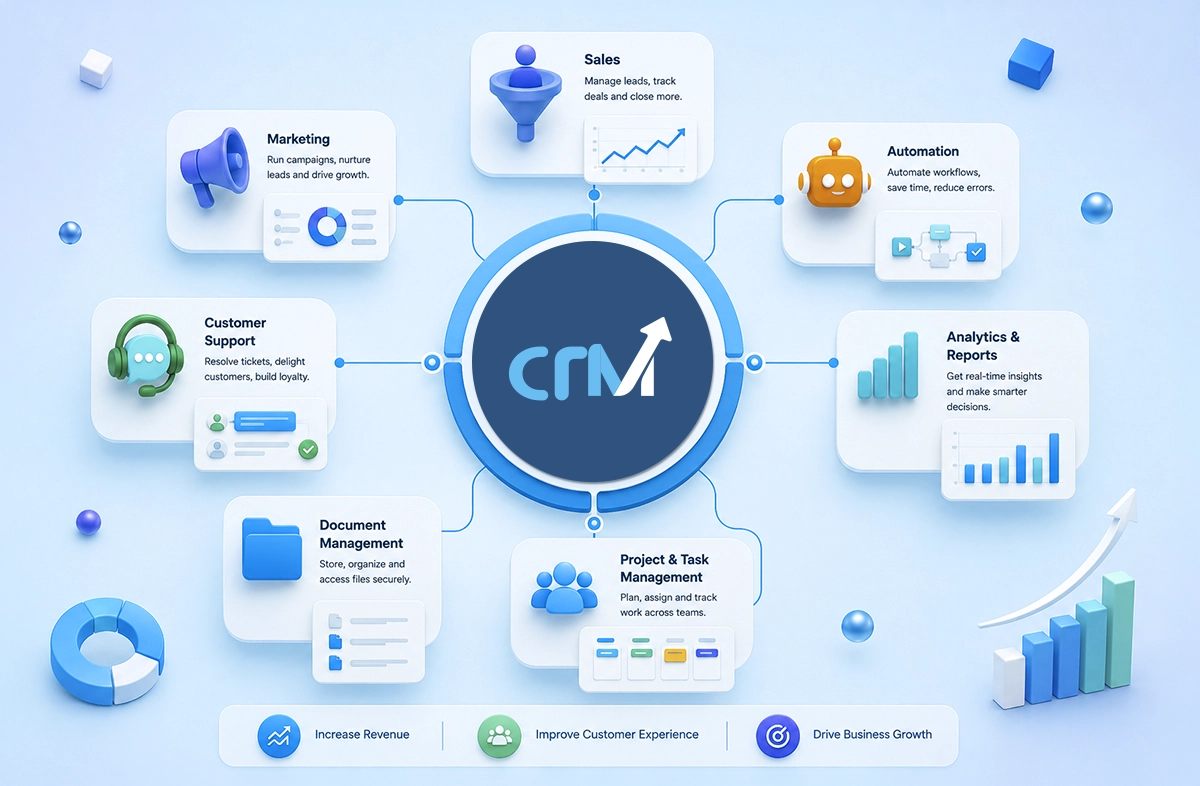
CRM modules are different components inside a CRM system. Each of them handles specific business functions. Instead of one bulky tool trying to do everything, CRM software modules divide tasks into dedicated sections like sales, marketing, customer support, and analytics.

Think of it like this:

A CRM isn’t one tool. It’s a collection of tools working together smoothly, if set up right. These customer relationship management modules help businesses:

  • Organize customer data
  • Automate repetitive tasks
  • Track interactions across channels
  • Improve decision-making with real insights

And yes, when implemented well, they reduce chaos.

Core CRM Modules

Now, not every CRM is built the same. Here is a key CRM features list that almost every business must have.

1. Sales CRM Module

This is actually where revenue happens. A sales CRM module helps the team manage leads, track deals, and close opportunities without scattered spreadsheets or forgotten follow-ups. 

Key functionalities include:

  • Lead management
  • Pipeline tracking
  • Deal management
  • Follow-up reminders

The biggest benefit? Visibility. You know exactly where each deal stands. No guessing and no chasing.

2. Marketing CRM Module

Marketing without data is just noise. This module connects your campaigns with actual customer behavior. It helps you attract, nurture, and convert leads more effectively.

Core features include:

  • Email campaigns
  • Lead nurturing workflows
  • Audience segmentation
  • Campaign performance tracking

In 2026, this module is heavily powered by AI. It doesn’t just send emails. It predicts when and what to send.

3. Customer Support Module

Customer experience is no longer a “nice-to-have.” It’s the brand. A CRM support module ensures that every customer query is tracked, managed, and resolved efficiently across every channel.

Key features:

  • Ticket management
  • Query tracking
  • SLA (Service Level Agreement) management
  • Omnichannel communication

And here’s the thing. Customers don’t care which department they’re talking to. They just want answers. This module makes that possible.

Operational & Productivity CRM Modules

Now this is where things get interesting. These CRM system modules don’t directly generate revenue, but they make everything faster, smoother, and scalable.

1. Workflow Automation Module

Repetitive tasks kill productivity. This module automates processes like:

  • Lead assignment
  • Follow-up emails
  • Task creation
  • Status updates

In short, it removes manual work and human errors. 

2. Reporting & Analytics Module

This module transforms raw data into actionable insights. You can track:

  • Sales performance
  • Campaign ROI
  • Customer behavior
  • Team productivity

Modern CRM tools now include predictive analytics. It means they don’t just show what happened. They suggest what to do next.

3. Project & Task Management Module

For teams juggling multiple clients or campaigns, this module is a lifesaver. It helps:

  • Assign tasks
  • Track deadlines
  • Monitor progress
  • Improve team collaboration

Everything stays aligned. No more “I thought someone else was handling it.”

4. Document Management Module

Scattered files are a nightmare. This module centralizes documents like:

  • Proposals
  • Contracts
  • Customer records

With secure access and version control, your team always works with the latest information.

CRM Modules Comparison Table

Module Type

Primary Function

Business Impact

Sales CRM

Manage leads & deals

Increased revenue

Marketing CRM

Campaign management

Better conversions

Customer Support

Handle queries

Improved customer experience

Automation

Streamline workflows

Higher efficiency

Analytics

Data insights

Smarter decisions

Project Management

Task tracking

Better collaboration

Document Management

File organization

Centralized data

Also Read: Why Cloud-Based CRM Software is Essential for Businesses?

6 Benefits of CRM Modules for Growing Businesses

When implemented correctly, CRM functionalities can transform how a business operates.

Here’s what you actually gain:

1. Better Customer Relationship Management

When all your customer information sits in one place, things just become easier. You’re not digging through emails or spreadsheets anymore. You have context, history, and clarity — which makes every interaction more meaningful.

2. Increase Sales Team Productivity

Sales teams spend a surprising amount of time on non-selling work. Updating data, chasing info, setting reminders it adds up. A good CRM takes that weight off, so they can focus more on conversations that actually close deals.

Also Read: How Custom CRM Solutions Improve Sales Performance?

3. Improve Team Collaboration

This one’s subtle, but powerful. When sales, marketing, and support are all working in the same system, things just click better. Less back-and-forth, fewer misunderstandings. Everyone’s on the same page. 

4. Workflow automation

You don’t really notice how repetitive your processes are until you stop doing them manually. Follow-ups, task assignments, status updates, once these get automated, your day feels lighter. And way less error-prone.

5. Better reporting

Most businesses have data, but don’t really use it well. A CRM organizes it in a way that actually makes sense. So instead of guessing, you can clearly see what’s working, what’s not and what needs fixing next.

6. Centralized business data

Everything lives in one system: customer details, deals, communication, reports. That means no switching between tools or searching for information. It keeps your operations organized and your team aligned.

Must Read: Benefits of Custom CRM Software

How to Choose the Right CRM Modules for Your Business?

Now this is where most businesses go wrong. They either choose too many modules or the wrong ones entirely. Here are some simple ways to approach it:

1. Understand Your Business Requirements

First things first… don’t start with the tool. Start with your problems. What’s slowing you down right now? Sales gaps, messy data, missed follow-ups? Choose CRM modules that actually fix those. Not just the ones that sound impressive.

2. Choose Based on Team Size

This one’s often overlooked. A small team usually needs something simple, quick to learn, easy to manage. But as your team grows, you’ll need structure – permissions, workflows, maybe even layered access. So yeah, think ahead a bit.

3. Check Integration Capabilities

Your CRM shouldn’t feel like a separate island. It needs to connect with the tools you already use: email, marketing platforms, accounting software. Otherwise, you’re just creating more silos, and that defeats the whole point.

4. Evaluate Automation Features

If your team is still doing repetitive tasks manually, something’s off. A good CRM should take that load off: assigning leads, sending follow-ups, updating statuses. It’s not just about saving time. It’s about reducing mistakes too.

Also Read: Why Custom CRM Software is the Future of Business Automation?

5. Review Reporting & Analytics

Data is great, but only if it makes sense. Look for CRM modules that give you clear insights, not complicated dashboards you’ll never use. You should be able to glance at it and think, “okay, now I know what to do next.”

6. Consider Future Scalability

And finally, think long term. Your CRM should grow with you, not hold you back. More users, more data, more processes. It should handle all of that without forcing you to switch systems every couple of years.

CRM Module Trends Shaping Businesses in 2026

This space is evolving fast. Here’s what’s shaping modern CRM software:

1. AI-Powered CRM

AI now handles:

  • Lead scoring
  • Sales forecasting
  • Customer segmentation
  • Smart recommendations

It’s not replacing humans, but it’s definitely reducing guesswork.

2. Predictive Analytics

CRMs are becoming proactive. Instead of just showing reports, they:

  • Predict customer churn
  • Suggest next best actions
  • Identify high-value leads

It’s like having a strategist built into your system.

3. Omnichannel Customer Communication

These days customers are present everywhere. They are on email, chat, WhatsApp, and social media. Modern CRM modules unify all these channels into one dashboard. So, there is no switching tabs or losing conversations.

4. No-Code Automation

We all know that not every team has developers. That’s okay. In such scenarios, no-code CRM tools allow you to build workflows, and that too without technical skills. Just drag, drop, automate, and it’s done.

5. Unified Customer Data

Data silos are disappearing. With CRM, everything, like sales, marketing, and support, can connect into one unified profile. This in turn, creates a 360-degree view of your customer.

And honestly, that’s where real personalization begins.

Suggested Read: Why CRM Is Essential for Business Competitiveness?

Simplify Customer Management with the Right CRM

CRM isn’t about software anymore. It’s about how your business runs. At the end of the day, the modules aren’t just features. They’re building blocks. The right combination can:

  • Streamline your operations
  • Improve customer relationships
  • Boost revenue predictability

But the wrong setup? It just adds complexity. So take your time and start small. Then scale smartly.

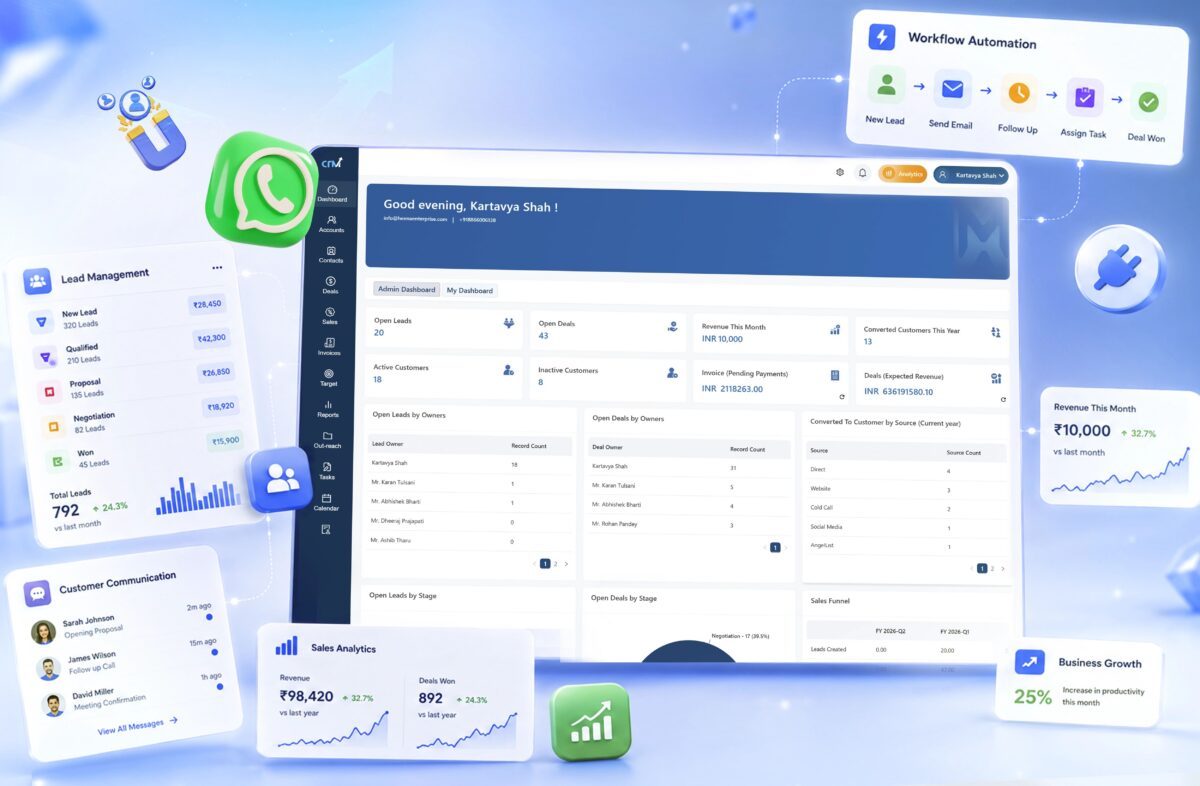
And if you’re looking for a CRM that brings all these modules together, without overwhelming your team, solutions like WeekMate CRM are built exactly for that. It’s flexible, scalable, and actually usable.

The companies winning in 2026 aren’t the ones with the most tools, but the ones using the right CRM tools and modules in the right way. 

So yes, choose wisely. Because your CRM doesn’t just store data. It shapes your growth.

Frequently Asked Questions

1. What are CRM modules?

CRM modules are different parts of a bigger CRM system. Each one handles a specific job like managing sales, running marketing campaigns, or handling customers. Instead of a single bulky tool, it’s like a set of dedicated features working together.

2. Which CRM modules matter the most?

It depends mostly on your business. Generally, sales, marketing, customer support, automation, and analytics are the important ones. These are the areas where most teams need structure and visibility.

3. Can small businesses actually use CRM modules effectively?

Yes. In fact, small businesses benefit the most. Many modern CRM tools are built to be simple, scalable, and even no-code. Hence, you don’t need a big team or technical expertise to get started.

4. How do CRM modules improve productivity?

They remove a lot of repetitive work from your plate. Tasks like follow-ups, data entry, and tracking interactions all get simplified. Also, since everything is in one place, teams spend less time searching and more time actually doing.

5. What does the future of CRM modules hold?

It’s moving towards smarter systems. More AI, more automation, and better predictions. CRM tools won’t just store data anymore; they’ll actually guide decisions.

How Custom CRM Solutions Improve Customer Retention and Sales Performance

Modern businesses can no longer afford to rely on spreadsheets, sticky notes, or isolation to maintain their customer relationships. As the sales cycle gets longer and customer demands rise, organizations are moving toward smarter systems that deliver greater efficiency and greater visibility.

That’s where custom CRM solutions are revolutionizing business operations. Unlike generic platforms, tailored CRM systems adapt to specific workflows, automate repetitive sales activities, and provide real-time insights that help teams make faster decisions.

Businesses today are also focusing heavily on how to improve customer retention strategies and increase sales performance with CRM software. Automation has become central to achieving these goals because it reduces manual effort while improving customer engagement consistency.

Solutions such as WeekMate allow businesses to merge productivity management with smart CRM workflows to establish a trusted, more efficient ecosystem.

What Are Custom CRM Solutions?

Custom CRM solutions are customer relationship management systems built specifically around a company’s day-to-day operations, sales process, and customer interaction methods.

Traditional CRM systems generally have predefined features and standard workflows. Although these programs may be suitable for certain small businesses at first, they often need to be replaced as the business grows.

A CRM tailored specifically to your needs will allow you to:

  • Automate internal workflows.
  • Track customer interactions more efficiently.
  • Integrate with existing business systems.
  • Customize dashboards and reporting.

The main benefit of customization is alignment. Instead of forcing businesses to fit their processes to the software, they can create software that fits their processes. This flexibility makes tailored CRM systems significantly more valuable than rigid, off-the-shelf alternatives.

Why Businesses Need Tailored CRM Systems?

Many companies choose a standard CRM product at first because it can be up and running quickly. But the limitations begin to show as the business grows.

Common customer relationship management tools can have too many unnecessary features and too few essential ones for a particular business sector. Teams can be challenged by inflexible workflows, inadequate integrations, or ineffective reporting hierarchies.

That’s why more organizations are turning to a custom CRM software development company to design solutions that fit their business models.

73% of customers want companies to understand their unique needs and expectations. Off-the-shelf solutions usually lack the level of customization needed to meet these demands.

Businesses can scale more quickly with a customized CRM without compromising operational efficiency or the customer experience.

Must Read: Benefits of Custom CRM Software for Growing Businesses

How Custom CRM Improves Customer Retention?

Customer retention has emerged as one of the key business growth indicators in 2026. Because acquiring new customers is costly, maintaining relationships over time is crucial to profitability.

A well-developed customer data management system enables businesses to consolidate customer interactions, transaction history, communication preferences, and the ways they engage with customers.

This level of visibility also allows companies to better tailor their communication to the recipient. For instance, a series of automated reminders, customized proposals, and recovery efforts may be triggered based on the customer’s behavior. These automations provide a more engaging customer experience without the need for additional manual labor.

Businesses looking to improve customer retention strategies are increasingly investing in CRM automation because it enables proactive engagement instead of reactive communication. Automation further reduces the risk of missed follow-ups, late responses, or  uneven customer experiences.

Boosting Sales Performance with Tailored CRM Solutions

Sales teams often spend a significant amount of time on repetitive administrative tasks rather than actual selling. And this is where CRM automation makes a tangible difference. 

Tailor-made systems enable this to be done automatically for lead assignments, follow-up scheduling, and even task reminders and progress reports. This means your salespeople are more likely to focus on building relationships and closing deals.

Companies can also increase sales performance with CRM by implementing:

  • Automated lead scoring.
  • Sales forecasting dashboards.
  • Pipeline tracking.
  • Real-time reporting.

According to research, less than 40% of sales professionals’ time is spent on actual selling, with administrative duties taking up most of their workday. Automation tackles this problem efficiently.

As a result of eliminating tedious tasks, organizations achieve better response times, reduced human error, and faster deal closings.

Manual Sales Tasks vs CRM Automation

Manual Process

CRM Automation Benefit

Manual data entry

Automatic customer record updates
Spreadsheet lead tracking

Real-time pipeline management

Reminder follow-ups

Automated notifications and sequences
Separate communication tools

Centralized communication tracking

Static reports

Live dashboards and analytics

Key Features of an Effective Custom CRM

A good CRM allows you to achieve the best of both worlds: high efficiency and effective customer experience management.

One of the most critical features is a centralized customer data management system. Companies require a holistic view of the customer across channels to deliver consistent customer interactions.

Workflow automation is also a key feature. CRM platforms can be tailored and used to automate the everyday tasks and workflows specific to your business.

Just as important are the integration capabilities. Today, businesses work on different platforms for accounting, communication, marketing, and support. With CRM integration, you can ensure your data flows seamlessly between systems.

Analytics dashboards also play a key role. By tracking sales performance, customer engagement, and operational bottlenecks in real time, insights allow vice-president teams to significantly outperform their counterparts. Mobile access is also needed, particularly in remote and hybrid work settings.

Impact of WeekMate on CRM Efficiency

WeekMate enables businesses to increase productivity while improving CRM efficiency. Traditional CRM software enables users to manage only such records. With WeekMate, customers can better align teams around customers through real, daily execution and operational responsibility.

The framework supports:

  • Task and workflow visibility.
  • Tracking of customer interactions.
  • Team coordination.
  • Goal-driven productivity control.

This seamless integration enables companies to coordinate their sales and operational processes.

Choosing the Right Custom CRM Development Partner

Finding the right development partner is a key driver of CRM success. A professional custom CRM software development company should be well-versed in both technological development and business processes.

Companies should assess:

  • Industry experience.
  • Customization abilities.
  • Integration expertise
  • Scalability planning.
  • Post-launch support.

It is also important to ask practical questions before development begins:

  • Will the CRM grow with the business?
  • How flexible are the automation workflows?
  • What integrations are supported?
  • How is data security managed?

Cost matters, but long-term operational value matters more. A robust CRM is an infrastructure investment, not a quick software buy.

Predictions for Custom CRM Development in the Future

Traditional CRM is increasingly being shaped by AI, predictive analytics, and automation. Organizations are prioritizing hyper-personalized customer experiences through intelligent technologies. CRM software can now anticipate customer behavior, suggest best practices for engagement, and even automate decision-making.

Automation will continue to replace the monotonous manual tasks in sales and customer service. Integration is also getting deeper. CRM will also integrate more closely with productivity tools, communication tools, and operations management solutions such as WeekMate.

These developments will further empower custom CRM solutions in business scalability and competitive differentiators.

Must Read: Why Custom CRM Software is the Future of Business Automation?

Conclusion

Automation is no longer a nice-to-have plug-in for CRM applications; it is evolving into the very basis by which business efficiency is measured.

Modern custom CRM solutions enable organizations to reduce manual sales efforts, increase customer engagement, and scale their operations more efficiently. From internal automation to complex predictive analytics, tailored CRM systems deliver operational flexibility not often available from standardized platforms.

As companies focus on improving customer retention and increasing sales performance through CRM, automation-driven CRM systems will continue to play a central role in growth. WeekMate embodies this modern approach by combining productivity management with customer workflow optimization, helping businesses build smarter, more scalable operational systems for the future.

FAQs

1. What are custom CRM solutions?

Tailored CRMs are customized CRM systems that align with a company’s specific workflows, sales process, and customer management requirements. They are more flexible, scalable, and adaptable than traditional CRM software.

2. How does sales automation replace manual sales activities?

CRM software automates repetitive tasks such as follow-ups, lead tracking, reminders, and reporting. This gives sales teams less manual work and more time to close deals and build relationships.

3. Why is a customer data management system important?

A customer data management system allows users to store all information in one place, and teams can easily access it on the go to get precise data. It enables better personalization, communication, and decision-making between teams.

4. Is it possible to improve customer retention with CRM software?

Yes, companies can enhance their customer retention strategies by leveraging CRM platforms to better track customer behavior over time, personalize communications, automate follow-ups, and more. With CRM systems, businesses can now enhance how they interact with customers and improve customer retention.

5. How can companies improve sales effectiveness with CRM?

CRM can help businesses improve sales performance by enabling them to more effectively manage their pipelines, automate workflows, efficiently track leads, and leverage analytics to refine predictive sales decisions.

6. What should companies look for in a CRM development company?

A trustworthy bespoke CRM software development company must offer scalability, integration support, various customization options, and project-long technical support tailored to business-specific needs.

7. How does WeekMate support CRM optimization?

WeekMate integrates productivity with CRM processes to help teams streamline their activities, capture customer experiences, and drive operational efficiency through a unified platform.

Top 10 Benefits of Custom CRM Software for Growing Businesses

In a world where the customer is king, companies need more than just spreadsheets and siloed software to track their interactions with clients. Today’s CRM software for businesses enables firms to manage customer data, communications, and sales in a more organized manner. However, standard CRM systems may not meet the unique business requirements during a business scale-up.

That’s when custom CRM software is a strategic asset. Instead of making teams work within a set framework, bespoke CRM solutions are built around existing working practices, business objectives, and customer engagement models.

The growing importance of customized digital infrastructure has made custom CRM software development more vital to enterprises for growth and efficiency than ever before. Tools such as WeekMate are enabling companies to build adaptable CRM platforms that support evolving business priorities.

In this blog, we will discuss the top benefits of custom CRM software, why fast-growing companies need tailored solutions, and how custom CRM solutions empower them to achieve sustainable competitive advantage.

What is Custom CRM Software?

Custom CRM software is a specialized customer relationship management application crafted to suit the working processes and objectives of a particular business.

In contrast to packaged software, which provides generic features, bespoke CRM solutions are built around a business’s specific needs. They can pick and choose features that specifically relate to their sales, marketing, and support methodologies.

Custom CRM platforms typically have: 

  • A lead management system.
  • Reporting and analytics dashboards.
  • Automation features.
  • Integration capabilities.
  • Customer communication tracking.

These customized systems are more efficient because they have the resources you need without those you do not use.

Why Growing Businesses Should Utilize CRM Tools?

When companies grow, it gets much harder to interact with customers manually. Sales teams lack access to consolidated data that customer support teams are blind to, and leadership teams struggle to monitor performance metrics.

This is why companies invest in CRM tools for business growth. A CRM system pools customer data and shares it organization-wide. Teams can monitor interactions, predict customer trends, and uncover opportunities more efficiently.

Companies that implement CRM report better customer satisfaction and more productive selling. Also, studies have shown that CRM returns an average of $8.71 for every $1 invested. These are some reasons why tailored CRM systems are becoming essential growth enablers.

Generic CRM vs Custom CRM

Feature Generic CRM Custom CRM Software
Flexibility Limited; bound by pre-set architecture Fully customizable and adaptable
Workflow Alignment Standardized; team must adapt to the software Tailored to match unique business needs
Integrations Restricted to supported third-party apps Flexible integration options with any tool
Scalability May require expensive tier upgrades Built for future growth without seat-cost penalties
User Experience Generic interface with unused bloat Optimized for internal teams and high adoption
Automation Predefined and rigid Customized automation workflows for specific tasks

This comparison clearly demonstrates the long-term benefits of custom CRM software for scaling businesses.

Top 10 Benefits of Custom CRM Software

1. Custom-Made to Your Business Requirements

Among the largest benefits of tailored CRM solutions is the flexibility they offer.

Each company has its own way of working. Generic software often includes unnecessary features while lacking essential capabilities. A customized solution aligns perfectly with internal workflows.

This level of customization increases efficiency and reduces employee frustration, making it one of the key benefits of bespoke CRM systems.

2. Robust Lead Management System

An effective lead management system is essential for sales growth. In custom CRM systems, companies can create a pipeline that aligns with their sales process. Teams can assign scores to leads, monitor interactions, and even trigger follow-ups based on the lead’s behavior. Greater control increases conversion rates and reduces lost opportunities.

3. Better Customer Retention

Customer loyalty is cheaper than constant new business. Businesses can also improve customer retention with CRM by personalizing communication, automating follow-ups, and tracking customer history.

Tailored CRM software enables firms to forge powerful relationships with their customers through customized engagement models.

Must Read: How Custom CRM Solutions Improve Customer Retention?

4. Seamless Workflow Automation

Growth is being hindered by manual processes. A robust workflow automation CRM enables such tasks to be automated, like:

  • Lead assignments.
  • Follow-up emails.
  • Status updates.
  • Task reminders.

Automation increases productivity with less human error. Teams are spending less time on admin work and more time on strategic work.

5. Easy Integration with Existing Tools

Modern businesses use a combination of software. This is where CRM integration services come into play. A custom CRM can seamlessly integrate with ERP systems, accounting software, email platforms, and marketing tools. Integrated systems enhance data consistency and break down silos between departments.

6. Scalable for Future Growth

Businesses need to change as they grow. A custom CRM system is more adaptable and scalable to future needs and demands. Companies can add new features, departments, or workflows rather than swapping out entire systems. This flexibility reduces post-migration expenses and minimizes operational disruptions.

7. Better Data Security

Data privacy and compliance are top concerns in 2026. A custom CRM system offers greater control over security measures. Companies can set access control, encryption, and Compliance policies according to their Industry standards. This degree of control is especially important for companies that handle sensitive customer data.

8. Reporting & Analytics Advanced

Good reporting is essential for data-driven decision-making. Custom dashboards enable companies to measure KPIs, sales, and customer data at any moment in time. These leaders can leverage this data to better understand patterns, predict revenue, and fine-tune operational tactics.

9. Better Team Collaboration

Fragmented communication generates inefficiency. Tailor-made CRM systems consolidate all your customer information in one place, enabling your sales, marketing, and support teams to work more effectively together. Increased visibility leads to better coordination and a harmonized customer experience across functions.

10. Competitive Edge

All industries are different and have distinct operational requirements. Tailored CRM platforms offer a range of specialized features designed for niche businesses. That leads to faster workflows, improved customer experiences, and greater agility to make better decisions. These operational advantages become critical differentiators in competitive markets.

Key Features to Include in Custom CRM Development

Everything goes your way, scale, and ease of use for a great occasion plan in the successful custom CRM development roadmap.

Features:

  • Advanced lead management system.
  • Built-in workflow automation CRM tools.
  • Reporting and analytics dashboards.
  • Access through mobile.
  • Robust CRM integration services.

The intent is to create a platform for operational efficiency without the complexity of many other software solutions.

How WeekMate Helps with Custom CRM Development?

WeekMate helps businesses build scalable CRM ecosystems that fit their work.

Its development process includes:

  • Business consultation and requirement analysis.
  • Customized CRM architecture planning.
  • Development and deployment.
  • Integration and optimization success.

Unlike many generic solutions, WeekMate is designed to seamlessly integrate CRM functionality into your business processes. This also ensures that your team gets more out of the platform faster and maximizes ROI.

Companies interested in learning more about operational insights and workflow services are encouraged to read this blog post: The Business Case for CRM Software.

Best Practices for Implementing Custom CRM Software

Strategic planning is necessary for CRM success. Businesses should:

  • Set clear expectations for day-to-day operations.
  • Involve key stakeholders early.
  • Plan the integration.
  • Evolve your processes continuously.

CRM adoption improves significantly when employees understand how the platform supports their daily responsibilities.

Also Read: Why Custom CRM Software is the Future of Business Automation?

Common Mistakes to Avoid While Implementing Custom CRM Software

Many CRM implementations fail because companies make the development too complex. Frequent mistakes include:

  • Adding unnecessary features.
  • Neglecting user training.
  • Poor integration planning.
  • Not to set measurable objectives.

The best CRM should be easy to use and scale well, rather than being too complicated for users.

Conclusion

As businesses scale, operational complexity increases. Generic systems often end up imposing constraints that are more limiting than the original challenges they were designed to address.

Some of the long-term benefits of custom CRM software include better alignment with business workflows, enhanced automation, increased customer retention, and scalable infrastructure suitable for business expansion.

With high-level insights to smooth integrations, personalized CRM solutions enable providers to boost operational efficiency while enhancing customer care.

WeekMate plays a key role in helping businesses build flexible, future-ready CRM ecosystems. By combining automation, integration, and tailored workflows, WeekMate enables companies to build CRM systems that support sustainable growth and long-term competitive advantage.

FAQs

1. What is custom CRM software?

Custom CRM software is a customer relationship management (CRM) system tailored to a company’s specific workflows, processes, and business objectives. It offers more customization options than standard CRM solutions.

2. Why do businesses in growth need to have CRM software?

Business CRM software centralizes customer information, enhances communication, and simplifies sales processes. It becomes increasingly necessary as business grow and the volume of customer interactions increases.

3. In what ways do sales benefit from lead management?

Lead management software monitors customer interactions, prioritizes opportunities, and automates follow-ups. Sales teams use this to improve lead conversion rates and reduce lost leads.

4. What is workflow automation CRM?

Workflow Automation in CRM performs repetitive tasks, such as assigning leads and sending reminders or follow-up emails. It enhances productivity and reduces manual work and operational errors.

5. What is the importance of crm integration service?

CRM integration services enable CRM platforms to connect with your other business tools, such as ERP systems, email platforms, and marketing software. That increase in data consistency bolstered operational efficiency.

6. Is there any improvement in customer retention through custom CRM software?

Yes, organizations can increase customer retention with CRM by personalizing communication, monitoring customer behavior, and using proactive engagement techniques to foster relationships.

7. Why WeekMate for CRM development for businesses?

WeekMate provides flexible, customized CRM development services to meet any business need. Its emphasis on automated processes, integrations, and workflow determinism lies at the heart of sustainable business growth.

Why Custom CRM Software is the Future of Business Automation?

Indian firms are racing to implement digital transformation to survive in the quickly changing market. From startups in Bengaluru to SMEs in Kolkata, the demand for smarter systems and more streamlined operations has never been higher. This change has led to demand for automation business tools that require minimal manual work and cannot be compromised on in terms of productivity.

Among the solutions having the largest impact on industry transformation is Custom CRM software. Unlike generic systems, it adapts to your business processes and grows with you. Meanwhile, CRM powered by AI is revolutionizing how companies acquire, serve, and retain customers.

Sales can increase by up to 29%, and productivity by up to 34% when CRM systems are used. Another report also predicts that the global CRM market will grow to $157 billion by 2030. The significance of these figures underscores the crucial role of CRM software in today’s business growth.

What is Custom CRM Software?

Custom CRM software is tailored to your company’s specific needs and lets you manage customer relationships in line with your own processes and goals. It enables firms to organize interactions, follow prospects, and boost customer engagement.

Unlike ready-made CRM products, custom-built solutions are designed specifically for your workflows.  This gives them greater adaptability and expandability.

Essential Elements:

  • Consumer data control: A single storage place for customer data.
  • Workflow automation systems: Automating repetitive tasks.
  • Integration features with other tools for business.

These combined elements provide powerful CRM benefits that extend well beyond simple customer tracking.

Why Businesses Are Moving Toward Custom CRM Solutions?

Understanding why custom CRM is important for business is flexibility. Each organization runs its business its own way, and generic CRMs can be limiting.

A Custom CRM enables companies to align with their specific workflows rather than trying to adapt to technology. It also guarantees scalability as activities expand. This flexibility boosts business automation and enhances productivity.

For Indian businesses, particularly SMEs, a customized solution can give them an edge in niche markets. That’s why the importance of custom CRM for business isn’t in question but it’s a must.

Top Benefits of Custom CRM Software

The benefits of CRM software are both immediate and long-term.

  • Centralized customer data management improves accessibility and accuracy
  • Improved team collaboration between departments
  • Better customer experience via customized interaction
  • Sophisticated reporting and data analytics
  • Increased sales productivity

The following CRM software features enhance a company’s ability to shift from reactive operations to proactive growth-oriented strategies.

How Custom CRM Software Improves Business Automation?

CRM is vital to business automation. It automates repetitive tasks such as follow-ups, lead tracking, and email communication, reducing manual work.

When synchronized with workflow automation systems, CRM systems ensure the coordination of all departmental processes. This minimizes mistakes made by people and saves time.

In essence, business automation enabled by CRM allows the team to spend more time strategizing and engaging with customers rather than performing routine tasks.

Must Read: How Custom CRM Solutions Improve Customer Retention?

AI-Driven CRM Solutions: A New Level of Functionality

The emergence of AI-powered CRM systems marks a new era in managing customer relationships. These systems not only store data but also deliver actionable insights.

Highlights:

  • Forecast analytics to aid decision-making
  • Chatbots and virtual assistants for receiving immediate assistance
  • Smart lead scoring
  • Tailored recommendations

Businesses can utilize AI-powered CRM solutions to deliver higher-quality customer service while increasing productivity. These are revolutionizing how organizations use Business Automation.

The Role of CRM Software in Digital Transformation

The importance of CRM in digital transformation is mind-blowing. CRM serves as the DNA of digital activities by aggregating customer information and enabling data-driven decision-making.

It heightens the pull effect on multi-channel communications, including email and social media. It also enables work-from-home and hybrid work by making information instantly available. This knowledge of how to leverage the power of CRM in digital transformation enables companies to strengthen and deepen their customer relationships.

Custom CRM vs Traditional CRM: Which is Better?

This comparison illustrates that custom CRM solutions are becoming increasingly popular among businesses. 

Feature

Custom CRM

Traditional CRM

Flexibility

Highly customizable Limited customization
Cost Over Time Higher initial, lower long-term

Lower initial, higher recurring

Integration

Seamless with existing tools Often limited

User Experience

Tailored to team needs

Generic interface

ROI High long-term value

Moderate

Industries That Benefit Most from Custom CRM Solutions

Many industries in India are using Custom CRM software for better efficiency:

  • E-commerce: Dealing with vast customer profiles
  • Healthcare: Enhance the patient experience
  • Estate: Property sales and leads tracking
  • Finance: Deepening customer ties
  • SaaS business: Subscriptions and support management

These sectors benefit greatly from improved customer data management and automation capabilities.

Common Challenges of Custom CRM Development

While the benefits are obvious, companies also have to weigh:

  • Development time and cost
  • Selecting the right technology partner
  • Security and regulatory compliance of data
  • User acceptance and training

Addressing these challenges will ensure that you maximize your CRM software benefits for years to come.

Future Trends in CRM Software and Business Automation

The future of CRM is really about innovation. Key trends include:

Rise of AI-powered CRM systems

  • Hyper-personalization of customer engagement
  • Connection with IoT and big data
  • Voice-enabled CRM systems
  • Rise of low-code and no-code solutions

These breakthroughs will take business automation to the next level and change how businesses operate.

Also Read: CRM Software in 2026: ROI, Benefits, and Business Growth

Final Thoughts

The shift towards custom CRM software is not just a trend but a strategic move towards smarter operations. As businesses continue to automate, the need for scalable, adaptive systems that drive tangible business outcomes is greater than ever.

From advancing customer data management to creating intelligent workflows with AI-driven CRM solutions, these tools are urgently needed by today’s organizations. Benefits of CRM software go beyond process efficiency; they fuel growth, innovation, and customer satisfaction.

Platforms such as WeekMate enable firms to combine CRM functionality with workforce management and automation to deliver a complete solution that drives efficiency and profitability.

FAQs

1. What is custom CRM software?

Custom CRM software is a system designed specifically for your organization’s processes and workflows. It offers greater flexibility and scalability than generic CRM tools.

2. Why is building your own CRM essential for your business?

It enables businesses to customize the technology to their needs and requirements, making the solution more flexible and scalable. The end result is long-term growth, greater efficiency, and higher productivity.

3. What is the role of CRM in the automation of business?

CRM systems automate repetitive tasks such as follow-ups, lead tracking, and reporting. That eliminates some manual work and allows teams to prioritize more strategic, customer-focused tasks.

4. What are AI-powered CRM systems?

AI-driven CRM uses advanced technologies, such as predictive analytics and chatbots, to improve decision-making. They can even provide more personalized customer experiences at scale.

5. Which sectors are suitable for customized CRM?

Most notably in industries such as e-commerce, healthcare, real estate , and finance. These divisions are highly dependent on automation and customer data management.

6. What are the advantages of using CRM software?

Key advantages include centralized customer information, enhanced team collaboration, superior customer experience, and greater sales productivity. As a result, all these features help the business run smoothly.

7. How can WeekMate help with CRM & Automation?

WeekMate combines CRM, labor management, and automation in a single platform. This leads to better visibility, more streamlined processes, and greater overall business efficiency.

Why Cloud-Based CRM Software is Essential for Modern Businesses

Organizations are now experiencing a significant digital evolution. From the way they communicate to the way they sell, everything is getting faster, smarter, and more customer-focused. This change in times has forced companies to adopt more efficient systems for aspects of business, such as customer relationship management tools, in order to stay in the market and retain customers.

That’s where cloud-based CRM software really shines. It enables companies to organize their customer interaction, sales, and help lists from a single place. Many organizations are ditching antiquated systems and turning to modern CRM systems tailored to today’s digital landscape.

What is Cloud-Based CRM Software?

Cloud-based CRM software is a type of customer relationship management software in which data is stored on cloud servers and can be accessed by businesses at any time, from anywhere. It’s not like the old days, when you needed to have a bunch of hardware and do manual maintenance.

Cloud CRM vs On-Premise CRM

Feature On-Premise CRM Cloud CRM
Installation Local servers Online/cloud
Cost High upfront Subscription-based
Accessibility Limited Anywhere access
Updates Manual Automatic
Scalability Limited Highly scalable

Cloud CRM is a powerful component of business management software that enables teams to work cohesively and make informed, collaborative decisions using real-time insights.

Important Features of the Recent CRM System

Today’s modern CRM systems are more than an address book or a contact list.

Key features:

  • Centralized Data Management: All customer data in one accessible database
  • Automation: Sales, marketing, and support procedures are automated
  • Insights in real time: You have access to data and analytics en vivo
  • Integrations: Integrates with your e-mail, marketing, (finance), and more
  • Customization: Businesses can tailor features through custom CRM software

All of these capabilities enable CRM to be an extremely effective tool for increasing productivity and customer satisfaction.

What Are the Benefits of Cloud CRM?

The advantages of cloud CRM have been among the driving factors behind the solution’s rapid adoption.

Key Benefits:

  • Cost-Effective: No costly infrastructure installation.
  • Remote Accessibility: Work as a team, from anywhere! Work as a team, from anywhere!
  • Scalable: Scales up with your business.
  • Data Security: Advanced security and frequent updates.
  • Team Collaboration: Work from a single data set.

Industry reports state that more than 70% of companies now lean towards cloud solutions due to their flexibility and cost benefits. These cloud CRM benefits also make it a good choice for both small and large companies.

How Cloud CRM Improves Customer Relationships?

Understanding why and how cloud CRM improves customer relationships is what will help you recognize its importance.

What You Can Do:

  • Customized Interactions: Communication tailored to the customer’s information.
  • Faster Responses: You have your customers’ history at your fingertips.
  • Customer Journey Tracking: Track each interaction at every touchpoint.
  • Improved Communication: Alignment across teams.
  • Data-Driven Engagement: Insights-driven improvements.

Companies that focus on how cloud CRM improves customer relationships often have higher retention and satisfaction rates.

The Importance of CRM in Growing Your Business

The role of CRM in business growth is significant and measurable.

Growth Drivers:

  • Sales pipelines that are more efficient.
  • More efficient campaigns.
  • An increase in customer retention.
  • The business owner can better forecast and plan.

Decision-making based on data. Research indicates that companies that implement CRM systems can experience a sales productivity increase of up to 34 percent. So the impact of CRM on business growth is clearly more than operational; it affects your bottom line.

Also Read: Why More Businesses Are Investing in CRM Software in 2026

Benefits of Custom CRM Software

Each business is different, so custom CRM software development is more applicable.

What Is Means:

With custom CRM software, companies can build the features they need to reflect their own workflow, tailored to their industry needs and objectives.

Advantages:

  • Custom processes
  • Greater efficiency
  • Higher user adoption

Industries That Profit:

  • Healthcare
  • Real estate
  • E-commerce
  • Financial services

Customized solutions like WeekMate offer a much more tailored experience, with greater flexibility and long-term value, compared to generic CRM software for businesses.

Must Read: Benefits of Custom CRM Software

Selecting the Right CRM Software for Businesses

Selecting the right CRM software for businesses requires careful planning.

Things to Consider:

Factor What to Look For
Business Size Scalable solutions
Budget Clear ROI and pricing
Features Automation, analytics, integrations
Ease of Use Simple interface
Support Reliable vendor assistance

Selecting the ideal CRM software for your business that matches your long term vision and functionality requirements is crucial.

The Next Wave of Cloud CRM

Cloud CRM is evolving fast.

Growing Trends:

  • AI-powered automation
  • Predictive analytics
  • Mobile-first platforms
  • IoT & Advanced Tools Integration

By 2026, intelligent CRM platforms will be the foundation of more than 80% of businesses. This underlines the increasing role modern CRM systems play in securing business growth.

Suggested Read: Future of Business Automation with Custom CRM Systems

Summary

In the current, fast digital world, adopting cloud-based CRM software is no longer acceptable, but a necessity. It allows the company to efficiently engage with its customers, streamlining its processes and enabling informed decision-making. That contributes to everything from better collaboration to personalization, and CRM is about success over the long term. Businesses that implement modern CRM systems such as WeekMate and embrace the flexibility of custom CRM software are positioned to grow, evolve, and stay ahead of the competition.

FAQs

1. What is a cloud CRM?

It serves as a platform that stores customer information in the cloud and enables companies to access and manage that data from any location. It also provides automation, scalability, and real-time data to support smarter decisions.

2. How can a CRM grow my business?

CRM streamlines the sales, marketing, and customer service processes. CRM is very important for business growth, as it helps the company make more money and work more efficiently.

3. What are the benefits of cloud CRM?

The benefits of using cloud CRM include cost reduction, accessibility from anywhere, scalability, and ease of collaboration among team members. It also provides data protection and automatic updates.

4. How does cloud CRM endear customers to a business?

Understanding how cloud CRM improves customer relationships shows how it enables personalized communication, faster responses, and better tracking of customer interactions across channels.

5. What is a custom CRM solution?

Custom CRM software solutions are designed and developed to meet unique business needs and processes. It offers greater flexibility and efficiency than off-the-shelf CRM products.

6. How do I select the best CRM software for my company?

Businesses should evaluate features, pricing, scalability, and ease of use. The right CRM software for businesses should align with company goals and support future growth.

7. Can I use CRM as business management software?

Yes, CRM plays an integral role in business management software, as it allows you to organize customer information, sales, and communications in one easy-to-use system.

Become A Partner